
Introduction
The question of whether Electric cars bus lanes UK rules allow electric vehicles to use bus lanes is one that many EV owners ask. As the UK continues to promote sustainable mobility, zero-emission vehicles, and cleaner transport solutions, drivers often assume that electric cars automatically receive special road privileges. However, the reality is more complex.
While some local authorities have allowed electric vehicles in bus lanes to encourage EV adoption, others follow standard UK bus lane rules that prohibit access unless specific exemptions apply. Understanding the latest regulations can help EV drivers avoid fines, stay compliant with local laws, and make the most of available incentives.
Understanding UK Bus Lane Rules for Electric Vehicles
Bus lanes are designated road lanes intended to improve public transport efficiency by reducing delays for buses. In many locations, taxis, cyclists, and motorcycles may also be permitted to use these lanes depending on local regulations.
When discussing EV bus lane access UK, it is important to understand that there is no nationwide law automatically granting all electric vehicles access to bus lanes. Instead, bus lane regulations UK are largely controlled by local authorities and councils.
This means that electric vehicle traffic laws regarding bus lane access can vary significantly from one city to another. A driver may be allowed to use a bus lane in one area but face penalties in another.
The UK Highway Code bus lanes guidance requires drivers to follow local signage and restrictions. Road signs remain the primary source of information about who can legally use a specific bus lane.
Why the Confusion Exists
The confusion often comes from older pilot schemes and local initiatives designed to encourage EV ownership. Some councils introduced electric car driving privileges by allowing electric vehicles to access certain bus lanes. As a result, many drivers assumed these privileges applied nationwide.
However, most of these permissions were local rather than national, making it essential to check area-specific regulations before driving.
Can EVs Use Bus Lanes in the UK?
The simple answer to Can EVs use bus lanes in the UK is: sometimes, but not always.
Are electric cars allowed in bus lanes? Only when local regulations specifically permit them. There is currently no blanket exemption under UK electric vehicle laws that allows all EVs to use all bus lanes.
Whether a vehicle qualifies depends on several factors:
- Local council policies
- Bus lane signage
- Specific exemptions listed for the lane
- Vehicle classification
For example, some councils may allow battery electric vehicles while excluding plug-in hybrids. Others may permit certain low-emission vehicles only during specific periods.
If a bus lane sign does not specifically indicate that electric vehicles are allowed, drivers should assume that standard restrictions apply.
Bus Lane Cameras and Enforcement
Modern bus lane enforcement cameras operate throughout many UK cities. These systems automatically detect unauthorized vehicles using restricted lanes.
If an EV driver incorrectly assumes they have permission to enter a bus lane, they may receive a Bus lane penalty charge notice. Electric vehicle ownership alone does not provide protection from enforcement.
Because camera systems are highly accurate, drivers should always verify local rules before entering a restricted lane.
Local Council Bus Lane Policies and EV Access
One of the most important aspects of Electric cars bus lanes UK regulations is the role played by local councils.
Local Authority Bus Lane Rules
Each authority has the power to establish its own local authority bus lane rules within legal frameworks. These decisions often reflect local traffic conditions, environmental goals, and public transport priorities.
Some councils have previously introduced electric vehicle bus lane exemptions to promote cleaner transportation. These policies were often linked to broader sustainable transport policies and environmental initiatives.
However, many authorities have reviewed or removed such exemptions due to increasing EV adoption. As electric vehicle numbers rise, unrestricted access to bus lanes could reduce the effectiveness of public transport corridors.
Council-Specific Bus Lane Permissions
When researching council-specific bus lane permissions, drivers should remember that policies can change regularly.
Examples of factors councils may consider include:
- Traffic congestion levels
- Public transport efficiency
- Air quality objectives
- EV adoption rates
- Urban planning goals
This localized approach means drivers must stay informed about current regulations in the areas where they travel.
Can Electric Cars Use Bus Lanes in London?
A frequently asked question is: Can electric cars use bus lanes in London?
London has some of the UK’s most heavily monitored and regulated roads. Many drivers mistakenly believe that EV ownership automatically grants access to bus lanes throughout the capital.
In reality, London bus lane regulations generally restrict access to authorized vehicles listed on roadside signs. Most electric cars do not receive universal bus lane access solely because they are electric.
London focuses more on incentives such as:
- Reduced emissions
- Support for clean transportation policies
- Promotion of zero-emission vehicles UK
- Clean air initiatives
Drivers should therefore pay close attention to signs indicating who may use a particular bus lane.
Clean Air Zones and EV Benefits
Although bus lane access may be limited, electric vehicle owners still enjoy numerous advantages.
Many cities support clean air zone vehicles by reducing or eliminating charges that apply to higher-emission vehicles. These benefits form part of wider electric vehicle incentives UK designed to accelerate the transition toward sustainable transport.
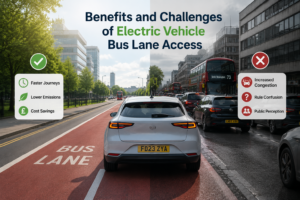
Benefits and Challenges of Electric Vehicle Bus Lane Access
Potential Benefits
Allowing electric cars and public transport lanes to coexist can offer several advantages.
One major benefit is encouraging EV adoption. When drivers receive practical advantages such as reduced travel times, electric vehicles become more attractive alternatives to conventional cars.
Additional benefits may include:
- Improved urban air quality
- Support for low-emission vehicle incentives
- Reduced carbon emissions
- Enhanced awareness of sustainable transport
Some policymakers argue that temporary electric vehicle road privileges can accelerate the shift toward greener transportation systems.
Challenges and Concerns
Despite these benefits, there are legitimate concerns about widespread EV access to bus lanes.
The primary purpose of bus lanes is to support public transport. If too many vehicles gain access, congestion can increase, reducing benefits for buses and passengers.
Authorities also face challenges in balancing:
- Public transport efficiency
- Traffic management
- Environmental objectives
- Fair access for all road users
As EV ownership continues growing, unrestricted bus lane access may become less practical.
Urban Traffic Management Considerations
Modern urban traffic management UK strategies increasingly focus on optimizing road space. Many transport experts believe bus lanes should primarily serve public transport rather than private vehicles, regardless of fuel type.
This perspective has influenced some councils to phase out EV exemptions that were initially introduced as temporary incentives.
How Drivers Can Check Bus Lane Permissions
Understanding electric car lane permissions requires careful attention to local regulations.
The most reliable approach is to examine road signs before entering a bus lane. Signs typically specify which vehicle categories may use the lane and during what hours restrictions apply.
Drivers should also stay informed about:
- Current bus lane restrictions
- Updated council policies
- Changes to EV road regulations
- New local transport initiatives
Assuming that all electric vehicles qualify for exemptions can be costly, particularly when enforcement cameras are active.
Practical Example
Consider a Tesla owner wondering, Can Tesla use bus lanes in the UK?
The answer is the same as for any other EV. The vehicle’s electric powertrain does not automatically grant access. The determining factor is whether the specific local authority permits electric vehicles in that particular bus lane.
This illustrates why understanding electric vehicle legislation UK and local policies is more important than the vehicle brand itself.
The Future of Bus Lane Access for Electric Vehicles
The future of bus lane access for zero-emission vehicles remains uncertain.
As the government continues supporting EV adoption, transport authorities must balance environmental objectives with effective public transport operations.
Some experts believe targeted exemptions may remain useful in areas where EV uptake is still developing. Others argue that incentives should focus on charging infrastructure, tax benefits, and clean air programs rather than road-space privileges.
Future policy decisions will likely depend on:
- EV ownership growth
- Traffic patterns
- Public transport demands
- Environmental targets
- Regional transportation strategies
As a result, Electric cars bus lanes UK 2026 regulations may continue evolving over time.
Conclusion
The answer to whether Electric cars bus lanes UK regulations allow electric vehicles to use bus lanes is not a straightforward yes or no. While some councils have introduced electric vehicle exemptions or temporary access schemes, there is no nationwide rule granting all EVs automatic use of bus lanes. Local authority decisions, road signage, and specific UK bus lane rules for electric vehicles determine whether access is permitted. EV drivers should always check local regulations and pay attention to bus lane signs to avoid penalties. As sustainable transport policies continue to evolve, future changes may affect how electric vehicles interact with public transport infrastructure, but for now, local rules remain the deciding factor.
FAQs
1. ARE ELECTRIC CARS EXEMPT FROM BUS LANE RESTRICTIONS IN THE UK?
No. There is no national exemption that allows all electric vehicles to use bus lanes. Access depends on local council regulations and the specific rules displayed on bus lane signs.
2. DO ELECTRIC VEHICLES GET BUS LANE ACCESS IN THE UK AUTOMATICALLY?
No. EV driving regulations UK do not automatically grant bus lane access. Drivers must check whether local authorities have approved electric vehicle use in particular bus lanes.
3. CAN TESLA VEHICLES USE BUS LANES IN THE UK?
Tesla vehicles follow the same rules as other electric cars. Whether a Tesla can enter a bus lane depends entirely on local bus lane exemptions UK and road signage, not the vehicle brand.
4. WHAT HAPPENS IF AN EV DRIVER INCORRECTLY USES A BUS LANE?
If a driver enters a restricted bus lane without authorization, bus lane cameras and fines may apply. The driver could receive a Bus lane penalty charge notice even if the vehicle is fully electric.
5. WHICH UK CITIES ALLOW EVS IN BUS LANES?
Policies vary by council and can change over time. Some authorities have introduced electric vehicle bus lane exemptions by council, while others have removed them. Drivers should always check the latest local regulations before assuming access is permitted.


One Comment