Why Public EV Charger Keeps Stopping During Charging Sessions
Why public EV charger keeps stopping

Introduction
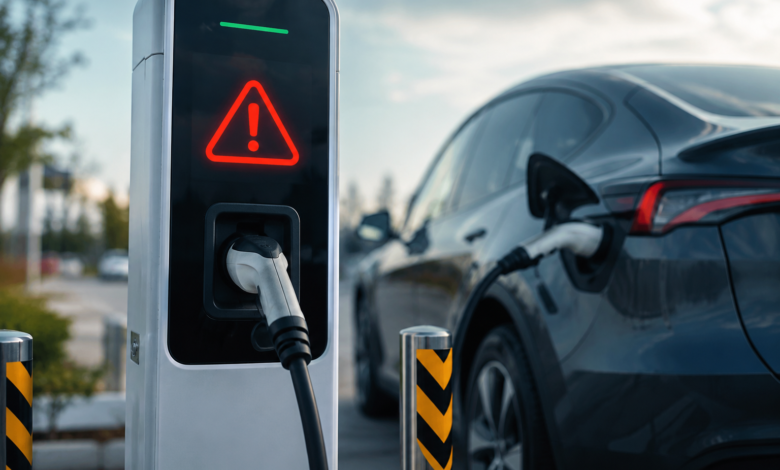
Why public EV charger keeps stopping is a common question among EV drivers. Charging interruptions can occur due to connectivity issues, faulty charging equipment, power fluctuations, or vehicle-related problems. Understanding why public EV charger keeps stopping can help drivers identify the cause and prevent future charging disruptions.
What Causes a Public EV Charger to Stop During a Session?
Public charging stations are designed with multiple safety and monitoring systems. When something unusual occurs, the charger may automatically stop the session to protect the vehicle, charger, or electrical network.
Common causes include:
- Communication errors between the EV and charger.
- Charging cable connection issues.
- Power supply interruptions.
- Battery temperature protection.
- Network connectivity problems.
- Payment or authentication failures.
- Charging station software glitches.
Most interruptions are temporary and can often be resolved by restarting the charging session.
Common Reasons for Interrupted Charging Sessions
Poor Communication Between the Vehicle and Charger
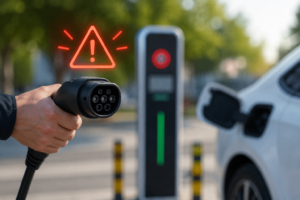
Modern EV charging systems rely on constant communication between the vehicle and charging equipment. Before charging begins, the charger and vehicle exchange information about battery status, charging speed, and safety requirements.
If this communication is interrupted, the charger may automatically stop the session. This is one of the most common reasons why public EV chargers keep stopping unexpectedly.
Possible triggers include:
- Software compatibility issues.
- Temporary communication faults.
- Outdated vehicle firmware.
- Charging station software errors.
Loose or Damaged Charging Cable
A charging cable that is not fully secured can trigger safety mechanisms.
Signs include:
- The charger starts and stops repeatedly.
- Error messages appear on the charger display.
- Unexpected session termination.
Even slight movement of the connector can interrupt charging and force the charger to disconnect.
Power Grid or Electrical Supply Issues
Public chargers depend on a stable electricity supply. Voltage fluctuations, local power disruptions, or overloaded electrical infrastructure can force a charger to shut down temporarily.
This is more common during:
- Severe weather conditions.
- Peak electricity demand periods.
- Electrical maintenance work.
Vehicle Battery Protection Systems
Your EV’s battery management system (BMS) constantly monitors battery health.
Charging may stop when:
- Battery temperature becomes too high.
- Battery temperature becomes too low.
- The battery reaches a protected charging threshold.
- Internal battery safety limits are triggered.
This protection helps extend battery life and prevent damage.
How Public EV Charging Systems Work
Quick Answer
Public EV chargers communicate continuously with the vehicle’s battery management system. If the charger detects a safety issue, communication error, power problem, battery protection event, or charging network fault, it automatically stops charging to prevent damage and ensure safe operation.
Charging Session Process
The charging process typically follows these steps:
- The driver connects the charging cable.
- Authentication or payment is completed.
- The charger communicates with the vehicle.
- Charging power is delivered.
- The vehicle and charger continuously exchange data.
- Safety systems monitor the session.
If any step fails, charging may stop automatically.
Real-World Examples of Charging Session Interruptions
Rapid Charger Overheating
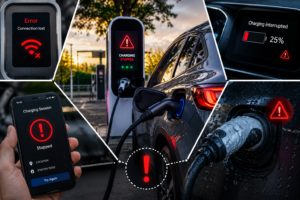
During summer heatwaves, some DC fast charging stations reduce charging speed or stop entirely to prevent overheating.
Weak Mobile Network Connectivity
Many modern charging stations rely on cloud-based management systems. Poor network signals can interrupt authorization or communication processes.
Vehicle Software Compatibility Issues
Occasionally, new EV software updates may temporarily create compatibility issues with certain charging networks until updates are released.
These examples show that charging interruptions are often related to technology safeguards rather than equipment failure.
Benefits of Automatic Charging Shutdown Features
Although interruptions can be inconvenient, automatic shutdown systems provide important advantages.
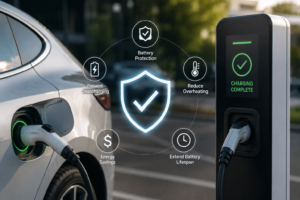
Enhanced Safety
Protects users from electrical faults and overheating.
Battery Protection
Prevents damage to expensive EV batteries.
Equipment Longevity
Reduces wear on charging infrastructure.
Grid Stability
Helps maintain reliable operation during power fluctuations.
Without these safeguards, charging systems would face greater risks of malfunction and failure.
Challenges and Limitations of Current Public Charging Infrastructure
Despite major improvements, public charging networks still face challenges.
Network Dependence
Many stations depend on internet connectivity for operation.
Hardware Aging
Older charging stations may experience more frequent faults.
Cross-Brand Compatibility
Different EV manufacturers use slightly different software implementations, which can occasionally create communication issues.
As EV adoption grows, infrastructure providers continue improving reliability and charging network performance.
Expert Insights: How to Prevent Charging Interruptions
EV charging experts recommend several best practices.
Check Connector Placement
Ensure the charging plug is fully inserted and locked.
Monitor Battery Temperature
Avoid fast charging immediately after aggressive driving if the battery is extremely hot.
Update Vehicle Software
Manufacturers regularly release updates that improve charging compatibility and reduce charger communication errors.
Choose Well-Maintained Charging Stations
Newer charging stations generally offer better reliability and fewer technical issues.
Report Faulty Chargers
Reporting recurring issues helps operators resolve problems faster.
Following these simple steps can significantly reduce charging interruptions and improve your overall charging experience.
Future Trends in EV Charging Reliability
The future of public charging looks promising.
Key developments include:
Smarter Charging Networks
AI-powered monitoring will identify faults before failures occur.
Improved Charger Diagnostics
Advanced sensors will detect connection issues instantly.
Better Battery Management Integration
Future EVs will communicate more efficiently with charging stations.
Predictive Maintenance
Operators will use real-time data to repair chargers before breakdowns occur.
More Reliable Fast Charging
Next-generation chargers are being designed for greater uptime and faster charging speeds.
These innovations will help reduce the frequency of charging session interruptions worldwide and improve the reliability ofelectric vehicle charging infrastructure.
Conclusion
Understanding why public EV chargers keep stopping can save EV drivers time, frustration, and unnecessary concern. Most charging interruptions are caused by safety mechanisms, communication errors, battery protection systems, power supply fluctuations, or charging station software issues. The good news is that these systems exist to protect both the vehicle and charging equipment.
As charging technology continues to evolve, public charging networks are becoming more reliable, efficient, and user-friendly. By understanding why public EV chargers keep stopping, learning how EV charging systems operate, and following best practices, drivers can enjoy smoother and more dependable charging experiences wherever they travel.
Frequently Asked Questions (FAQs)
WHY DOES MY PUBLIC EV CHARGER STOP AFTER A FEW MINUTES?
This usually occurs because of communication errors, battery protection systems, overheating, unstable power supply conditions, or charging network issues.
WHY DO PUBLIC EV CHARGERS kEEP STOPPING UNEXPECTEDLY?
Public EV chargers may stop unexpectedly because of charger communication errors, overheating protection, battery management system limits, software glitches, payment verification issues, or power supply interruptions.
CAN WEATHER AFFECT PUBLIC EV CHARGING SESSIONS?
Yes. Extreme heat, cold temperatures, heavy rain, or electrical storms can sometimes impact charger performance and reliability.
IS IT NORMAL FOR FAST CHARGING TO SLOW DOWN BEFORE STOPPING?
Yes. Many EVs reduce charging speed as the battery approaches higher charge levels to protect battery health and maintain charging efficiency.
CAN A FAULTY CHARGING CABLE CAUSE CHARGING INTERRUPTIONS?
Absolutely. Loose, damaged, or improperly connected cables are among the most common causes of charging session failures.
HOW CAN I PREVENT PUBLIC CHARGING INTERRUPTIONS?
Keep vehicle software updated, ensure secure cable connections, monitor battery temperature, and use reliable charging stations whenever possible.


One Comment