7 Powerful Reasons to Compare EV charger tethered vs untethered Before You Buy
EV charger tethered vs untethered

Introduction
Choosing the right EV charger is one of the most important decisions for any electric vehicle owner. When comparing EV charger tethered vs untethered, many drivers are unsure which option offers the best combination of convenience, flexibility, and long-term value. Both charger types are designed to deliver safe and efficient charging, but they differ in installation, usability, maintenance, and compatibility. Understanding EV charger tethered vs untethered can help you avoid costly mistakes and select the ideal charging solution for your home or business. This guide explains the key differences, advantages, disadvantages, and practical considerations so you can make a confident and informed decision.
What Does EV charger tethered vs untethered Mean?
The comparison between EV charger tethered vs untethered starts with understanding how each charger is designed.
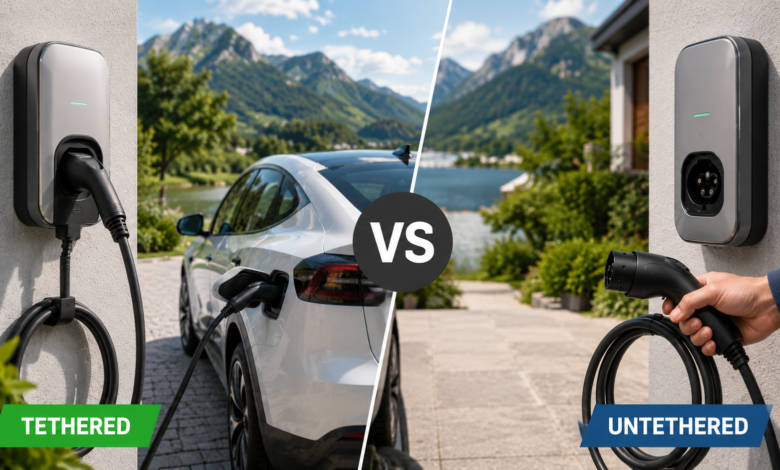
A tethered EV charger comes with a permanently attached charging cable. When you want to charge your electric vehicle, you simply remove the cable from its holder and plug it into your car. Since the cable is always connected, charging is quick and convenient.
An untethered EV charger, on the other hand, does not include a permanently attached cable. Instead, the charging socket is built into the charger, and you connect your own charging cable whenever you need it. Most electric vehicles already include a compatible charging cable, making this setup highly flexible.
When evaluating EV charger tethered vs untethered, the biggest difference is whether the charging cable remains attached to the charging unit or is supplied separately.
Key Differences Between EV charger tethered vs untethered
Although both charger types perform the same basic function, they differ in several practical ways.
A tethered charger offers outstanding convenience because the cable is always ready to use. Drivers who charge their vehicles daily often appreciate this simplicity, especially during bad weather or busy mornings.
An untethered charger provides greater flexibility. Since the cable is removable, you can use different cable lengths or replace the cable without replacing the charging station. This makes it suitable for households with multiple electric vehicles using different connector types.
Another important consideration in EV charger tethered vs untethered is appearance. Untethered chargers usually look cleaner because the cable is stored separately when not in use. Homeowners who prefer a neat driveway often choose this option.
Maintenance is another area where differences appear. If a tethered cable becomes damaged, repairs may be more expensive because the cable is integrated into the charger. With an untethered charger, replacing the cable is generally easier and less costly.
Benefits and Challenges of Tethered EV Chargers
A tethered charger is often considered the most convenient solution for homeowners with one primary electric vehicle.
One of its biggest advantages is ease of use. Since the cable is permanently attached, there is no need to unpack or connect a separate cable each time you charge. This saves time and simplifies the charging process.
Another benefit is faster daily operation. Drivers simply park, plug in, and begin charging immediately. Families with busy schedules often appreciate this added convenience.
However, there are also limitations. If you purchase another electric vehicle with a different connector standard in the future, compatibility may become an issue depending on the charger model. In addition, the permanently attached cable remains exposed to outdoor conditions, requiring proper storage to maintain its condition.
When considering EV charger tethered vs untethered, tethered chargers are generally ideal for drivers who prioritize speed and convenience over flexibility.
Benefits and Challenges of Untethered EV Chargers
Untethered chargers are becoming increasingly popular because of their adaptability.
The most significant advantage is compatibility with different vehicles. Since you choose the charging cable separately, changing vehicles rarely requires replacing the charging station.
Many homeowners also appreciate the cleaner appearance. Without a permanently attached cable hanging on the wall, the installation often looks more modern and organized.
Portability is another advantage. If your charging cable becomes worn or damaged, replacing it is usually straightforward. You can also purchase cables of different lengths to suit your parking arrangement.
The primary drawback is that charging requires one additional step. You must retrieve your cable and connect it before charging begins. While this only takes a few moments, some users prefer the simplicity of a permanently attached cable.
For buyers comparing EV charger tethered vs untethered, flexibility is often the deciding factor in choosing an untethered model.
Which Option Is Better for Different Drivers?
There is no universal answer to EV charger tethered vs untethered because the best choice depends on individual circumstances.
If you own one electric vehicle and expect to keep it for several years, a tethered charger delivers excellent convenience. Daily charging becomes quick and effortless, making it perfect for regular commuters.
If your household owns multiple electric vehicles or plans to upgrade in the future, an untethered charger offers greater long-term flexibility. Different charging cables can accommodate various vehicle models without replacing the charger.
Businesses, apartment buildings, and public charging locations frequently choose untethered chargers because they support a wider range of users and vehicle types.
Budget can also influence the decision. Initial installation costs are often similar, but long-term maintenance expenses may differ depending on cable replacement needs.
When evaluating EV charger tethered vs untethered, think about your current vehicle, future plans, charging habits, parking layout, and maintenance preferences before making a purchase.
Expert Insights and Buying Tips
Professionals generally recommend selecting a charger that matches both your current needs and future expectations.
Before purchasing, confirm that the charger supports the correct charging speed for your vehicle. A charger with smart charging features can also help reduce electricity costs by scheduling charging during off-peak hours.
Weather protection is another consideration if the charger will be installed outdoors. High-quality weather-resistant materials improve durability and extend the life of both the charger and cable.
Homeowners should also consider cable management. Tethered chargers often include integrated cable holders, while untethered systems require separate storage solutions for charging cables.
Experts agree that the debate around EV charger tethered vs untethered should focus less on which option is universally better and more on which solution aligns with your lifestyle and future vehicle ownership plans.
If convenience is your highest priority, tethered chargers are often the preferred option. If flexibility and future compatibility matter most, untethered chargers usually provide greater value over time.
Conclusion
The comparison of EV charger tethered vs untethered ultimately comes down to convenience versus flexibility. Tethered chargers make everyday charging faster and simpler because the cable is permanently attached. Untethered chargers offer greater compatibility, cleaner aesthetics, and easier cable replacement, making them ideal for households expecting future vehicle upgrades.
There is no one-size-fits-all solution. By carefully considering your driving habits, available parking space, future vehicle plans, and maintenance preferences, you can confidently choose the right charger. Understanding EV charger tethered vs untethered ensures you invest in a charging solution that meets both your current and future needs while delivering reliable performance for years to come.
More EV Car Guides: Read more electric vehicle news, buying guides, reviews, and ownership tips on magazinerock.co.uk.
(FAQs)
What is the main difference in EV charger tethered vs untethered?
The primary difference is that a tethered charger has a permanently attached charging cable, while an untethered charger requires a separate removable charging cable that connects when needed.
Is a tethered EV charger better for home use?
A tethered charger is often the better choice for homeowners who charge the same electric vehicle every day because it offers faster and more convenient daily charging.
Why do some people prefer untethered chargers?
Many drivers prefer untethered chargers because they support different cable types, provide greater flexibility for future vehicle upgrades, and create a cleaner-looking installation.
Which charger requires less maintenance?
Untethered chargers often have lower maintenance costs because damaged charging cables can usually be replaced separately without replacing the charging station itself.
Which option should I choose between EV charger tethered vs untethered?
Choose a tethered charger if convenience and daily ease of use are your priorities. Select an untethered charger if you want maximum flexibility, compatibility with multiple vehicles, and easier long-term maintenance.