10 Essential Facts About EV charger installation time in the UK
EV charger installation time

Introduction
If you’re planning to install a home charging point, one of the first questions you’ll ask is how long the process actually takes. Understanding EV charger installation time helps you plan your schedule, avoid unnecessary delays, and ensure your electric vehicle is ready for convenient home charging. While many homeowners expect a quick installation, several factors influence the overall timeline, from property type and electrical capacity to installer availability and paperwork. In most cases, a straightforward installation can be completed in just a few hours, but more complex projects may take longer. This guide explains every stage of the process, common delays, expert advice, and practical tips to help you better understand EV charger installation time in the UK.
What Is the Typical EV charger installation time in the UK?
For most UK homes, the average EV charger installation time ranges between two and five hours on the installation day. However, the complete process—from booking an installer to switching on your charger—usually takes one to three weeks.
A standard installation includes mounting the charger, running cables, connecting it to the consumer unit, testing the electrical system, and demonstrating how to use the charger safely. Experienced installers follow UK electrical regulations and manufacturer guidelines to ensure the installation is safe and reliable.
If your property already has suitable wiring and easy access to the fuse board, the installation can often be completed in a single visit. In these situations, the actual EV charger installation time remains relatively short.
However, if additional electrical work is required, the timeline can increase significantly. Every property is different, which is why installers normally conduct a site survey before confirming the expected EV charger installation time.
Factors That Affect EV charger installation time
Several factors determine how long the installation will take. Understanding these variables helps homeowners prepare in advance and avoid unexpected delays.
The biggest factor is the location of the charger. Installing a charging point close to the consumer unit requires less cabling and labour. If the charger needs to be mounted far away, installers must route longer cables through walls, loft spaces, or underground conduits, increasing the overall EV charger installation time.
Electrical capacity also plays an important role. Some older UK homes require consumer unit upgrades before a charger can be safely connected. These upgrades naturally extend the installation process.
Property type also matters. Detached houses usually provide easier cable routes than flats or terraced homes, where access restrictions and shared infrastructure can complicate the project.
Weather conditions may also influence outdoor work. Heavy rain or extreme weather can delay cable installation, especially when trenching or external wall work is involved.
Finally, installer availability affects the complete timeline. Demand for EV charging points continues to grow across the UK, meaning homeowners may wait several days or even weeks before their scheduled appointment.
The Installation Process Explained
Understanding each installation stage helps explain why EV charger installation time varies from one home to another.
Initial Property Survey
Before installation begins, the installer reviews your property either through photographs, a virtual survey, or an on-site inspection. They assess your electrical system, parking location, cable routing, internet connectivity, and charging requirements.
The survey ensures there are no hidden issues that could delay the installation later.
Installation Day
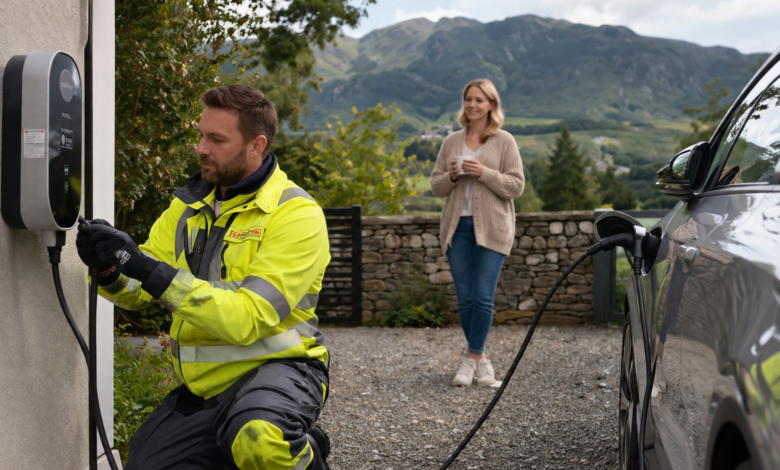
On the agreed date, installers begin by isolating the electrical supply safely. They mount the charger securely, install protective cable routes, connect the charger to the consumer unit, and fit safety devices where necessary.
After the physical installation is complete, the charger undergoes electrical testing to verify compliance with UK safety standards.
Finally, the installer demonstrates how to operate the charger, download any required mobile app, schedule charging sessions, and understand safety features.
Although this entire process usually takes only a few hours, the overall EV charger installation time depends on the property’s complexity.
Common Challenges That Can Increase Installation Time
While many installations proceed smoothly, certain situations can extend EV charger installation time beyond initial expectations.
Older homes sometimes have outdated electrical systems that require upgrading before a charger can be installed safely. This may involve replacing the consumer unit or installing additional circuit protection.
Limited parking access can also create complications. If the charger is located a considerable distance from the electrical supply, installers must spend additional time routing cables safely.
Some homeowners discover that their preferred charger location requires drilling through multiple walls or installing underground cable protection, both of which increase labour time.
Network operator approvals can occasionally delay projects if additional electrical capacity or supply upgrades are required.
Unexpected structural issues, such as hidden pipes, insulation, or difficult wall materials, may also extend the overall EV charger installation time.
How to Reduce EV charger installation time
Although homeowners cannot control every factor, there are several practical ways to make the installation process faster.
Choose a charging location close to your consumer unit whenever possible. Shorter cable runs reduce both installation time and costs.
Provide clear photographs during the initial survey. Accurate information allows installers to prepare the correct equipment before arriving.
Ensure access to your fuse board, parking space, and electrical equipment on installation day. Removing obstacles beforehand prevents unnecessary interruptions.
Schedule installation well before taking delivery of your new electric vehicle. Booking early provides greater flexibility and avoids waiting during busy periods.
Selecting an experienced installer with extensive knowledge of UK electrical regulations also helps minimise unexpected delays while ensuring a safe installation.
By following these simple recommendations, many homeowners experience a much smoother EV charger installation time.
Why Professional Installation Matters
Some homeowners wonder whether installing an EV charger themselves could save time or money. In reality, professional installation remains the safest and most reliable option.
Certified installers understand UK wiring regulations, electrical testing requirements, and manufacturer specifications. They ensure every component is installed correctly and safely.
Professional installers also verify that protective devices function correctly, reducing the risk of overheating, electrical faults, or equipment damage.
Many charger manufacturers require professional installation to maintain warranty coverage. Insurance providers may also expect chargers to be installed according to recognised standards.
Although hiring professionals may seem like an additional expense, it ensures your investment remains safe, compliant, and reliable for years to come.
Ultimately, professional expertise often results in a more efficient EV charger installation time while reducing the likelihood of future electrical problems.
Conclusion
Understanding EV charger installation time allows homeowners to plan confidently before purchasing an electric vehicle or home charging point. While the installation itself often takes between two and five hours, the complete process usually spans one to three weeks, depending on surveys, scheduling, electrical upgrades, and property complexity.
Most installations are straightforward when the property’s electrical system is suitable and the charger is positioned near the consumer unit. Preparing your home in advance, choosing an experienced installer, and providing accurate survey information can significantly improve EV charger installation time.
As electric vehicle ownership continues to grow across the UK, investing in a professionally installed home charger offers convenience, lower charging costs, and long-term peace of mind. By understanding the factors that influence EV charger installation time, you can avoid surprises and enjoy a smooth transition to cleaner, smarter driving.
EV Cars: More EV Car Guides: Read more electric vehicle news, buying guides, reviews, and ownership tips on magazinerock.co.uk.
FAQs
How long does a standard home EV charger installation take?
Most standard installations take between two and five hours. However, the full process, including booking, surveys, and scheduling, usually takes one to three weeks.
Can an older house increase installation time?
Yes. Older properties may require consumer unit upgrades, additional circuit protection, or electrical improvements, which can extend the installation timeline.
Does charger location affect installation time?
Absolutely. Chargers installed close to the consumer unit require less cabling and labour. Longer cable routes or complex wall access increase installation time.
Will I need planning permission before installation?
Most residential EV charger installations in the UK do not require planning permission. However, listed buildings, conservation areas, or unusual property types may have additional requirements.
How can I speed up the installation process?
Providing accurate survey information, choosing a suitable charger location, ensuring easy property access, and booking an experienced installer are the best ways to reduce delays and complete installation efficiently.