Powerful EV Battery Temperature Effects: How Temperature Impacts EV Battery Performance
EV battery temperature effects

Introduction
Electric vehicles are transforming the future of transportation, but one factor that many drivers overlook is battery temperature. Understanding EV battery temperature effects is essential because temperature directly influences driving range, charging speed, efficiency, battery health, and overall vehicle performance. Whether you drive in freezing winter conditions or scorching summer heat, battery temperature plays a significant role in how your electric vehicle performs. By learning how different temperatures affect lithium-ion batteries and following practical battery care strategies, EV owners can maximize efficiency, extend battery lifespan, and enjoy a more reliable driving experience throughout the year. This guide explains the science behind EV battery temperature effects and offers expert insights to help you get the best performance from your electric vehicle.
What Are EV Battery Temperature Effects?
EV battery temperature effects refer to the changes in battery performance caused by variations in temperature. Most modern electric vehicles use lithium-ion batteries because they offer high energy density, long life, and efficient charging. However, these batteries perform best within an ideal temperature range of approximately 20°C to 30°C (68°F to 86°F).
When temperatures move significantly above or below this range, chemical reactions inside the battery become less efficient. Cold weather slows these reactions, reducing available power and increasing charging time. On the other hand, excessive heat accelerates battery degradation and may permanently reduce battery capacity over time.
Manufacturers design advanced battery thermal management systems to maintain an optimal operating temperature, but environmental conditions still influence real-world performance. Understanding EV battery temperature effects helps drivers make informed decisions about charging, parking, and driving habits.
How Cold Weather Influences EV Battery Performance
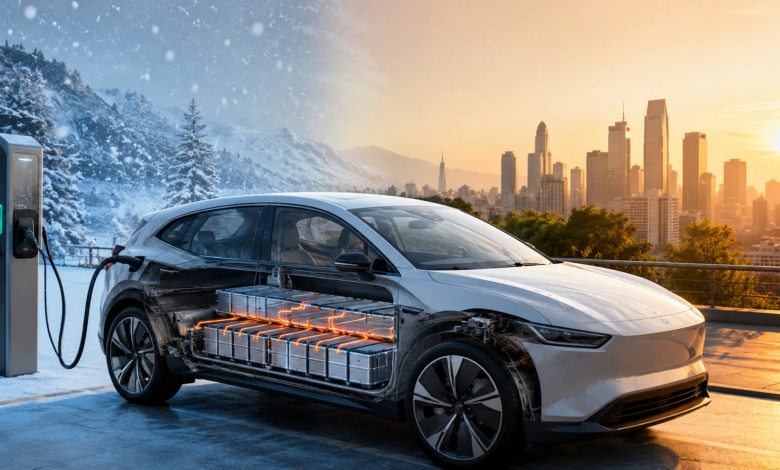
Cold temperatures are among the biggest challenges for electric vehicle owners. During winter, the electrolyte inside lithium-ion batteries becomes less active, making it harder for electricity to flow efficiently. As a result, EV battery temperature effects become noticeable through reduced driving range and slower charging.
Many drivers experience a temporary range reduction because the battery cannot deliver energy as efficiently in freezing conditions. Additionally, the vehicle requires extra power to heat the cabin, battery pack, and other components, increasing overall energy consumption.
Charging is also affected. Battery management systems often reduce charging speed in cold weather to protect battery cells from damage. Although this may increase charging time, it helps preserve long-term battery health.
Fortunately, modern electric vehicles include battery preconditioning features that warm the battery before charging or driving. This technology minimizes negative EV battery temperature effects and improves overall efficiency during winter.
The Impact of High Temperatures on Battery Health
While cold weather causes temporary performance losses, excessive heat can create long-term damage. High temperatures accelerate chemical reactions inside lithium-ion batteries, leading to faster battery aging and capacity loss. This is one of the most important EV battery temperature effects that EV owners should understand.
Continuous exposure to extreme heat increases internal resistance and may permanently reduce battery lifespan. Fast charging during very hot weather also generates additional heat, placing more stress on battery cells if cooling systems cannot manage the temperature effectively.
Most manufacturers equip electric vehicles with liquid cooling or air cooling systems to regulate battery temperature. These systems significantly reduce harmful EV battery temperature effects, but drivers should still avoid unnecessary exposure to extreme heat whenever possible.
Parking in shaded areas, using covered parking, and limiting repeated fast charging during hot afternoons are simple habits that help protect battery health.
Why Battery Thermal Management Systems Matter
Battery thermal management systems are one of the most important technologies in modern electric vehicles. Their primary purpose is to maintain battery temperature within the optimal operating range regardless of outside weather conditions.
These systems monitor battery temperature continuously and activate heating or cooling mechanisms whenever necessary. Effective thermal management minimizes EV battery temperature effects by improving charging efficiency, maintaining consistent performance, and reducing battery degradation.
Advanced electric vehicles automatically precondition the battery before DC fast charging, ensuring optimal temperature for maximum charging speed. This improves efficiency while protecting battery chemistry from unnecessary stress.
Manufacturers continue investing in better thermal management technologies because temperature control remains one of the most effective ways to extend battery lifespan.
Practical Tips to Reduce EV Battery Temperature Effects
Although temperature cannot be controlled outdoors, drivers can adopt several habits that minimize EV battery temperature effects and improve long-term battery performance.
Whenever possible, park your vehicle in a garage or shaded location to reduce exposure to extreme temperatures. During winter, precondition the battery before driving or charging if your vehicle supports this feature.
Avoid leaving the battery fully charged for extended periods during extremely hot weather, as prolonged exposure to high temperatures may accelerate battery degradation. Instead, maintain a moderate state of charge for daily driving unless preparing for a long trip.
Planning charging sessions during cooler parts of the day can also help reduce battery heat buildup. Following the manufacturer’s recommended charging practices ensures better efficiency while protecting battery health.
Regular software updates from vehicle manufacturers often improve battery management strategies, making it worthwhile to keep your EV software current.
Understanding these simple maintenance practices helps reduce EV battery temperature effects while improving overall driving reliability.
Future Innovations to Minimize EV Battery Temperature Effects
Battery technology continues evolving rapidly. Researchers are developing new battery chemistries that perform better across wider temperature ranges while maintaining excellent energy density and safety.
Solid-state batteries are considered one of the most promising future innovations because they may offer improved temperature tolerance, faster charging, higher energy capacity, and longer service life compared to current lithium-ion batteries.
Artificial intelligence is also becoming an important part of battery management. Smart algorithms can predict temperature changes based on driving conditions, navigation routes, and weather forecasts, allowing the vehicle to prepare the battery before performance is affected.
Improved cooling materials, advanced insulation technologies, and more efficient thermal management systems will continue reducing EV battery temperature effects as electric vehicle technology advances.
These innovations will improve range consistency, charging performance, battery durability, and overall customer satisfaction in the coming years.
Conclusion
Understanding EV battery temperature effects is essential for every electric vehicle owner. Temperature influences driving range, charging speed, battery efficiency, and long-term battery lifespan. Cold weather temporarily reduces available energy and slows charging, while excessive heat accelerates battery aging and permanent capacity loss. Fortunately, modern thermal management systems, battery preconditioning, and smart driving habits significantly reduce these challenges. By following recommended charging practices, avoiding prolonged exposure to extreme temperatures, and keeping vehicle software updated, drivers can minimize EV battery temperature effects and enjoy reliable, efficient, and long-lasting electric vehicle performance throughout every season.
More EV Car Guides: Read more electric vehicle news, buying guides, reviews, and ownership tips on magazinerock.co.uk.
(FAQs)
Why are EV battery temperature effects important?
EV battery temperature effects determine how efficiently an electric vehicle operates. Temperature impacts driving range, charging speed, battery efficiency, safety, and long-term battery lifespan.
Does cold weather permanently damage EV batteries?
No. Cold weather mainly causes temporary reductions in battery performance and driving range. Once the battery returns to its ideal operating temperature, normal performance is generally restored.
How does hot weather affect EV batteries?
High temperatures accelerate battery aging, increase chemical degradation, and may permanently reduce battery capacity if exposure continues for long periods without proper cooling.
Can battery thermal management systems prevent temperature problems?
Yes. Modern battery thermal management systems actively heat or cool the battery to maintain optimal operating temperatures, reducing many negative EV battery temperature effects and improving battery longevity.
How can EV owners protect their batteries from extreme temperatures?
Drivers should park in shaded or covered areas, use battery preconditioning when available, avoid unnecessary fast charging in extreme heat, follow manufacturer charging recommendations, and keep vehicle software updated. These practices help minimize EV battery temperature effects while extending battery life and maintaining reliable performance.