Leapmotor Stellantis Partnership: How This EV Alliance Is Changing the European Market
Leapmotor Stellantis Partnership

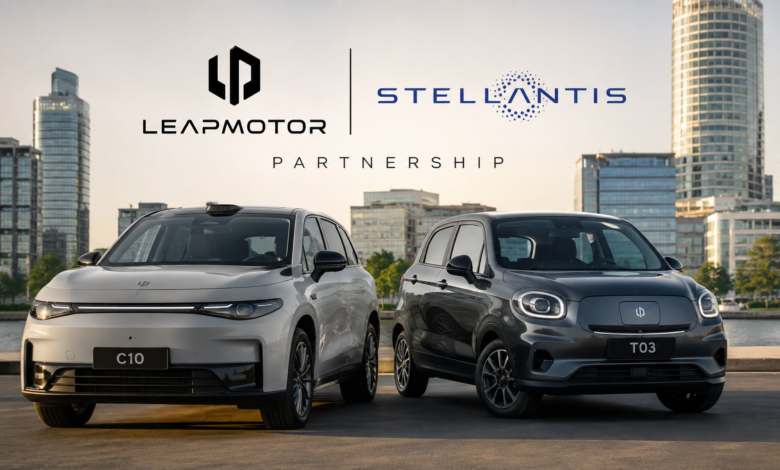
The Leapmotor Stellantis Partnership represents a significant shift in how the European automotive industry is responding to the rapid growth of electric vehicles and Chinese EV manufacturers. Instead of competing with every emerging Chinese brand independently, Stellantis has chosen to work directly with Leapmotor, combining European distribution, manufacturing expertise, and customer networks with Chinese EV technology and cost-focused engineering.
The alliance is more than a conventional investment. It creates a route for Leapmotor to expand beyond China while giving Stellantis access to competitively priced electric vehicles and new technology. As European consumers increasingly look for affordable EVs with modern features, this collaboration could influence vehicle prices, product development, manufacturing strategies, and competition across the continent.
What Is the Leapmotor Stellantis Partnership?
The Leapmotor Stellantis Partnership is built around Leapmotor International, a joint venture established by Stellantis and Leapmotor. Stellantis holds 51% of the joint venture, while Leapmotor owns 49%. Separately, Stellantis invested approximately €1.5 billion in 2023 to acquire about 21% of Leapmotor.
The structure gives both companies a different but complementary role. Leapmotor contributes its electric vehicle technology, engineering capabilities, software expertise, and experience in China’s highly competitive new energy vehicle market. Stellantis contributes its extensive European commercial infrastructure, manufacturing knowledge, dealer relationships, service operations, and international automotive experience.
This arrangement matters because entering Europe is difficult for a young automotive company. Building dealerships, service centers, logistics operations, customer-support systems, and regulatory expertise from scratch requires substantial time and capital. Leapmotor can use Stellantis’ established infrastructure to accelerate its European expansion.
At the same time, Stellantis gains a way to broaden its EV portfolio without developing every vehicle entirely internally.
Why Stellantis Needed a Different EV Strategy
The European automotive market is undergoing a fundamental transformation. Traditional manufacturers are facing pressure to reduce vehicle emissions while keeping electric cars affordable. At the same time, Chinese manufacturers have become increasingly competitive in battery technology, vehicle software, manufacturing efficiency, and pricing.
The Leapmotor Stellantis Partnership therefore gives Stellantis another way to respond to this competitive pressure.
Rather than treating Leapmotor only as an outside competitor, Stellantis can use the relationship to access products and technologies that can reach European customers relatively quickly. This is particularly relevant in the affordable and mid-market EV segments, where vehicle price remains one of the biggest barriers to mass adoption.
The strategy also reflects a broader industry trend. European manufacturers increasingly need flexible partnerships because developing an entire EV ecosystem—from batteries and software to platforms and manufacturing—requires enormous investment.
For Stellantis, the partnership can potentially improve its ability to compete at lower price points while allowing its established brands to focus on their own product identities.
Leapmotor’s Advantage in the European Market
Leapmotor’s biggest opportunity is its ability to combine technology with relatively competitive pricing. The company’s approach includes significant vertical integration, meaning it develops many important vehicle technologies internally rather than relying entirely on external suppliers.
Its early European models demonstrate this strategy.
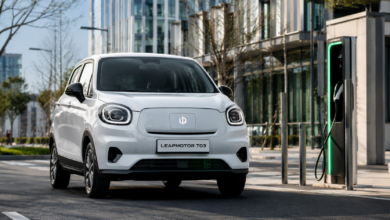
The Leapmotor T03 is a small electric city car designed for urban mobility, while the C10 is a larger electric SUV aimed at families. These vehicles allow the company to address two very different parts of the European EV market.
The T03 is particularly relevant because smaller affordable electric cars have historically been difficult for European manufacturers to produce profitably. A compact EV with practical range, modern connectivity, and a competitive price could appeal to urban drivers who do not need a large SUV.
The C10, meanwhile, gives Leapmotor a presence in a much larger vehicle category where European consumers increasingly prefer crossovers and SUVs.
This combination allows the Leapmotor Stellantis Partnership to target both entry-level EV buyers and customers looking for a more spacious family vehicle.
How the Alliance Is Changing EV Competition
One of the most important effects of the Leapmotor Stellantis Partnership is the additional competitive pressure it creates.
European consumers now have more choices between established European brands and newer Chinese EV manufacturers. Increased competition can encourage manufacturers to improve equipment levels, technology, efficiency, after-sales support, and pricing.
This could be particularly important in the affordable EV sector. If a manufacturer can offer more technology at a lower price, competing brands may have to reconsider their own pricing and equipment strategies.
The partnership also changes the traditional idea of competition. A Chinese EV company is no longer simply entering Europe independently. Through Stellantis, Leapmotor becomes connected to an established European automotive ecosystem.
That makes the alliance strategically different from a simple import operation.
For consumers, the potential benefit is greater choice. For established automakers, however, it increases the pressure to demonstrate why their products justify potentially higher prices.
From Chinese Imports to European Manufacturing
The next stage of the Leapmotor Stellantis Partnership could be even more significant because the relationship is moving beyond distribution.
In 2026, Stellantis and Leapmotor expanded their collaboration toward European manufacturing, with production activity centered on Stellantis’ Zaragoza facility in Spain. This represents an important change because manufacturing vehicles in Europe can improve supply flexibility and reduce some of the complications associated with importing vehicles directly from China.
Local production can also make the partnership more relevant to European industrial policy and employment.
For Stellantis, using existing factory capacity can help improve the utilization of facilities that might otherwise operate below their potential. For Leapmotor, European production provides a faster route into regional manufacturing without having to build a completely new factory network.
The arrangement could eventually influence where future Leapmotor models are assembled and how components are sourced.
Benefits for European Consumers
The Leapmotor Stellantis Partnership could provide several practical benefits for buyers.
The first is greater competition. When more manufacturers compete for the same customers, buyers generally gain more options.
The second is access to modern EV technology at potentially more accessible prices. Leapmotor’s strategy focuses heavily on combining technology, equipment, and cost efficiency.
The third is the availability of an established service network. One concern surrounding newer automotive brands is whether customers will have convenient access to servicing, spare parts, warranty support, and trained technicians. Stellantis’ existing dealer and service infrastructure can help address that concern.
There is also a wider benefit: competition may encourage traditional manufacturers to accelerate the development of affordable electric vehicles.
If successful, the partnership could help make EV ownership accessible to customers who previously considered electric cars too expensive.
Challenges and Risks Behind the Partnership
Despite its potential, the Leapmotor Stellantis Partnership is not without challenges.
One major issue is brand positioning. Stellantis has numerous established brands, including Peugeot, Citroën, Fiat, Opel, Jeep, and others. Leapmotor must occupy a clear position without creating unnecessary overlap with existing products.
Another challenge is consumer trust. European buyers may still have questions about the long-term reliability, resale value, servicing, software support, and durability of newer Chinese brands.
Regulation is another important factor. European trade policy toward Chinese-made electric vehicles can influence pricing and supply strategies. Changes in tariffs, local-content requirements, subsidies, and industrial policies could affect the economics of imported and locally produced vehicles.
There is also a strategic risk for Stellantis. Working closely with a Chinese EV specialist can provide access to technology and competitive products, but it also creates a deeper dependence on an external technology partner.
The success of the alliance will therefore depend on how effectively both companies balance cooperation with their individual long-term interests.
What the Partnership Means for the European Auto Industry
The Leapmotor Stellantis Partnership reflects a broader transformation in the automotive industry.
For decades, European manufacturers competed primarily against other European, Japanese, Korean, and American companies. The rapid expansion of Chinese EV manufacturers has changed that competitive landscape.
The partnership demonstrates that European companies can respond through collaboration as well as direct competition.
It also highlights the growing importance of manufacturing flexibility. Automotive factories are extremely expensive assets, and maintaining efficient production becomes increasingly important as vehicle demand changes. Using existing European facilities to manufacture competitive EVs could become an increasingly attractive strategy.
There is also a technological lesson. Chinese EV companies have developed strong capabilities in batteries, software, electronics, vehicle integration, and rapid product development. European manufacturers can benefit from accessing some of these capabilities while contributing their own strengths in safety, engineering, manufacturing, distribution, and customer support.
What Could Happen Next?
The future of the Leapmotor Stellantis Partnership will depend heavily on product expansion and European manufacturing.
The initial T03 and C10 gave Leapmotor a starting point, but sustained growth requires a broader range of vehicles. Additional models in popular segments such as compact SUVs and family cars could significantly increase the brand’s relevance.
Local production could also become increasingly important. Manufacturing more vehicles in Europe could improve supply flexibility while making the partnership less dependent on long-distance vehicle imports.
For Stellantis, the key question is whether Leapmotor can provide genuinely competitive products without weakening the company’s existing brands.
For Leapmotor, the challenge is proving that its technology, quality, pricing, and customer support can build lasting confidence among European buyers.
If both sides manage those challenges, the partnership could become a model for how established European automakers and fast-growing Chinese EV companies work together.
Conclusion
The Leapmotor Stellantis Partnership is changing the European EV landscape by combining Chinese electric vehicle technology with European manufacturing, distribution, and automotive expertise. Its importance goes beyond the sale of a few new EV models. It represents a new competitive strategy for an industry facing rapid technological, regulatory, and economic change.
For Leapmotor, Stellantis provides a valuable route into European markets and manufacturing. For Stellantis, the relationship offers access to competitively priced EV technology and a way to respond more quickly to Chinese competition.
European consumers could ultimately benefit through greater choice, stronger competition, improved technology, and potentially more affordable electric cars. However, long-term success will depend on product quality, customer trust, pricing, regulatory developments, manufacturing efficiency, and clear brand positioning.
The Leapmotor Stellantis Partnership is therefore worth watching not simply as a corporate alliance, but as an example of how the global automotive industry is being reorganized around electric mobility.
More EV Car Guides: Read more electric vehicle news, buying guides, reviews, and ownership tips on magazinerock.co.uk.
(FAQs)
What is the Leapmotor Stellantis Partnership?
The Leapmotor Stellantis Partnership is a strategic collaboration built around Leapmotor International, a joint venture in which Stellantis owns 51% and Leapmotor owns 49%. Stellantis also acquired approximately 21% of Leapmotor through a separate investment. The partnership is designed to expand Leapmotor’s EV business internationally while giving Stellantis access to Leapmotor’s electric vehicle technology and competitive products.
Which Leapmotor vehicles are available in Europe?
The first major European models were the Leapmotor T03 and C10. The T03 is a compact electric city car aimed at urban customers, while the C10 is a larger family-oriented SUV. The partnership is expected to support further model expansion as Leapmotor develops its European product range.
Why is Stellantis working with a Chinese EV manufacturer?
Stellantis is working with Leapmotor because China’s EV industry has developed strong capabilities in areas such as battery technology, software, vehicle electronics, manufacturing efficiency, and cost control. The partnership allows Stellantis to access these strengths while using its European distribution, manufacturing, and service infrastructure.
Will Leapmotor cars be manufactured in Europe?
Yes. The collaboration has moved toward European manufacturing, including production activity at Stellantis’ Zaragoza facility in Spain. European manufacturing can improve supply flexibility and factory utilization while reducing dependence on importing every vehicle directly from China.
How could the partnership affect European EV prices?
The Leapmotor Stellantis Partnership could increase price competition, particularly in affordable and mid-range electric vehicles. If Leapmotor offers strong equipment and technology at competitive prices, established manufacturers may face greater pressure to improve value and control costs. However, final prices will continue to depend on taxes, tariffs, production location, incentives, exchange rates, and individual market conditions.