Introduction
The debate over electric vehicle safety has become more intense as more drivers switch from petrol and diesel cars to battery-powered alternatives. One of the most common concerns is whether electric cars are more likely to catch fire than conventional vehicles. In the UK, this question often leads people to search for EV battery fire risk UK because they want reliable information before buying an electric vehicle. While dramatic news stories about electric vehicle fires often attract attention, they do not always reflect the overall reality.
Understanding how electric vehicles work, why battery fires happen, and how frequently they occur helps separate facts from myths. This guide explains the real risks, explores modern safety systems, and provides practical advice for drivers who want to make informed decisions.
Are Electric Cars More Likely to Catch Fire?
The simple answer is no. Based on available evidence, electric cars are generally not more likely to catch fire than petrol or diesel vehicles. In fact, studies from different regions consistently show that internal combustion engine vehicles experience more fires overall because they contain highly flammable fuels, complex exhaust systems, and numerous moving components that generate heat.
When discussing EV battery fire risk UK, it is important to distinguish between the likelihood of a fire occurring and the way a fire behaves once it starts. Electric vehicle battery fires can be more challenging to extinguish because lithium-ion batteries may experience thermal runaway. However, this does not mean electric vehicles catch fire more frequently.
Electric vehicles undergo rigorous testing before reaching the market. Manufacturers design battery packs with multiple protective layers, advanced cooling systems, reinforced casings, and intelligent battery management software to minimize risks. These technologies continuously monitor battery temperature, voltage, and performance to detect potential issues before they become dangerous.
Another reason for public confusion is media coverage. A single electric vehicle fire often receives widespread attention because it is still considered unusual, whereas thousands of petrol vehicle fires rarely become headline news.
Understanding What Causes EV Battery Fires
Understanding EV battery fire risk UK starts with knowing how lithium-ion batteries function. These batteries store large amounts of energy within compact cells. Under normal conditions, they operate safely for many years.
Several factors can increase the possibility of battery damage.
One common cause is severe collision damage. A high-impact crash can damage battery cells, leading to internal short circuits. Modern electric vehicles include automatic safety systems that disconnect the battery immediately after a collision to reduce this risk.
Manufacturing defects are another possible cause, although they are extremely rare. Quality control standards continue to improve, making defective batteries less common than in the early years of electric vehicle production.
Improper repairs also present risks. Only qualified technicians should service high-voltage battery systems. Unauthorized modifications or poorly performed repairs can compromise battery safety.
Charging equipment is another consideration. Using damaged cables, incompatible chargers, or faulty electrical installations can increase electrical hazards, although the battery itself usually remains protected by built-in safety systems.
Extreme heat may place additional stress on battery components, but modern cooling systems help regulate operating temperatures even during demanding conditions.
Why Modern Electric Vehicles Are Built for Safety
Vehicle manufacturers invest heavily in reducing EV battery fire risk UK through engineering innovation and continuous testing.
Battery packs are typically installed beneath the vehicle floor inside reinforced protective enclosures. This location lowers the vehicle’s center of gravity while shielding the battery from road debris and collisions.
Battery management systems constantly monitor individual battery cells. If abnormal temperatures or voltage changes are detected, the system automatically limits charging or discharges affected sections to prevent further problems.
Advanced cooling systems circulate liquid coolant around battery modules, helping maintain stable operating temperatures during driving, rapid charging, and hot weather.
Crash sensors instantly isolate high-voltage components after an accident, reducing the chance of electrical faults and protecting emergency responders.
Manufacturers also conduct extensive crash testing, water resistance testing, vibration testing, and thermal testing before releasing new electric vehicle models. These comprehensive evaluations ensure batteries remain stable under a wide variety of real-world conditions.
These engineering improvements continue to reduce EV battery fire risk UK as battery technology evolves.
How Electric Vehicle Fires Compare with Petrol Car Fires
Comparing electric and petrol vehicles requires looking beyond headlines.
Petrol cars carry highly combustible fuel that can ignite when fuel lines rupture or hot engine components come into contact with leaking liquids. Engine overheating, oil leaks, electrical faults, and mechanical failures all contribute to conventional vehicle fires.
Electric vehicles eliminate many of these fire sources because they have fewer moving parts, no engine oil, no exhaust system, and no petrol tank.
Although battery fires behave differently, they occur less frequently according to current industry data. This distinction is essential when evaluating EV battery fire risk UK objectively.
One reason electric vehicle fires receive greater public attention is that lithium-ion battery fires can burn hotter and may require larger quantities of water during firefighting operations. Emergency services across the UK continue to update training procedures specifically for electric vehicle incidents.
The important point is that firefighters have adapted to these situations through specialized equipment and improved emergency response techniques.
Practical Ways to Reduce EV Fire Risks
Drivers can further minimize EV battery fire risk UK by following sensible ownership practices.
Always use manufacturer-approved charging equipment whenever possible. Certified chargers communicate properly with the vehicle’s battery management system, helping maintain safe charging conditions.
Keep charging cables clean, dry, and free from visible damage. If cables show signs of wear, replace them promptly rather than attempting temporary repairs.
Avoid ignoring dashboard warning messages. Battery management systems are designed to alert drivers to unusual conditions before they become serious problems.
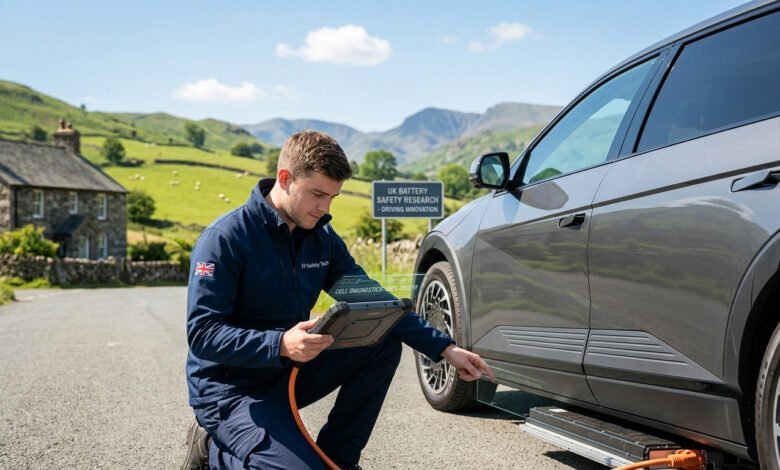
Schedule regular maintenance with qualified electric vehicle technicians. Professional inspections can identify software updates, cooling system issues, or damaged components early.
After any significant collision, have the battery inspected even if the vehicle appears to drive normally. Internal battery damage is not always immediately visible.
Parking in shaded areas during extremely hot weather may also help reduce unnecessary heat exposure, although modern cooling systems already provide substantial protection.
By following these simple practices, drivers contribute to keeping EV battery fire risk UK exceptionally low throughout the vehicle’s lifespan.
Common Myths About Electric Vehicle Fires
Several myths continue to shape public opinion about EV battery fire risk UK, but many are unsupported by evidence.
One widespread myth claims electric vehicles regularly burst into flames without warning. In reality, spontaneous battery fires are extremely uncommon, and modern battery management systems continuously monitor battery health.
Another misconception suggests electric vehicles become dangerous whenever they are charged. Charging is generally very safe when approved equipment is used and electrical installations meet safety standards.
Some people believe firefighters cannot extinguish electric vehicle fires. While these incidents require different techniques, emergency services have developed effective procedures for handling lithium-ion battery fires.
Others assume older electric vehicles become increasingly dangerous over time. Battery degradation naturally occurs with age, but declining capacity does not automatically increase fire risk when batteries are properly maintained.
Understanding these misconceptions allows consumers to evaluate EV battery fire risk UK based on facts rather than fear.
The Future of Battery Safety in the UK
Battery technology continues to improve rapidly, making electric vehicles even safer.
Researchers are developing solid-state batteries that offer improved thermal stability, faster charging, and reduced fire risk compared with current lithium-ion technology.
Artificial intelligence is also becoming part of battery management systems. These intelligent systems can identify early warning signs, predict battery health, and optimize charging behavior more accurately than previous generations.
Manufacturers continue investing in stronger battery casings, better cooling technologies, and enhanced protective materials.
Government regulations, independent safety testing, and ongoing innovation all contribute to reducing EV battery fire risk UK as electric vehicle adoption increases.
As charging infrastructure expands and battery designs improve, public confidence in electric vehicle safety is expected to grow even further.
Conclusion
Electric vehicles have transformed modern transportation, but concerns about battery fires continue to generate questions. The available evidence shows that electric cars are generally no more likely—and often less likely—to catch fire than petrol or diesel vehicles. While lithium-ion battery fires require specialized firefighting methods, they remain relatively rare thanks to advanced engineering, strict manufacturing standards, and sophisticated battery management systems.
Drivers can further reduce EV battery fire risk UK by using approved charging equipment, maintaining their vehicles properly, and responding promptly to warning messages. As battery technology continues to evolve, electric vehicles are becoming even safer, making them a practical and reliable choice for UK motorists seeking cleaner and more efficient transportation.
More EV Car Guides: Read more electric vehicle news, buying guides, reviews, and ownership tips on magazinerock.co.uk.
FAQs
Is EV battery fire risk UK higher than petrol car fire risk?
No. Current evidence indicates petrol and diesel vehicles experience more fires overall than electric vehicles. Although battery fires require different firefighting techniques, they occur less frequently.
What causes most electric vehicle battery fires?
Most battery fires result from severe collision damage, manufacturing defects, improper repairs, or significant battery damage. Modern battery management systems are designed to detect and reduce these risks before they become dangerous.
Can charging an electric vehicle increase EV battery fire risk UK?
Charging is generally very safe when using manufacturer-approved equipment and professionally installed charging points. Faulty chargers or damaged electrical installations can create hazards, but built-in vehicle safety systems provide multiple layers of protection.
Are electric vehicle battery fires difficult to extinguish?
Yes, they can be more challenging because lithium-ion batteries may experience thermal runaway. However, UK fire services receive specialized training and use appropriate techniques to manage these incidents safely and effectively.
How can drivers reduce EV battery fire risk UK?
Drivers should use approved charging equipment, schedule regular maintenance, avoid unauthorized battery repairs, inspect the vehicle after major accidents, and follow manufacturer recommendations. These simple steps help maintain battery safety throughout the vehicle’s life.