Complete EV ownership checklist UK for a Smooth and Confident 2026 Journey
EV ownership checklist UK

Introduction
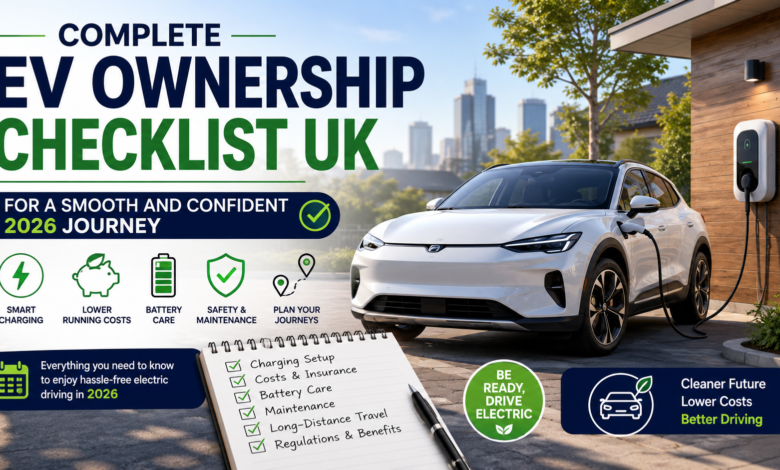
Buying your first electric vehicle is an exciting step toward cleaner, more efficient transport. However, becoming an EV owner involves much more than collecting the keys and driving away. Understanding charging options, running costs, maintenance, insurance, and government regulations can help you enjoy a hassle-free ownership experience. This comprehensive EV ownership checklist UK is designed specifically for new drivers in 2026, helping you prepare for every stage of electric vehicle ownership. Whether you’ve purchased a compact city EV or a family SUV, following this guide will help you make informed decisions, avoid common mistakes, and maximise the benefits of owning an electric vehicle in the UK.
Choose the Right Charging Solution for Your Lifestyle
One of the first priorities in any EV ownership checklist UK is deciding how you will charge your vehicle. Unlike petrol or diesel cars, electric vehicles require planning around charging habits, making this one of the most important decisions for new owners.
If you have off-street parking, installing a home charger is often the most convenient solution. A dedicated wall charger offers faster charging speeds than a standard household socket while improving safety and efficiency. Many drivers find that overnight charging provides enough battery capacity for daily commuting, allowing them to begin each morning with a fully charged vehicle.
Drivers who live in flats or properties without private parking should explore nearby public charging facilities before purchasing an EV. Rapid chargers at supermarkets, retail parks, motorway service stations, and dedicated charging hubs continue to expand across the UK, making public charging increasingly accessible in 2026.
Understanding the different charger types is equally important. Slow chargers are suitable for overnight use, fast chargers work well at workplaces and shopping centres, while rapid and ultra-rapid chargers significantly reduce waiting times during longer journeys.
Another essential part of the EV ownership checklist UK is downloading reliable charging apps before your first trip. These apps help locate available charging stations, compare charging speeds, monitor charging progress, and simplify payments. Becoming familiar with these tools saves time and reduces range anxiety.
Charging costs also vary depending on where and when you charge. Home electricity tariffs are generally more economical than public rapid charging. Some energy suppliers even offer EV-specific tariffs with lower overnight electricity rates, helping owners reduce long-term running expenses.
Understand Running Costs, Insurance, and Essential Ownership Expenses
One of the biggest advantages highlighted in every EV ownership checklist UK is the potential for lower running costs compared with traditional petrol or diesel vehicles. Nevertheless, understanding all ownership expenses helps create realistic expectations.
Electric vehicles contain fewer moving parts, meaning they usually require less routine maintenance. There are no oil changes, fewer fluid replacements, and reduced engine-related servicing requirements. Brake wear is also lower because regenerative braking assists with slowing the vehicle while recovering energy for the battery.
Despite these savings, EV owners should still budget for tyre replacements, cabin air filters, brake inspections, suspension maintenance, and regular vehicle safety checks. Since electric vehicles are often heavier than conventional cars due to battery packs, tyres may wear differently depending on driving style and road conditions.
Insurance deserves careful consideration as part of your EV ownership checklist UK. Premiums can differ from those for petrol vehicles because insurers consider battery replacement costs, repair expertise, vehicle value, and specialist parts availability. Comparing multiple insurance providers helps secure competitive cover without sacrificing important benefits.
Many insurers now offer policies specifically designed for electric vehicles. These may include charging cable protection, wall charger cover, battery protection, and roadside assistance for battery depletion. Understanding exactly what your policy includes prevents unexpected surprises if you need to make a claim.
Road tax regulations continue to evolve, making it essential for new owners to stay informed about current UK vehicle taxation rules. Checking annual tax obligations before purchasing ensures there are no unexpected ownership costs after registration.
Electricity prices can also influence your monthly budget. Monitoring household energy consumption, charging during off-peak hours, and maintaining efficient driving habits contribute to lower operating costs over time.
Finally, keep all essential ownership documents organised. Vehicle registration, insurance certificates, servicing records, charger installation paperwork, and warranty information should be stored safely for future reference. Maintaining accurate records not only supports warranty claims but can also improve resale value if you decide to sell your electric vehicle later.
By carefully planning charging arrangements, understanding ownership costs, and preparing financially, new EV drivers can enjoy a smoother transition into electric motoring while gaining the full benefits of sustainable transportation in 2026.
Learn Battery Care and Smart Driving Habits
Battery health is one of the most valuable aspects of any electric vehicle, making it an essential part of the EV ownership checklist UK. Although modern EV batteries are built to last for many years, good charging habits can help maintain their performance and efficiency.
For everyday driving, it is generally recommended to keep the battery charge between 20% and 80% unless you are preparing for a long journey. Frequently charging to 100% or allowing the battery to become completely empty may increase long-term battery wear. Most manufacturers include battery management systems that protect the battery, but sensible charging habits still make a difference.
Weather also affects battery performance. Cold temperatures can temporarily reduce driving range, while extremely hot weather may increase battery cooling demands. Pre-conditioning your vehicle before driving allows the battery and cabin to reach an efficient operating temperature while the vehicle is still plugged in.
Driving style has a significant impact on range. Smooth acceleration, maintaining consistent speeds, and making full use of regenerative braking improve energy efficiency. Planning journeys in advance also helps reduce unnecessary charging stops and improves overall convenience.
Another important step in the EV ownership checklist UK is keeping your vehicle software updated. Manufacturers regularly release software updates that improve battery management, charging efficiency, navigation, and safety features. Installing these updates ensures your EV continues to perform at its best.
Prepare for Long-Distance Travel and Emergencies
Owning an electric vehicle does not mean you have to avoid long journeys. However, proper preparation is an important part of the EV ownership checklist UK.
Before travelling, identify charging locations along your route and allow extra time for charging breaks. Most modern navigation systems automatically recommend charging stops based on battery level and driving conditions, making trip planning much easier.
Always carry your charging cables, especially if you regularly use public charging stations that require your own connector. Keeping a portable charging cable in the boot provides extra flexibility when different charging options are available.
Emergency preparation is equally important. Ensure your breakdown provider offers support specifically for electric vehicles. Some recovery companies now transport EVs to the nearest compatible charging station if the battery becomes depleted.
Keeping tyre pressures at the manufacturer’s recommended level also improves driving range and safety. Regularly checking tyre condition, lights, windscreen washer fluid, and emergency equipment should become part of your normal driving routine.
Including emergency planning in your EV ownership checklist UK gives you greater confidence, whether travelling locally or across the country.
Stay Updated with UK EV Regulations and Ownership Responsibilities
Electric vehicle technology and UK regulations continue to evolve, making it important for owners to stay informed. One of the key points in the EV ownership checklist UK is understanding changes that may affect ownership costs, charging infrastructure, taxation, and environmental policies.
Government incentives, workplace charging schemes, parking benefits, and local authority regulations may change over time. Staying informed allows you to take advantage of available benefits while ensuring you remain compliant with current requirements.
Routine servicing should always follow the manufacturer’s recommended schedule. Although electric vehicles require less maintenance than petrol or diesel cars, professional inspections remain important for checking battery systems, suspension, braking components, and electrical safety.
If your vehicle includes advanced driver assistance systems, regularly calibrating and maintaining these features helps ensure they continue operating safely and accurately.
Completing your EV ownership checklist UK also means reviewing your warranty coverage. Understand what is included for the battery, drivetrain, charging equipment, and vehicle electronics so you know your rights if repairs become necessary.
Conclusion
Owning an electric vehicle in 2026 offers lower running costs, quieter driving, reduced emissions, and an increasingly convenient charging network throughout the country. Following a complete EV ownership checklist UK helps new owners prepare for every aspect of electric driving, from choosing the right charging solution to maintaining battery health, understanding insurance, planning longer journeys, and staying informed about changing regulations.
By following this EV ownership checklist UK, you can avoid common mistakes, protect your investment, and enjoy a more confident ownership experience. As electric vehicles become an even more important part of the UK’s transport future, taking the time to prepare today will make every journey smoother, safer, and more enjoyable.
More EV Car Guides: Read more electric vehicle news, buying guides, reviews, and ownership tips on magazinerock.co.uk.
FAQs
Why is an EV ownership checklist UK important for new drivers?
A comprehensive EV ownership checklist UK helps new owners understand charging, maintenance, insurance, battery care, and legal responsibilities before they begin driving. It reduces common mistakes and improves the overall ownership experience.
Can I charge my electric vehicle at home?
Yes. Most EV owners prefer home charging because it is convenient and often more affordable than public charging. Installing a dedicated home charger usually provides faster and safer charging than using a standard household socket.
Are electric vehicles cheaper to maintain than petrol cars?
In many cases, yes. Electric vehicles have fewer moving parts, require no engine oil changes, and generally experience less brake wear due to regenerative braking. However, regular servicing and tyre maintenance remain essential.
How can I maximise my EV battery life?
Maintaining moderate charge levels, avoiding frequent deep discharges, driving smoothly, limiting unnecessary rapid charging, and keeping vehicle software updated all contribute to better long-term battery health.
What should I check before taking a long EV journey?
Plan your charging stops in advance, ensure your charging cables are packed, check tyre pressures, confirm your battery level, review weather conditions, and make sure your breakdown cover includes electric vehicle assistance. Following the EV ownership checklist UK before travelling helps make long-distance journeys more reliable and stress-free.

2 Comments