7 Powerful Reasons Why Electric Van vs Diesel Van Cost Comparison Matters
electric van vs diesel van

Introduction
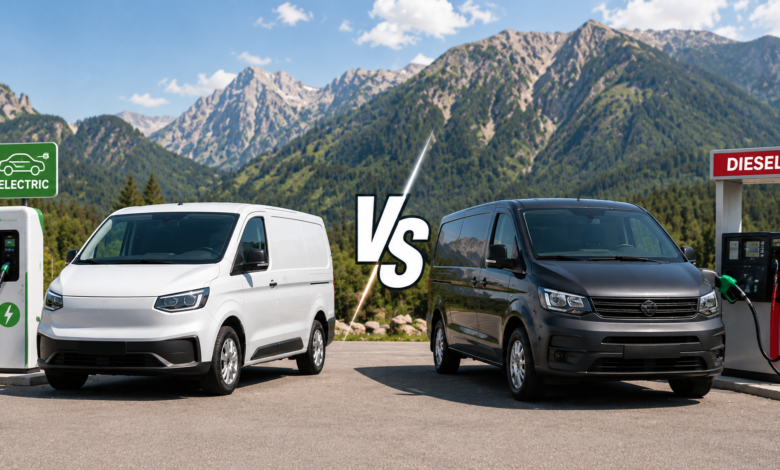
Choosing between an electric van and a diesel van has become one of the most important decisions for businesses and individual drivers. The electric van vs diesel van debate is no longer limited to environmental concerns. Today, buyers are equally interested in total ownership costs, fuel expenses, maintenance, reliability, resale value, and long-term savings. While diesel vans have been the traditional choice for decades, electric vans are rapidly gaining popularity thanks to lower running costs and government incentives in many regions. Understanding the true electric van vs diesel van cost comparison helps you make an informed investment that suits your driving needs, business goals, and future operating expenses.
Purchase Price: Which Van Costs More Initially?
The first factor most buyers consider is the purchase price. In the electric van vs diesel van comparison, electric vans generally have a higher upfront cost. This is mainly due to the expensive battery technology used in electric vehicles. Even though battery prices have fallen significantly over the past few years, electric vans still cost more than similar diesel models.
A diesel van usually offers a lower initial investment, making it attractive for buyers working within a limited budget. Small businesses, delivery companies, and independent contractors often choose diesel vans because the purchase price is easier to manage.
However, focusing only on the purchase price can be misleading. A lower upfront cost does not always result in lower ownership costs over several years. Many fleet managers now evaluate the total cost of ownership rather than simply comparing sticker prices. This broader perspective often changes the outcome of the electric van vs diesel van decision.
Government grants, tax credits, and incentives can also reduce the effective purchase price of electric vans in many countries. These financial benefits narrow the price gap and make electric vehicles more affordable than they first appear.
Running Costs: Electricity vs Diesel Fuel
One of the biggest differences in the electric van vs diesel van comparison is the daily operating cost. Fuel represents one of the largest ongoing expenses for commercial vehicle owners, especially businesses covering thousands of miles every month.
Electric vans are generally much cheaper to operate because electricity costs less than diesel fuel. Charging overnight at business premises or at home can significantly reduce energy expenses. Companies that install their own charging infrastructure may achieve even greater savings over time.
Diesel vans remain practical for long-distance driving because refueling is fast and fuel stations are widely available. However, diesel prices fluctuate frequently and can increase operating expenses unexpectedly. Businesses that rely heavily on diesel fuel often experience higher monthly costs compared to operators using electric fleets.
The actual savings depend on several factors, including electricity rates, diesel prices, annual mileage, driving habits, and charging methods. Nevertheless, many fleet operators report substantial reductions in operating expenses after switching to electric vans.
The electric van vs diesel van comparison clearly shows that higher annual mileage usually increases the financial advantage of electric vehicles because lower energy costs accumulate year after year.
Real-World Operating Example
Consider two delivery companies covering approximately 20,000 miles annually. The diesel fleet spends considerably more on fuel each month, while the electric fleet benefits from lower charging costs. Although the electric vans required a larger initial investment, their reduced operating expenses gradually offset that difference over several years.
This illustrates why businesses increasingly analyze lifetime ownership costs instead of focusing solely on purchase prices.
Maintenance Costs and Vehicle Reliability
Maintenance is another major factor when evaluating the electric van vs diesel van cost comparison. Electric vans contain fewer moving mechanical parts than diesel vehicles, resulting in simpler maintenance requirements.
A diesel engine requires regular oil changes, fuel filters, air filters, exhaust system servicing, timing components, and various engine-related repairs throughout its lifespan. These routine maintenance tasks contribute significantly to long-term ownership costs.
Electric vans eliminate many of these maintenance requirements because they do not use engine oil, traditional transmissions, or complex exhaust systems. As a result, owners typically spend less on scheduled servicing.
Brake systems on electric vans also tend to last longer because regenerative braking reduces wear on brake pads and discs. This technology converts braking energy into electricity while slowing the vehicle, improving efficiency and reducing maintenance expenses.
Reliability has improved significantly for both vehicle types in recent years. Modern electric vans are engineered for commercial use and undergo extensive testing before entering the market. Battery manufacturers also provide lengthy warranties, offering buyers additional confidence.
That said, battery replacement remains one of the biggest concerns in the electric van vs diesel van discussion. Although battery technology continues to improve, replacing a battery outside the warranty period can be expensive. Fortunately, most commercial operators sell or replace their vehicles before battery degradation becomes a major financial issue.
For businesses that prioritize predictable maintenance budgets, electric vans often provide greater cost certainty throughout their ownership period. As manufacturers continue improving battery durability and charging technology, maintenance savings are expected to become even more attractive in the coming years.
Insurance costs are another important consideration when comparing commercial vehicles. In the electric van vs diesel van debate, insurance premiums vary depending on the vehicle model, driver history, business use, and local insurance market. Some electric vans may cost slightly more to insure because replacement parts and battery repairs can be expensive. However, as electric vehicles become more common and repair networks expand, insurance costs are becoming increasingly competitive.
Depreciation is another factor that directly affects the total cost of ownership. Diesel vans have traditionally held their value well because of strong demand in the used vehicle market. However, tightening emissions regulations and the introduction of low-emission zones in many cities are changing buyer preferences.
Electric vans are experiencing stronger demand in both new and used markets. Businesses looking to reduce operating costs and meet sustainability goals are creating a growing market for quality pre-owned electric vans. While resale values still depend on battery condition, mileage, and maintenance history, modern electric vans are showing improved value retention compared with earlier models.
When evaluating the electric van vs diesel van comparison, buyers should consider depreciation alongside purchase price rather than viewing them separately. A vehicle with a higher purchase price but better resale value may ultimately cost less over its lifetime.
Long-Term Cost Comparison and Which Van Offers Better Value?
The most accurate way to compare ownership costs is by looking at the total cost of ownership over several years. This includes purchase price, fuel or electricity, maintenance, insurance, taxes, depreciation, and expected resale value.
For businesses that drive high annual mileage, the electric van vs diesel van comparison often favors electric vehicles. Lower charging costs and reduced maintenance expenses can generate significant savings that gradually offset the higher purchase price. Fleet operators making hundreds of deliveries each week frequently recover the additional investment within a few years.
Diesel vans continue to offer advantages for drivers who regularly travel long distances in areas with limited charging infrastructure. Fast refueling and widespread fuel availability remain important benefits for certain industries, particularly those operating in remote regions.
Another important consideration is future regulation. Many governments are encouraging the transition to zero-emission vehicles through financial incentives, tax benefits, and stricter emissions standards. Businesses investing in electric vans today may be better prepared for future policy changes while also improving their environmental reputation.
From an expert perspective, the ideal choice depends on your operating requirements. Urban delivery services, local tradespeople, municipal fleets, and businesses with predictable daily routes often benefit the most from electric vans. Conversely, companies covering extensive rural routes without reliable charging access may still find diesel vans to be the more practical solution.
Ultimately, the electric van vs diesel van decision should be based on your expected annual mileage, charging availability, ownership period, and overall business strategy rather than the purchase price alone.
Conclusion
The electric van vs diesel van cost comparison demonstrates that there is no universal answer for every buyer. Diesel vans generally require a lower upfront investment and continue to perform well for long-distance driving where rapid refueling is essential. However, electric vans deliver lower energy costs, reduced maintenance requirements, quieter operation, and lower emissions, making them increasingly attractive for businesses and individual owners alike.
When calculating total ownership costs over several years, the electric van vs diesel van comparison often favors electric vehicles, especially for drivers covering high annual mileage with reliable access to charging facilities. Carefully evaluating purchase price, running costs, servicing expenses, depreciation, and resale value will help you choose the option that offers the best long-term financial return. By understanding every aspect of the electric van vs diesel van comparison, you can invest with confidence and select the van that best supports your operational and financial goals.
FAQs
Is an electric van cheaper to run than a diesel van?
Yes. In most situations, an electric van costs less to operate because electricity is generally cheaper than diesel fuel. Electric vans also require less routine maintenance since they have fewer moving parts, no engine oil, and fewer components that wear out over time. Businesses with high annual mileage often experience the greatest savings.
How long does it take for an electric van to recover its higher purchase price?
The payback period depends on annual mileage, electricity prices, diesel costs, maintenance expenses, and available government incentives. Many commercial fleet operators recover the additional purchase cost within three to six years through lower running and servicing expenses.
Are diesel vans still a good choice for commercial businesses?
Yes. Diesel vans remain an excellent option for businesses that regularly travel long distances, operate in remote areas, or require fast refueling throughout the day. They continue to offer dependable performance where charging infrastructure is limited.
Do electric van batteries require frequent replacement?
No. Modern electric van batteries are designed to last for many years and usually come with long manufacturer warranties. Battery degradation occurs gradually, and many commercial operators replace or sell their vehicles before battery performance becomes a significant concern.
Which option offers better long-term value: an electric van or a diesel van?
The answer depends on how the vehicle will be used. For urban deliveries, local businesses, and companies with predictable routes, the electric van vs diesel van comparison usually favors electric vans because of lower operating and maintenance costs. For long-distance operations with limited charging access, diesel vans may still provide better overall practicality.