Leapmotor 800V Fast Charging: Supported Models, Charging Speed & Benefits
Leapmotor 800V Fast Charging

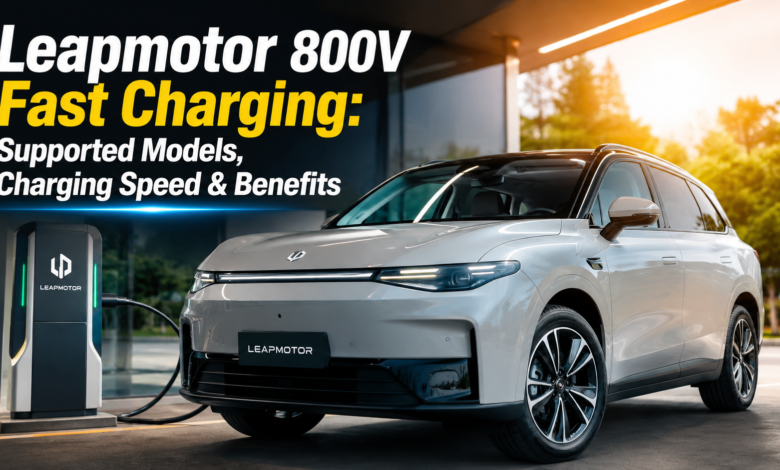
Leapmotor 800V Fast Charging is becoming an important part of the brand’s newer electric vehicles as drivers increasingly expect shorter charging stops and better long-distance usability. An 800-volt electrical architecture can allow an EV to accept high charging power while keeping electrical current comparatively lower than an equivalent 400V system. However, the “800V” label alone does not determine charging speed. Battery chemistry, charger output, temperature, software, state of charge, and the vehicle’s maximum DC input all influence real-world performance.
For drivers considering a Leapmotor EV, understanding Leapmotor 800V Fast Charging is therefore about more than looking at a charging-time figure. It means understanding which models actually use the architecture, how quickly they can charge, what equipment is required, and when the technology provides a meaningful advantage.
What Is Leapmotor 800V Fast Charging?
An 800V EV architecture is designed to operate at a much higher battery-system voltage than traditional 400V platforms. Because electrical power is broadly related to voltage multiplied by current, increasing voltage can allow substantial power to be transferred without requiring an equally large increase in current. This can help manage electrical losses and heat while supporting high-power DC charging.
Leapmotor 800V Fast Charging is therefore part of a wider electrical and battery system. It can involve high-voltage components, battery-management software, thermal management, power electronics, and a battery capable of accepting substantial DC power.
The practical advantage is simple: a compatible vehicle can potentially add a useful amount of range during a relatively short charging stop. This is especially valuable on motorways and long road trips where drivers do not want to spend 30, 40, or 50 minutes waiting at a charging station.
It is also important to distinguish AC charging from DC fast charging. An 800V vehicle can still use normal AC charging at home or at public AC stations. The major advantage of Leapmotor 800V Fast Charging becomes visible when the vehicle is connected to a suitable high-power DC charger.
Which Leapmotor Models Support 800V Charging?
Model availability depends on the market, production year, battery configuration, and drivetrain. This is particularly important with Leapmotor because similar model names can have different technical specifications in different regions.
The newer C10 AWD is one of the clearest examples of Leapmotor 800V Fast Charging. Leapmotor states that the C10 AWD uses an 800V architecture and can charge from 30% to 80% in approximately 22 minutes under suitable conditions.
The updated C11 BEV is another important model. Its newer electric version moved to an 800V high-voltage platform and is designed to replenish the battery from 30% to 80% in around 18 minutes. This represents a major change from the previous-generation C11 electrical architecture.
The C16 BEV has also adopted an 800V platform. Newer versions can support very high DC charging power, with some specifications reporting peak charging capability of around 250kW and a 30% to 80% charging time of approximately 16 minutes.
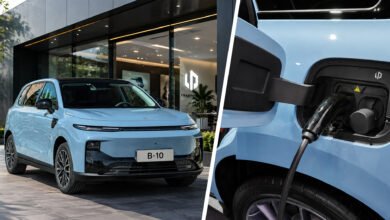
The B10 needs more careful consideration. The Chinese-market B10 is associated with an 800V platform and fast charging, but the European B10 specification uses a 400V-class battery system with a maximum DC charging power of 168kW and a claimed 30% to 80% charging time of 20 minutes.
This distinction is essential. A vehicle can offer very fast DC charging without technically using an 800V architecture. Buyers should therefore check the exact specification of the model being sold in their country rather than relying only on the model name.
How Fast Is Leapmotor 800V Charging?
Charging speed is normally expressed in kilowatts, while voltage describes the electrical architecture. Therefore, an 800V system does not automatically mean that every charging session will reach 200kW, 250kW, or another high figure.
For example, the C10 AWD can charge from 30% to 80% in around 22 minutes, while the updated C11 BEV is designed around an approximately 18-minute 30% to 80% charging window. The newer C16 BEV can offer even higher peak charging capability in certain configurations.
These figures should be viewed as manufacturer or test-condition targets rather than guaranteed times for every charging session. EV charging follows a charging curve, meaning the vehicle does not necessarily receive its maximum power continuously.
A battery may accept high power when its state of charge is relatively low or moderate. As the battery approaches a higher state of charge, the vehicle generally reduces charging power to control temperature, voltage, and battery stress. This is why charging from 20% or 30% to 80% can be much more time-efficient than waiting for 100%.
For practical driving, the more useful question is often how much range can be added during a short stop. A high-power charging system can make a 15- or 20-minute break much more useful, particularly when the driver only needs enough energy for the next section of a journey.
Key Benefits of 800V Charging Technology
The most obvious benefit of Leapmotor 800V Fast Charging is reduced charging time. When a vehicle can accept substantial DC power, drivers can spend less time waiting at charging stations. This can make electric vehicles more convenient for highway travel and frequent long-distance journeys.
Another potential advantage is improved electrical efficiency. For a given power level, a higher voltage allows lower current. Lower current can reduce resistive losses in electrical cables and components. However, the overall efficiency of an EV still depends on the complete electrical system rather than voltage alone.
High-voltage platforms can also work effectively with advanced power electronics. Modern EVs increasingly use technologies such as silicon-carbide components because they can offer efficient operation at high switching frequencies and temperatures. Combined with effective battery thermal management, these systems can help maintain charging and driving performance.
There is also a major convenience benefit. Faster charging can change how an EV owner plans a journey. Instead of scheduling a long charging break, the driver can combine charging with a coffee, meal, shopping trip, or short rest.
For example, a driver travelling several hundred kilometres may not need to charge to 100% during a highway stop. Adding enough energy to reach the next charging location can be faster and more practical. This makes Leapmotor 800V Fast Charging particularly relevant to road-trip planning.
Charging Requirements and Real-World Limitations
The availability of an 800V vehicle does not mean every public charging station can deliver its maximum charging speed. The charger must provide an appropriate voltage and power level, while the vehicle must be able to communicate with and accept that output.
Charging infrastructure is therefore just as important as the vehicle itself. A high-performance EV connected to a lower-power DC charger will naturally charge more slowly. Public chargers can also experience power sharing, hardware limitations, network congestion, or temporary technical problems.
Battery temperature is another important factor. A cold battery may restrict charging power until it reaches a suitable operating temperature. A very hot battery can also cause the vehicle to reduce power. Battery-management software continuously balances charging speed with temperature, cell voltage, and long-term battery protection.
The starting state of charge matters too. Peak charging power is generally available only during part of the charging curve. As the battery gets closer to full, power normally decreases.
Drivers should therefore distinguish between peak charging power and the average power delivered during a complete session. A vehicle briefly reaching 250kW does not mean it charged at 250kW from 30% to 80%. The actual average can be significantly lower.
For home use, an 800V architecture does not replace AC charging. Overnight AC charging remains practical for everyday use, while DC fast charging is most useful for road trips, urgent top-ups, and situations where charging time matters.
Is Leapmotor 800V Fast Charging Worth It?
For drivers who frequently travel long distances, Leapmotor 800V Fast Charging can provide a meaningful advantage. Shorter charging stops can make route planning easier and reduce one of the biggest inconveniences associated with battery-electric vehicles.
However, buyers should not select an EV solely because it has an 800V label. A well-engineered 400V EV with a strong charging curve, efficient battery, good thermal management, and convenient access to reliable chargers can still be more useful than an 800V vehicle that rarely has access to compatible high-power infrastructure.
The best buying decision should consider battery capacity, real-world range, DC charging power, charging curve, connector compatibility, warranty coverage, local service support, and the availability of high-power charging stations.
The newer C10 AWD, C11 BEV, and C16 BEV demonstrate how Leapmotor is expanding high-voltage charging technology. At the same time, the different B10 specifications show why buyers should verify the exact market version before assuming that a vehicle has 800V hardware.
Conclusion
Leapmotor 800V Fast Charging represents an important development in the company’s EV technology strategy. By combining a high-voltage electrical architecture with battery-management software, thermal control, advanced power electronics, and compatible DC charging infrastructure, selected Leapmotor models can deliver significantly shorter charging stops.
The C10 AWD, updated C11 BEV, and C16 BEV are notable examples of Leapmotor’s move toward 800V technology, while the B10 demonstrates why model-year and regional specifications matter. The headline charging time is only one part of the overall picture.
Ultimately, Leapmotor 800V Fast Charging is most valuable when the vehicle, battery, charger, and charging network work together effectively. For drivers who regularly use motorways and have access to powerful DC charging stations, the technology can make EV ownership more convenient and reduce the time spent waiting for a useful battery top-up.
More EV Car Guides: Read more electric vehicle news, buying guides, reviews, and ownership tips on magazinerock.co.uk.
(FAQs)
What is Leapmotor 800V Fast Charging?
Leapmotor 800V Fast Charging refers to high-voltage charging technology used in selected newer Leapmotor electric vehicles. It allows compatible models to accept high DC charging power and potentially replenish useful battery energy much faster than conventional charging systems.
Which Leapmotor models have 800V charging?
Relevant newer models include the C10 AWD, updated C11 BEV, and C16 BEV. The B10 requires market-specific checking because its Chinese and European specifications use different charging architectures. Always confirm the exact battery and charging specification of the vehicle available in your region.
How long does an 800V Leapmotor take to charge?
Charging times vary by model and conditions. Some newer Leapmotor models can charge from 30% to 80% in approximately 16 to 22 minutes under suitable conditions. Actual times can be longer because of battery temperature, charger power, starting state of charge, and charging-curve tapering.
Can an 800V Leapmotor charge at home?
Yes. The 800V architecture mainly relates to the vehicle’s high-voltage DC charging system. Home charging normally uses AC through the onboard charger. Therefore, an 800V Leapmotor can still use a suitable home wallbox or standard AC charging equipment.
Does 800V fast charging damage the battery?
Not necessarily. Modern battery-management and thermal-management systems are designed to control charging temperature and electrical stress. However, repeated high-power DC charging is generally more demanding than slower AC charging. When convenient, overnight AC charging can be a practical choice for everyday use, while fast DC charging is especially useful for longer journeys.

One Comment