Leapmotor T03 Charging: How Long Does the Cheapest EV Take to Charge?
Leapmotor T03 Charging

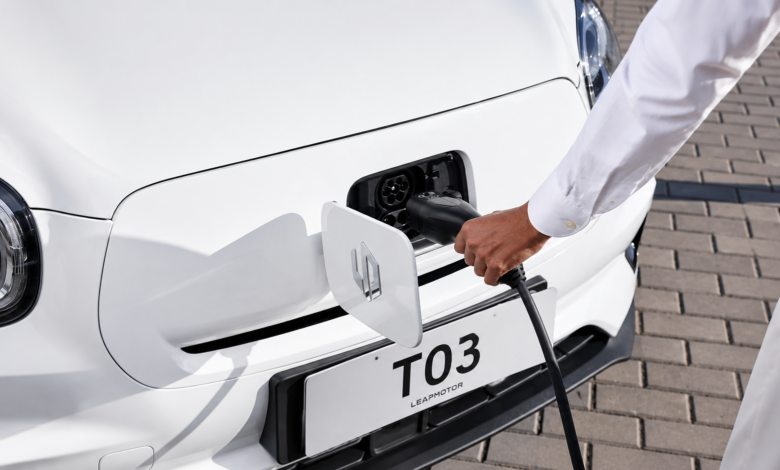
For buyers considering an affordable electric city car, leapmotor t03 charging is one of the most important ownership questions. The T03 uses a 37.3 kWh battery, a 6.6 kW onboard AC charger and DC fast-charging capability of up to 48 kW. That gives it convenient home charging and a useful rapid-charging option. In the UK, the T03 has recently attracted attention as a low-cost EV, with pricing advertised from £12,995 under a Leapmotor incentive. It offers up to 165 miles of WLTP range.
How Long Does the Leapmotor T03 Take to Charge?
The headline figures are simple. With a suitable home wallbox, the T03 can charge from about 30% to 80% in around 3.5 hours. A compatible DC rapid charger can complete the same 30% to 80% session in approximately 36 minutes. A full 0% to 100% AC charge takes roughly six hours normally.
Charging does not happen at one constant speed. It generally slows as the battery approaches a high state of charge, so owners do not need to wait for 100% every time.
What Charging Equipment Does the T03 Use?
Understanding leapmotor t03 charging starts with the two connector types and their different speeds. The UK-specification T03 supports Type 2 AC charging and CCS2 DC charging. Its 6.6 kW onboard charger is designed for home wallboxes and public AC points, while DC charging can reach a maximum rated power of 48 kW.
With AC, the car’s onboard charger converts electricity for the battery. With DC rapid charging, the charging station handles that conversion, allowing energy to reach the battery faster.
For town drivers, leapmotor t03 charging will mainly mean home AC charging. A wallbox can replenish the battery while the vehicle is parked overnight.
Is Home Charging Fast Enough for Everyday Driving?
For most owners, leapmotor t03 charging will happen at home rather than at a rapid public station. The T03’s 6.6 kW AC rate is not especially high by modern EV standards, but its relatively small battery makes the limitation less significant. A full charge taking around six hours means an overnight session is generally sufficient for a typical commuter.
For example, a driver arriving home with 30% battery remaining can reach 80% in roughly 3.5 hours under suitable conditions. If the car is plugged in for eight to ten hours overnight, there is usually plenty of time to restore a substantial amount of range.
This is where the T03’s design makes sense. It is primarily a compact urban EV rather than a motorway-focused long-distance car. If daily mileage is modest, owners may not need to charge every night.
How Fast Is DC Rapid Charging?
The main advantage of leapmotor t03 charging on a longer trip is the ability to make a relatively quick DC top-up. Leapmotor quotes around 36 minutes for a 30% to 80% recharge using a suitable rapid charger, with maximum DC input rated at 48 kW.
A stop of this length can add useful range during a coffee break. However, 48 kW is a peak figure; actual power depends on the charger, battery temperature, state of charge and charging curve.
Maximum power is not a constant rate. Charging is normally more effective when the battery is relatively low, while power can taper as the battery fills. For this reason, a driver travelling long distance may save time by stopping for a useful top-up rather than waiting for 100%.
What Can Change Real-World Charging Time?
Real-world leapmotor t03 charging times can differ from official estimates. Temperature is one of the biggest factors. Cold batteries can charge more slowly, particularly during rapid charging, while very high temperatures can also cause the battery management system to limit power.
The starting battery percentage matters too. A battery at 20% will behave differently from one at 70%, and charging near full capacity is normally slower. The charging station is another variable. If a public unit can provide only 30 kW, the T03 cannot receive its full 48 kW capability.
Other influences include electrical supply conditions, battery temperature, charging losses and energy used by heating or air conditioning. Official times should therefore be treated as benchmarks rather than guarantees.
Is a Home Wallbox Worth It?
A home wallbox makes leapmotor t03 charging easier because the car can recover energy while parked. For drivers with off-street parking, a home wallbox can make ownership much easier. The main benefit is convenience: the car can be plugged in after work and charged while parked, eliminating unnecessary trips to public chargers.
Home electricity rates and public charging prices vary, so the cheaper option depends on the owner’s tariff and local network. Rapid charging is best reserved for situations where speed matters most.
A domestic socket can work occasionally, but a wallbox is faster and makes better use of the T03’s 6.6 kW AC capability.
Is the T03 Suitable for Long Trips?
For longer journeys, leapmotor t03 charging should be planned around available CCS stations rather than maximum range alone. The T03 can manage longer journeys, but buyers should understand its limitations. A larger EV with a bigger battery and faster charging will generally require fewer or shorter stops on a long motorway trip.
Route planning is important. Drivers should check CCS rapid-charging availability and avoid relying on a single location.
Its strongest role remains affordable urban and suburban driving, with occasional longer journeys. The leapmotor t03 charging system balances vehicle price, battery size and usability.
Practical Tips for Better Charging
Good habits can make leapmotor t03 charging more predictable. For everyday use, AC charging at home is usually the simplest approach. Plug in after normal daily driving and let the car charge while parked rather than making special trips to a public charger.
For longer journeys, use DC rapid charging when time matters and avoid waiting for 100% if you already have enough range. Cold conditions can also reduce charging performance and driving range.
The Bottom Line on Charging Speed
Overall, leapmotor t03 charging is better suited to predictable daily use than ultra-fast long-distance travel. Around six hours for a full AC charge and about 36 minutes for a 30% to 80% DC recharge give owners practical options for overnight use and longer journeys.
It is not the fastest-charging EV available, and frequent motorway travellers may prefer a larger model with a higher-power charging system. For urban and suburban drivers, however, the combination of a 37.3 kWh battery, 6.6 kW AC charging and up to 48 kW DC charging is workable.
The biggest advantage is simplicity: charging can become a routine part of parking. That is where leapmotor t03 charging fits the T03’s affordable EV mission.
Conclusion
The answer is straightforward: the T03 takes around six hours to charge from empty to full using a 6.6 kW AC wallbox, while a suitable DC rapid charger can take it from approximately 30% to 80% in about 36 minutes. Actual times vary with temperature, battery level, charger capability and other conditions.
For most buyers, home charging will be the foundation of ownership, while DC rapid charging provides flexibility for longer journeys.
Ultimately, leapmotor t03 charging is not about achieving the highest charging number. It is about having a charging system that matches a low-cost city EV: affordable, predictable and capable of handling everyday driving without making charging unnecessarily complicated.
More EV Car Guides: Read more electric vehicle news, buying guides, reviews, and ownership tips on magazinerock.co.uk.
(FAQs)
How long does the Leapmotor T03 take to charge at home?
With a 6.6 kW AC wallbox, a full charge takes roughly six hours. From about 30% to 80%, the quoted time is around 3.5 hours. Actual results vary with temperature and battery conditions.
How long does the Leapmotor T03 take to fast charge?
Using a compatible DC rapid charger, the T03 can charge from approximately 30% to 80% in around 36 minutes. Its maximum DC capability is 48 kW, although the actual rate depends on conditions.
Can the Leapmotor T03 use public rapid chargers?
Yes. The UK-specification T03 supports CCS2 DC rapid charging as well as Type 2 AC charging. Owners can use compatible public rapid-charging networks when they need to add range quickly.
Is the Leapmotor T03 good for long-distance driving?
It can handle longer journeys, but it is primarily a compact city EV. Its up-to-165-mile WLTP range and moderate DC speed mean motorway trips require more planning.
What is the best way to charge a Leapmotor T03?
For most owners, regular overnight AC charging is the most convenient approach. DC rapid charging suits longer trips or situations where time matters. A sensible battery buffer can make leapmotor t03 charging more efficient.