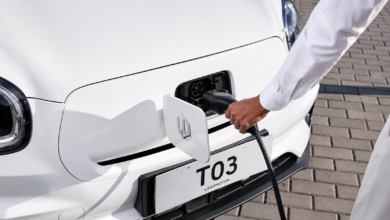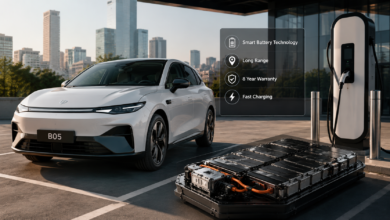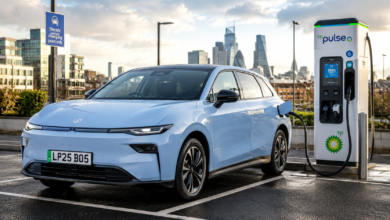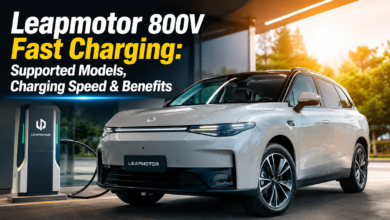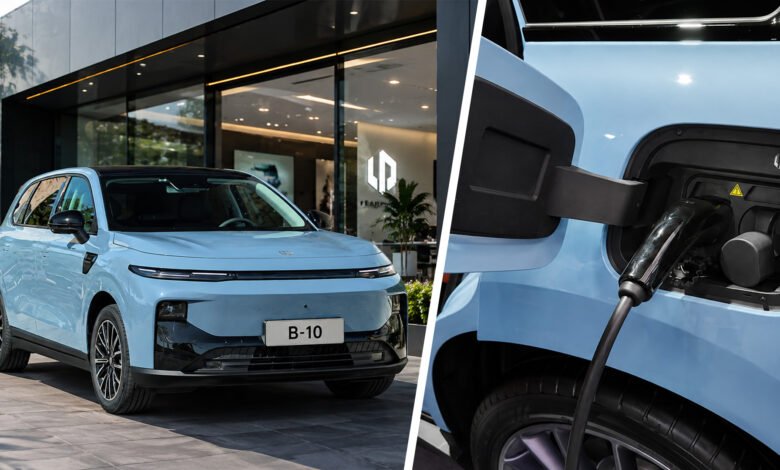
Understanding charging is one of the most important parts of owning an electric SUV. Battery size, charging speed, electricity prices, and everyday driving habits all affect the ownership experience. leapmotor b10 charging is particularly useful to understand because the B10 is available with different battery capacities and supports both AC home charging and high-power DC fast charging.
With the right setup, overnight charging can handle most daily driving, while rapid charging can make longer journeys much easier. This guide explains charging times, costs, home and public charging options, battery-care practices, and practical ways to make charging more convenient.
Leapmotor B10 Battery and Charging Specifications
The B10 is available in international markets with two main battery options: a 56.2 kWh battery and a larger 67.1 kWh battery. Both versions support up to 11 kW AC charging through a suitable wallbox.
The smaller battery can support DC fast charging at up to around 140 kW, while the larger battery can reach up to approximately 168 kW, depending on the market and specification. The manufacturer quotes around 20 minutes for a 30% to 80% DC charge under suitable conditions.
These maximum figures should not be treated as constant charging speeds. Actual performance depends on battery temperature, starting state of charge, charger capability, electricity supply, and the vehicle’s charging curve. This is an important point when planning leapmotor b10 charging for long-distance travel.
The B10 uses an LFP battery, a chemistry widely used in modern electric vehicles. It is designed for durability, while the vehicle’s thermal-management system helps regulate battery temperature during driving and charging.
How Long Does Leapmotor B10 Charging Take?
Charging time depends mainly on the charging source. With an 11 kW AC wallbox, the 56.2 kWh version can take roughly six hours for a full charge under typical conditions. The 67.1 kWh version can take around seven hours. Actual times can vary because charging power is not always maintained at the maximum level.
For most drivers, this is not a significant limitation. If the B10 is parked overnight for eight or more hours, an 11 kW wallbox can replenish a substantial amount of energy without requiring a separate trip to a charging station.
DC fast charging is considerably quicker. The manufacturer’s approximately 20-minute 30% to 80% figure makes the B10 suitable for relatively short charging stops during road trips. However, the exact result can be longer if the battery is cold, the charger is operating below its advertised power, or the vehicle is already at a higher state of charge.
Why Fast Charging Slows Down
Electric vehicles generally do not maintain their maximum charging power throughout an entire session. The B10 can accept high power when conditions are favorable, but charging power normally decreases as the battery approaches a higher state of charge.
This means a short session from a low or moderate battery level can add energy much faster than the final portion of a charge. For road trips, leapmotor b10 charging is therefore often most efficient when the driver charges enough to continue the journey rather than waiting for 100%.
Cold weather can also affect charging speed. Battery preconditioning, where available, can help bring the battery toward a suitable temperature before a rapid-charging stop.
What Does Leapmotor B10 Charging Cost?
The cost depends on battery capacity, electricity price, charging losses, and the type of charger used. The basic calculation is simple:
Charging cost = electricity used in kWh × price per kWh
For example, if a driver adds 50 kWh at an electricity rate of $0.15 per kWh, the basic energy cost is $7.50. The actual amount taken from the electrical supply can be somewhat higher because charging involves energy losses.
At the same hypothetical rate, filling a 56.2 kWh battery would theoretically cost about $8.43, while 67.1 kWh would cost about $10.07. These figures are examples rather than fixed ownership costs because electricity prices differ considerably between countries, utilities, and charging providers.
Public DC charging can cost more than home charging. Some networks charge by the kWh, while others may add connection fees or use different pricing structures. Consequently, leapmotor b10 charging is usually most economical when home charging is available.
Home Charging vs. Public Fast Charging
Home charging is generally the most convenient option for regular B10 use. An 11 kW wallbox allows the vehicle to charge while it is parked, especially overnight. This eliminates the need to visit a public station simply to restore the energy used during normal commuting.
A professionally installed wallbox also provides more predictable charging than relying on a standard household outlet. The exact installation requirements depend on the local electrical system, so owners should use appropriately rated equipment and follow local safety requirements.
Public DC charging has a different purpose. It is most useful when travelling long distances, when the battery needs a quick boost, or when home charging is unavailable. The B10’s higher DC charging capability can significantly reduce the length of a charging stop compared with slower AC alternatives.
For most owners, the best strategy is simple: use AC charging for everyday driving and reserve DC fast charging for situations where speed is genuinely valuable.
How to Reduce Charging Costs
The easiest way to reduce charging expenses is to make home charging the primary charging method whenever possible. Drivers with time-of-use electricity plans may also benefit from scheduling charging during cheaper periods.
Avoiding unnecessary DC fast charging can make a noticeable difference to running costs. Fast charging is convenient, but public charging rates can be higher than residential electricity rates.
Another useful habit is charging according to your actual driving requirements. If you only drive a moderate distance each day, there is no need to completely refill the battery after every trip. Adding the energy required for upcoming journeys can reduce unnecessary charging sessions.
For road trips, it can also be more economical in terms of time to make shorter rapid-charging stops instead of waiting for a complete charge. This approach makes better use of the B10’s charging curve and helps keep travel moving.
Charging the B10 on Long Trips
Long-distance driving requires more planning than everyday commuting. Instead of assuming that every charging stop should take the battery to 100%, drivers can plan stops around their route, available chargers, weather, and expected energy consumption.
A practical journey might involve arriving at a fast charger with a moderate battery level, adding enough energy to reach the next suitable station, and continuing the trip. This can be more efficient than waiting for the final part of a high state-of-charge session.
Charger availability is another consideration. A station advertised as a high-power charger may not always deliver its maximum output. The charger could be shared, temporarily limited, or affected by local electrical demand.
Weather and driving conditions also influence range. Cold temperatures, strong winds, high speeds, heavy loads, and extensive climate-control use can increase energy consumption. Therefore, leapmotor b10 charging plans should always allow a reasonable safety margin rather than relying exclusively on the official range figure.
Charging Best Practices for Battery Health
Modern LFP batteries are engineered for long-term use, but sensible charging habits are still worthwhile. Owners should avoid leaving the vehicle at an extremely low state of charge for extended periods, particularly if the car will remain parked for several days.
Charging to 100% can be useful before a long journey when maximum range is required. However, there is generally little benefit in keeping the battery at a very high state of charge for long periods when the additional range is not needed.
Battery temperature also matters. The B10’s thermal-management system is designed to regulate battery conditions, but very hot or cold environments can influence charging performance.
Following the charging recommendations in the owner’s manual is the best way to handle battery limits, charging settings, and long-term storage. Good charging habits are less about avoiding fast charging completely and more about using the appropriate charging method for each situation.
Common Leapmotor B10 Charging Mistakes
One common mistake is assuming that a 168 kW charger will continuously deliver 168 kW to the B10. That figure represents the vehicle’s maximum charging capability under appropriate conditions, not a guaranteed average.
Another mistake is comparing chargers only by their advertised power. A slower home charger can be more useful and less expensive for everyday ownership than a powerful public charger if the vehicle is parked overnight.
Drivers should also remember that the energy drawn from the electrical supply can be higher than the energy stored in the battery because charging is not perfectly efficient.
Finally, charging to 100% at every public fast-charging stop can waste valuable travel time. The final part of the charging session is generally slower, so stopping earlier can often provide a better balance between range and journey time.
Is Leapmotor B10 Charging Fast Enough for Everyday Use?
For most owners, the answer is yes. The combination of 11 kW AC charging and rapid DC capability gives the B10 flexibility for different types of driving.
The 56.2 kWh version can be well suited to urban and regional driving, particularly when home charging is available. The 67.1 kWh version offers more energy capacity and can be especially attractive to drivers who regularly travel longer distances.
The important factor is not simply the highest charging number. leapmotor b10 charging works best when the charging method matches the situation. Overnight AC charging is convenient for daily use, while DC fast charging is valuable when travelling or when time is limited.
Expert Tips for Better Charging
A reliable home charging setup should be one of the first considerations for anyone planning to use the B10 regularly. Having an 11 kW wallbox can make daily charging almost effortless because the vehicle can replenish energy while parked.
Owners should also learn to monitor charging power rather than focusing only on the advertised peak figure. Watching the battery percentage, estimated range, charging rate, and electricity cost can help determine when it makes sense to unplug.
For longer journeys, it is useful to identify several compatible charging locations rather than relying on a single station. This provides a backup if a charger is busy, unavailable, or operating below its expected power.
In practical terms, leapmotor b10 charging becomes much easier once drivers stop treating every charging session the same. Daily charging, emergency top-ups, and road-trip charging each have different priorities.
Conclusion
leapmotor b10 charging offers a useful combination of convenience and speed. The B10’s 56.2 kWh and 67.1 kWh battery options support up to 11 kW AC charging, while DC fast charging can reach around 140 kW or 168 kW depending on the battery version and market. A manufacturer-rated 30% to 80% DC session can take about 20 minutes under suitable conditions.
For everyday ownership, home AC charging is usually the most convenient and cost-effective solution. Public DC charging is better suited to road trips and situations where reducing charging time is more important than minimizing the electricity price.
Understanding electricity rates, charging losses, battery temperature, charging curves, and real-world driving conditions can make ownership much easier. With sensible habits, leapmotor b10 charging can be predictable, practical, and economical for both daily commuting and longer journeys.
More EV Car Guides: Read more electric vehicle news, buying guides, reviews, and ownership tips on magazinerock.co.uk.
(FAQs)
How fast can the Leapmotor B10 charge?
leapmotor b10 charging can reach up to around 140 kW DC with the 56.2 kWh battery and approximately 168 kW with the 67.1 kWh version, depending on the market specification. The manufacturer states that a 30% to 80% DC charge can take about 20 minutes under suitable conditions.
How long does it take to charge a B10 at home?
With an 11 kW AC wallbox, a full charge can take roughly six hours for the 56.2 kWh battery and around seven hours for the 67.1 kWh battery. Actual time varies depending on the starting battery percentage, temperature, charging conditions, and power available from the electrical system.
Is home charging cheaper than fast charging?
In many situations, yes. Home electricity is often less expensive than public DC charging, although prices vary by location and provider. leapmotor b10 charging costs can also be reduced by using off-peak electricity if the local utility offers time-based rates.
Can I charge the B10 to 100% every day?
You can charge the B10 to 100% when maximum range is needed, such as before a long trip. However, keeping the battery at a very high state of charge for extended periods is generally unnecessary when the additional range is not required. For everyday driving, a moderate charging routine can be more practical.
Why does fast charging become slower near a high battery percentage?
leapmotor b10 charging slows as the battery approaches a high state of charge because the vehicle reduces charging power to manage battery temperature, voltage, and battery protection. This is normal EV behavior. For road trips, charging during the lower-to-middle portion of the battery can often provide a better combination of charging speed and travel time.