15 Critical EV battery overheating symptoms You Should Never Ignore
EV battery overheating symptoms

Introduction
Electric vehicles have become increasingly popular because of their efficiency, lower maintenance costs, and environmentally friendly performance. However, like any advanced technology, EVs require proper care to operate safely and efficiently. One issue that every electric vehicle owner should understand is EV battery overheating symptoms. Recognizing these warning signs early can help prevent costly repairs, improve battery lifespan, and reduce the risk of unexpected breakdowns.
Modern EV batteries include advanced thermal management systems designed to regulate temperature. Despite these protections, extreme weather, fast charging, heavy driving conditions, or battery faults can still cause excessive heat buildup. Understanding EV battery overheating symptoms allows drivers to respond quickly before minor issues become serious safety concerns.
What Is EV Battery Overheating and Why Does It Matter?
An electric vehicle battery operates best within a carefully controlled temperature range. Lithium-ion battery cells generate heat during charging and discharging, but the vehicle’s cooling system normally keeps temperatures under control. When this balance is disrupted, EV battery overheating symptoms may begin to appear.
Battery overheating occurs when internal temperatures rise beyond safe operating limits. This excessive heat can accelerate battery degradation, reduce driving range, affect charging efficiency, and in severe situations increase the risk of thermal runaway. While modern EVs are engineered with multiple safety features, early detection remains the best defense against expensive damage.
Several factors can contribute to overheating, including prolonged fast charging, repeated rapid acceleration, towing heavy loads, driving in extremely hot climates, damaged cooling components, software issues, and aging battery cells. Knowing these potential causes helps drivers understand why monitoring battery health is essential.
Another important consideration is long-term battery performance. Continuous exposure to high temperatures gradually reduces battery capacity. Even if the vehicle appears to function normally, unnoticed overheating may shorten the battery’s usable lifespan and increase future replacement costs.
Common EV battery overheating symptoms Every Driver Should Know
Recognizing warning signs early gives you the best chance to avoid major battery damage. While different manufacturers use different monitoring systems, many overheating indicators are similar across electric vehicles.
One of the earliest EV battery overheating symptoms is a dashboard warning light or battery temperature alert. Most modern EVs continuously monitor battery conditions and immediately notify the driver if temperatures exceed recommended limits. These warnings should never be ignored, even if the vehicle continues driving normally.
A noticeable reduction in driving performance is another common indicator. The vehicle may automatically limit acceleration or reduce available power to protect the battery from additional heat. This protective feature, often called power limiting or limp mode, is designed to prevent further stress on the battery pack.
Charging behavior may also change significantly. If you notice slower charging speeds than usual, interrupted charging sessions, or repeated charging errors, the battery management system may be reducing charging power because of excessive temperatures. These changes often represent important EV battery overheating symptoms rather than charger malfunctions.
Unexpected drops in driving range can also indicate rising battery temperatures. Heat affects battery efficiency, meaning the vehicle may consume energy faster than normal. If your estimated range suddenly decreases without changes in driving habits, battery temperature should be considered as a possible cause.
Another warning sign is unusually loud cooling fans or cooling pumps operating for extended periods after parking. While cooling systems normally activate during charging or hot weather, constant operation may indicate that the battery is struggling to reduce excessive internal temperatures.
Drivers may also notice unusual odors coming from the battery area. A strong chemical or burning smell should always be treated as a serious warning. Although uncommon, this could signal internal battery damage requiring immediate professional inspection.
Finally, repeated system notifications requesting reduced driving speed or advising the driver to stop the vehicle should never be dismissed. These alerts are specifically designed to prevent additional heat buildup and protect both the battery and vehicle occupants.
Why These Symptoms Should Never Be Ignored
Many drivers assume temporary performance changes are harmless, especially during summer months. However, ignoring repeated EV battery overheating symptoms can accelerate battery wear and lead to permanent capacity loss. Even if the vehicle eventually returns to normal operation, recurring overheating places unnecessary stress on battery cells.
Modern battery management systems work continuously to balance cell temperatures and maintain safe operation. When warning messages appear, they usually indicate that built-in safety systems are already working harder than normal. Responding quickly by reducing speed, avoiding aggressive driving, or allowing the battery to cool naturally can prevent more serious problems later.
Understanding these warning signs empowers EV owners to make informed decisions, protect their investment, and maintain reliable performance for years to come.
What Causes EV battery overheating symptoms?
Understanding the root causes of EV battery overheating symptoms helps drivers reduce unnecessary stress on the battery and maintain long-term performance. While modern electric vehicles are designed with sophisticated battery cooling systems, no system is completely immune to extreme conditions or mechanical failures.
One of the most common causes is frequent DC fast charging. Although rapid charging is convenient, repeated high-power charging sessions generate significant heat inside lithium-ion battery cells. If the battery has little time to cool between charging sessions, temperatures can gradually rise beyond the optimal operating range.
Extreme weather is another major contributor. Driving or charging in very hot climates places additional strain on the battery’s thermal management system. High ambient temperatures reduce the cooling system’s efficiency, increasing the likelihood of EV battery overheating symptoms.
Aggressive driving habits can also create excessive heat. Rapid acceleration, sustained high-speed driving, steep hill climbs, and towing heavy loads require large amounts of battery power, causing the battery to generate more heat than during normal driving conditions.
Mechanical issues may also be responsible. A malfunctioning cooling pump, blocked coolant lines, damaged temperature sensors, or low coolant levels can prevent the battery from maintaining safe temperatures. In such cases, even everyday driving may trigger overheating warnings.
Battery age is another important factor. As lithium-ion batteries naturally degrade over time, their internal resistance increases. Higher resistance produces more heat during charging and discharging, making older battery packs more susceptible to overheating.
How to Prevent EV battery overheating symptoms
Prevention is always more effective and less expensive than repairing battery damage. By following a few practical habits, EV owners can significantly reduce the risk of EV battery overheating symptoms while extending battery life.
Whenever possible, avoid repeated fast charging sessions on the same day. Alternating between standard AC charging and DC fast charging gives the battery more time to cool naturally.
Parking in shaded areas or covered garages during hot weather can also make a noticeable difference. Lower starting temperatures reduce stress on the battery before driving or charging begins.
Manufacturers regularly release software updates that improve battery management and thermal control. Keeping your vehicle’s software up to date ensures the battery management system operates as efficiently as possible.
It is equally important to monitor the cooling system during routine maintenance. Although electric vehicles require less maintenance than traditional gasoline cars, coolant levels, pumps, and temperature sensors should still be inspected according to the manufacturer’s recommendations.
Drivers should also avoid consistently operating the battery at extremely low or extremely high states of charge. Maintaining a moderate charge level for daily driving helps reduce thermal stress and supports long-term battery health.
Finally, pay close attention to recurring EV battery overheating symptoms. A warning that appears once may result from temporary environmental conditions, but repeated alerts indicate that professional inspection is necessary.
What to Do If You Notice EV battery overheating symptoms
If you experience EV battery overheating symptoms, remaining calm and responding appropriately is essential. Most situations can be managed safely if addressed promptly.
Begin by reducing speed and avoiding rapid acceleration. Lower power demand allows the battery to generate less heat while the cooling system works to stabilize temperatures.
If practical, park the vehicle in a safe location away from direct sunlight and allow it to cool. Avoid immediately connecting the vehicle to a charger if overheating warnings are active, as charging may increase battery temperature further.
If the dashboard displays a severe battery warning or instructs you to stop driving, follow those instructions immediately. Continuing to drive despite serious warnings may increase the risk of permanent battery damage.
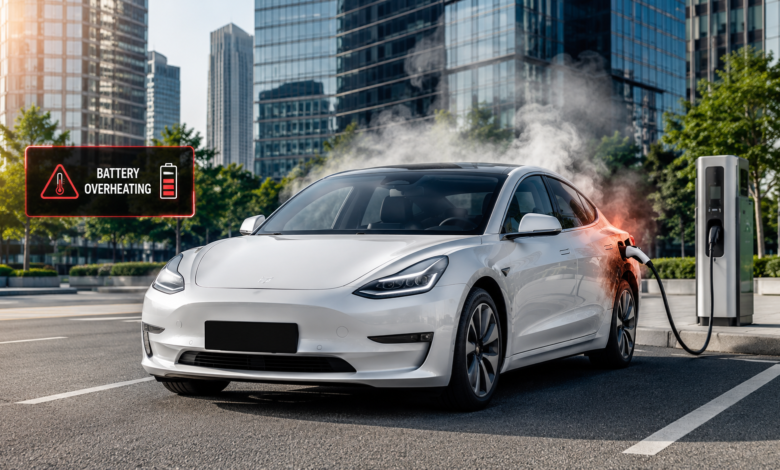
Should you notice smoke, unusual swelling, or a strong chemical odor together with EV battery overheating symptoms, exit the vehicle safely, move away from it, and contact emergency services if necessary. Although these situations are rare, they require immediate professional attention.
After the battery has cooled, schedule an inspection with a qualified EV technician. Diagnostic tools can identify issues involving battery cells, cooling components, sensors, or the battery management system before they become more serious.
Expert Insights on Maintaining a Healthy EV Battery
Battery technology continues to improve rapidly, and today’s electric vehicles are considerably safer than earlier generations. Advanced battery management systems constantly monitor cell voltage, temperature, charging rates, and cooling performance to minimize overheating risks.
Industry experts generally agree that consistent driving habits, moderate charging practices, and routine maintenance contribute more to battery longevity than any single maintenance trick. Drivers who understand EV battery overheating symptoms are better prepared to identify problems before they become expensive repairs.
It is also worth remembering that occasional warm battery temperatures during charging or long highway trips are completely normal. The concern arises only when temperatures exceed safe operating limits or when warning messages repeatedly appear. Distinguishing normal operating warmth from genuine overheating helps owners avoid unnecessary worry while remaining alert to legitimate issues.
As electric vehicle technology evolves, improved battery chemistry and more efficient cooling systems will continue to reduce overheating risks. Even so, driver awareness remains one of the most valuable tools for protecting battery performance and ensuring safe operation.
Conclusion
Understanding EV battery overheating symptoms is an important part of responsible electric vehicle ownership. Early warning signs such as dashboard alerts, reduced performance, slower charging, unexpected range loss, excessive cooling fan activity, or unusual odors should never be ignored. Recognizing these indicators early allows drivers to prevent costly repairs, preserve battery capacity, and maintain reliable vehicle performance.
By following good charging habits, avoiding unnecessary heat exposure, maintaining the cooling system, and responding quickly whenever EV battery overheating symptoms appear, EV owners can significantly extend battery life while improving safety and reliability. A proactive approach today can save substantial repair costs and provide greater confidence every time you drive.
More EV Car Guides: Read more electric vehicle news, buying guides, reviews, and ownership tips on magazinerock.co.uk.
(FAQs)
What are the first EV battery overheating symptoms to watch for?
The earliest warning signs usually include dashboard battery temperature alerts, reduced vehicle power, slower charging speeds, unexpected drops in driving range, and cooling fans running longer than usual. Addressing these symptoms promptly helps prevent further battery stress.
Can hot weather alone cause battery overheating?
Yes. Extremely high outdoor temperatures can increase battery temperatures, especially during fast charging or long-distance driving. However, a properly functioning thermal management system is designed to minimize this risk under normal conditions.
Is it safe to continue driving when overheating warnings appear?
If the warning is minor, reducing speed and allowing the battery to cool may be sufficient. However, if the vehicle instructs you to stop driving or displays a serious battery warning, you should pull over safely and follow the manufacturer’s guidance.
Does frequent fast charging increase overheating risk?
Frequent DC fast charging generates more heat than standard AC charging. While modern EVs are built to handle fast charging, repeated sessions without adequate cooling time may contribute to higher battery temperatures and faster long-term battery degradation.
How can I extend the lifespan of my EV battery?
Maintain moderate charging habits, avoid prolonged exposure to extreme temperatures, keep the battery cooling system properly maintained, install software updates when available, and respond immediately to any EV battery overheating symptoms. These practices help maximize battery efficiency, reliability, and overall lifespan.