charging electric car overnight UK: Best Guide to Safe EV Charging
charging electric car overnight UK

Introduction
As electric vehicles become more popular across Britain, many drivers ask the same question: should you plug in your EV every night? Understanding charging electric car overnight UK is essential if you want to save money, protect your battery, and enjoy worry-free driving. While charging every night may seem like the safest option, it is not always necessary for every driver. Your daily mileage, battery size, charging equipment, electricity tariff, and vehicle recommendations all play a role. This guide explains when overnight charging makes sense, when it doesn’t, and how to develop smart charging habits that maximize battery health and convenience.
Should You Charge Your EV Every Night?
The simple answer is that it depends on your driving habits rather than a universal rule. Many new EV owners believe they should fully charge their vehicle every night, just as they charge a smartphone. However, electric vehicle batteries work differently.
For most drivers, charging electric car overnight UK is the most convenient way to keep an EV ready for daily use. If you regularly drive long distances or commute every day, overnight charging ensures your battery has enough energy each morning.
On the other hand, if you only travel short distances throughout the week, charging every night may be unnecessary. Many modern electric vehicles can travel between 200 and 350 miles on a full charge, allowing several days of driving before another charging session is required.
Instead of charging simply because the battery has dropped slightly, many experts recommend charging when the battery reaches around 20% to 40% and stopping at around 80% for daily use.
Why Overnight Charging Is Popular in the UK
One reason charging electric car overnight UK has become increasingly popular is the availability of cheaper off-peak electricity tariffs. Energy suppliers often offer lower electricity prices during late-night hours when demand is lower.
Charging overnight also means your vehicle is ready before your morning commute without requiring extra planning. Home charging eliminates frequent visits to public charging stations and provides greater convenience for busy households.
Another advantage is that smart chargers automatically start charging during cheaper electricity periods. This helps reduce charging costs while making better use of the national electricity grid.
For homeowners with dedicated driveways or garages, overnight charging has become one of the easiest ways to integrate an electric vehicle into everyday life.
Does Overnight Charging Damage Your EV Battery?
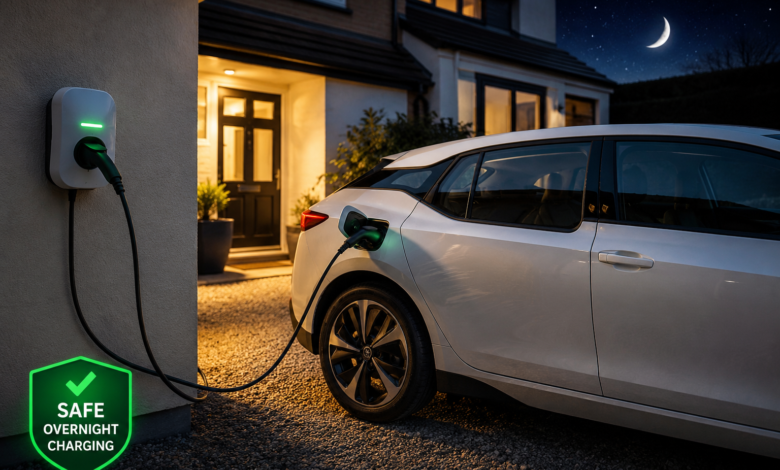
One of the biggest concerns surrounding charging electric car overnight UK is battery health. Fortunately, modern electric vehicles include sophisticated battery management systems that protect batteries from overcharging.
Once the battery reaches its preset charging level, the charging process automatically stops. This means leaving your vehicle plugged in overnight does not continuously push electricity into the battery.
However, regularly charging to 100% every night may gradually increase battery wear over many years. Most manufacturers recommend limiting daily charging to around 80%, reserving full charges only for longer journeys.
Maintaining a moderate charging range reduces stress on lithium-ion batteries and helps preserve long-term battery capacity.
Temperature also affects battery performance. Fortunately, many EVs automatically regulate battery temperature while plugged in, helping maintain optimal performance during cold UK winters.
When Charging Every Night Makes Sense
There are several situations where charging electric car overnight UK becomes the best choice.
Drivers who commute significant distances every weekday benefit from starting each morning with a fully prepared vehicle. Taxi drivers, delivery drivers, and business users often rely on overnight charging because they need maximum driving range throughout the day.
Families with only one vehicle also appreciate the certainty of waking up with sufficient battery for unexpected journeys.
If your electricity provider offers low-cost overnight tariffs, charging during these hours can significantly reduce annual charging expenses compared to daytime charging.
Likewise, drivers planning early morning travel can avoid unnecessary delays by ensuring the battery is already charged before leaving home.
When You May Not Need to Charge Every Night
Not every EV owner needs daily charging.
If you drive only a few miles each day, your battery may retain plenty of range for several days before needing another charge. Continuously plugging in the vehicle simply out of habit may provide little practical benefit.
Many retired drivers, remote workers, and people using their EV mainly for shopping or local trips find that charging once or twice a week is perfectly adequate.
Understanding your own driving patterns helps determine the most efficient charging routine.
Instead of following the same schedule as other drivers, monitor your battery percentage and charge only when necessary.
This balanced approach supports both convenience and long-term battery health.
Best Battery Charging Practices
Developing healthy charging habits improves battery lifespan regardless of vehicle model.
Most manufacturers recommend maintaining the battery between approximately 20% and 80% during normal daily use.
Avoid allowing the battery to remain completely empty for extended periods. Likewise, leaving the battery at 100% for several days without driving may increase long-term battery stress.
Using scheduled charging allows the battery to finish charging shortly before departure rather than remaining fully charged overnight.
This approach combines convenience with improved battery care.
Following manufacturer recommendations remains the safest strategy because battery technologies differ between vehicle brands.
Home Charging vs Public Charging
For many households, charging electric car overnight UK at home offers the most practical solution.
Home charging is generally cheaper than relying exclusively on public rapid chargers. It also eliminates waiting in queues or searching for available charging points.
Public charging remains valuable during long-distance travel, holidays, or emergencies when home charging is unavailable.
Rapid chargers are designed for convenience but frequent exclusive use may cost more than regular home charging.
Many EV owners successfully combine overnight home charging with occasional public charging for longer journeys.
This flexible approach provides convenience while helping control charging costs.
How Smart Chargers Improve Overnight Charging
Smart charging technology has transformed charging electric car overnight UK into an efficient and cost-effective process.
Smart chargers allow users to schedule charging during cheaper electricity periods automatically.
Some systems communicate directly with energy suppliers to optimize charging based on real-time electricity prices.
Others enable smartphone control, allowing owners to start, stop, or monitor charging remotely.
Many chargers also record electricity consumption, making it easier to understand monthly charging costs.
These intelligent features help drivers save money while reducing pressure on the electricity grid during peak demand.
Common Myths About Overnight EV Charging
Several misconceptions continue to confuse new EV owners.
Some believe leaving the charger connected all night damages the battery. Modern battery management systems prevent overcharging, making this concern largely outdated.
Others assume charging every night is mandatory regardless of battery level. In reality, charging frequency depends entirely on individual driving habits.
Another myth suggests fast charging should always be avoided. While exclusive reliance on rapid charging is not ideal for every driver, occasional use is perfectly safe and expected during longer trips.
Understanding how modern EV technology works helps drivers make informed decisions instead of relying on outdated advice.
Expert Advice for UK EV Owners
Experts generally agree that charging electric car overnight UK is both safe and practical when done correctly.
The most effective strategy is to match charging habits to your lifestyle instead of following rigid rules.
Use home charging whenever possible.
Take advantage of off-peak electricity pricing.
Avoid unnecessary daily charging if your battery already has sufficient range.
Follow manufacturer recommendations regarding maximum charging levels.
Keep your charging equipment properly maintained and regularly inspected.
These simple habits improve convenience while helping maximize battery lifespan and reduce electricity costs.
Conclusion
Whether you should charge your EV every night depends on how you drive rather than a single rule that applies to everyone. For frequent commuters and high-mileage drivers, charging electric car overnight UK offers outstanding convenience, lower energy costs through off-peak tariffs, and a vehicle that is always ready to go. For drivers with shorter daily journeys, charging only when needed may be the better option. Modern electric vehicles are designed with advanced battery management systems that make overnight charging safe, while sensible charging habits help preserve battery health for many years. By understanding your driving routine and following manufacturer guidance, you can confidently choose the charging schedule that works best for your needs.
FAQs
Is it safe to leave my electric car charging overnight?
Yes. Modern electric vehicles include battery management systems that automatically stop charging once the selected charge level is reached, making overnight charging safe under normal conditions.
Should I charge my EV to 100% every night?
For everyday driving, most manufacturers recommend charging to around 80%. Charging to 100% is usually best reserved for long journeys when maximum driving range is required.
Does overnight charging increase my electricity bill?
It depends on your electricity tariff. Many UK energy providers offer lower overnight rates, allowing drivers to reduce charging costs by scheduling charging during off-peak hours.
How often should I charge my electric vehicle?
Charging frequency depends on your daily mileage. Drivers with long commutes may charge every night, while those covering shorter distances may only need to charge once or twice each week.
Can frequent overnight charging shorten battery life?
Not necessarily. Battery life depends more on charging habits than charging overnight itself. Avoiding frequent charging to 100%, maintaining moderate battery levels, and following manufacturer recommendations all help extend battery lifespan.
More EV Car Guides: Read more electric vehicle news, buying guides, reviews, and ownership tips on magazinerock.co.uk.