10 Costly EV charging mistakes You Must Avoid for Better Battery Life
EV charging mistakes

Introduction
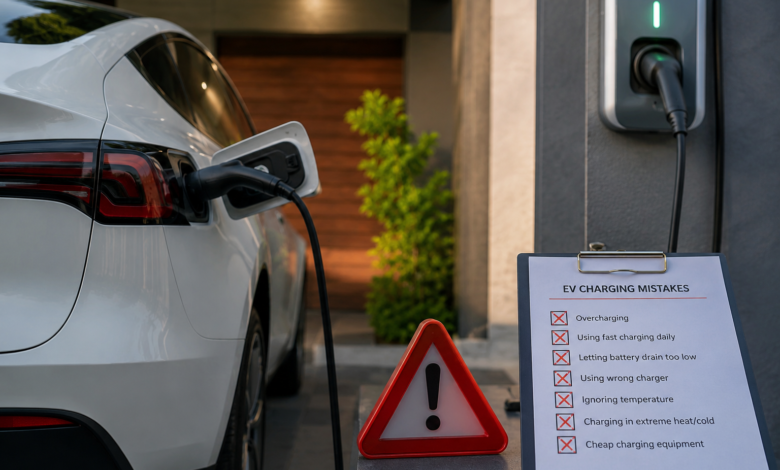
Electric vehicles are becoming more popular as more drivers look for cleaner, more affordable transportation. While owning an EV is generally easier than maintaining a traditional gasoline-powered car, charging it correctly is essential for long-term performance. Many new and even experienced EV owners unknowingly make EV charging mistakes that reduce battery efficiency, increase electricity costs, and shorten battery lifespan.
Understanding these common errors can help you protect your investment, improve charging efficiency, and enjoy a smoother driving experience. This guide explains the most common charging mistakes, why they matter, and how to avoid them with practical advice based on industry best practices and real-world experience.
Understanding Why Proper EV Charging Matters
Charging an electric vehicle may seem straightforward, but there is much more to it than simply plugging in the charger. Modern EV batteries are sophisticated systems designed to deliver reliable performance for many years. However, poor charging habits can slowly affect battery health and reduce driving range over time.
Avoiding EV charging mistakes not only helps preserve battery performance but also lowers charging costs, improves safety, and ensures that your vehicle remains reliable throughout its lifespan. Whether you charge at home, at work, or at public charging stations, adopting good charging habits makes a noticeable difference.
10 Common Charging Habits That Every EV Owner Should Avoid
1. Charging the Battery to 100% Every Day
One of the most common EV charging mistakes is charging the battery to full capacity every single day. While reaching 100% occasionally is perfectly acceptable, keeping the battery fully charged for extended periods places unnecessary stress on lithium-ion cells.
Most manufacturers recommend maintaining a daily charge between 20% and 80% for regular driving. Reserving a full charge only for long road trips helps maintain battery health and extends its useful life.
2. Letting the Battery Drop to Extremely Low Levels
Waiting until the battery is nearly empty before charging is another avoidable mistake. Deep discharges increase stress on battery cells and may contribute to faster degradation over time.
Instead of allowing the battery to reach single-digit percentages regularly, recharge whenever it falls near 20% or 30%. This simple habit reduces wear and improves long-term reliability.
3. Using Fast Charging Too Frequently
DC fast charging is incredibly convenient during long journeys, but relying on it every day is one of the biggest EV charging mistakes many drivers make.
Fast charging generates more heat than standard Level 2 charging. Excessive heat can gradually affect battery chemistry if used continuously. Home charging with a Level 2 charger remains the healthiest option for everyday use, while fast chargers should be reserved for situations where speed is essential.
4. Charging Immediately After Aggressive Driving
After driving at highway speeds or climbing steep hills, the battery temperature may already be elevated. Plugging in immediately after intense driving can increase battery heat even further.
Allowing the vehicle to cool for a short period before charging helps maintain optimal battery temperature and improves charging efficiency. Many modern EVs include thermal management systems, but giving the battery time to stabilize is still a smart practice.
5. Ignoring Battery Temperature
Battery temperature plays a critical role in charging performance. Extremely hot or freezing weather affects charging speed and battery efficiency.
One of the overlooked EV charging mistakes is charging without considering environmental conditions. In cold climates, preconditioning the battery before charging allows it to accept energy more efficiently. During hot weather, parking in shaded areas or garages helps reduce unnecessary heat exposure.
Choosing the Right Charging Equipment
Using quality charging equipment is just as important as following proper charging habits. Certified chargers provide better protection against electrical faults and ensure consistent performance.
6. Using Low-Quality Charging Accessories
Cheap or uncertified charging cables may appear attractive because of their lower price, but they can create safety hazards and inconsistent charging performance.
Always use manufacturer-approved or certified charging equipment that meets recognized safety standards. Investing in quality hardware protects both your vehicle and your home electrical system.
7. Ignoring Regular Charger Inspection
Many drivers overlook the condition of their charging cable and connector. Damaged insulation, bent pins, loose connections, or moisture exposure may create charging interruptions or safety risks.
Checking your charging equipment periodically is an easy way to prevent unexpected problems and maintain reliable operation.
Smart Charging Practices Save Money
Electric vehicle charging is not only about convenience but also about reducing long-term operating costs.
8. Charging During Expensive Peak Hours
Another common EV charging mistakes occurs when owners always charge during peak electricity demand. Many utility companies offer lower electricity rates during off-peak hours.
Scheduling overnight charging through your vehicle or charger allows you to benefit from lower energy costs without sacrificing convenience. Smart charging features available in many EVs make this process automatic.
9. Ignoring Software Updates
Modern electric vehicles rely heavily on software to manage charging, battery performance, and thermal systems.
Manufacturers regularly release updates that improve charging efficiency, optimize battery management, and fix potential issues. Ignoring these updates means missing valuable improvements that enhance both performance and safety.
Keeping your vehicle software current is one of the easiest ways to avoid unnecessary EV charging mistakes.
10. Not Planning Charging Stops for Long Trips
Range anxiety often leads drivers to make poor charging decisions. Some charge too early, while others wait until the battery becomes dangerously low.
Planning charging stops before starting a long journey allows you to use charging stations more efficiently and reduces unnecessary waiting time. Navigation systems in most modern EVs automatically recommend optimal charging locations based on battery level and destination.
Additional Expert Tips for Better EV Charging
Developing consistent charging habits provides long-term benefits. Instead of focusing only on battery percentage, consider your daily driving routine.
If you drive short distances each day, there is no need to recharge to full capacity. Likewise, leaving the vehicle plugged in continuously after charging has completed is unnecessary unless your manufacturer specifically recommends it.
Understanding your vehicle’s battery management system also helps prevent EV charging mistakes. Every manufacturer has slightly different recommendations, so reviewing your owner’s manual ensures that you follow the most appropriate charging practices.
Home charging remains the most economical option for many EV owners. Installing a dedicated Level 2 charger improves convenience, reduces charging time, and provides better energy management compared to using a standard household outlet.
The Benefits of Avoiding Common Charging Mistakes
Drivers who avoid EV charging mistakes often experience better battery longevity, more consistent driving range, lower maintenance costs, and greater overall confidence in their vehicles.
Proper charging habits also contribute to higher resale value because battery condition remains one of the most important factors buyers consider when purchasing a used electric vehicle.
In addition, responsible charging supports a more efficient electrical grid when combined with off-peak charging schedules and smart energy management.
Challenges That New EV Owners Commonly Face
Transitioning from gasoline vehicles to electric vehicles involves a learning curve. Many drivers naturally carry over fueling habits that do not apply to battery-powered vehicles.
Unlike filling a fuel tank, EV charging works best when performed consistently and thoughtfully. Learning the differences helps eliminate unnecessary EV charging mistakes and allows owners to enjoy the full benefits of electric mobility.
Fortunately, today’s charging technology continues to improve with smarter charging systems, better battery management, and faster charging infrastructure that makes ownership easier than ever.
Conclusion
Avoiding EV charging mistakes is one of the simplest ways to protect your electric vehicle, improve battery lifespan, and reduce long-term ownership costs. Small adjustments such as avoiding daily full charges, limiting frequent fast charging, monitoring battery temperature, using certified equipment, and charging during off-peak hours can significantly improve your overall EV experience. As electric vehicles continue to evolve, following proven charging practices will help you maximize performance, maintain reliability, and enjoy worry-free driving for many years. By understanding and preventing these common EV charging mistakes, you can get the most value from every charge while keeping your vehicle operating at its best.
FAQs
What is the biggest EV charging mistakes that owners make?
Charging the battery to 100% every day is one of the most common mistakes. Most manufacturers recommend maintaining a charge between 20% and 80% for everyday driving to preserve battery health.
Does frequent fast charging damage an EV battery?
Occasional fast charging is perfectly safe, but relying on it every day can increase battery temperature and contribute to gradual battery degradation over many years.
Is it better to charge an EV every night?
If your daily driving requires it, overnight charging is a convenient option. However, charging should match your driving needs rather than automatically charging to full capacity every night.
What charging level is best for daily driving?
Most EV experts recommend maintaining the battery between 20% and 80% for regular use because this range helps maximize battery lifespan and overall efficiency.
How can I reduce EV charging costs?
Charging during off-peak electricity hours, using a Level 2 home charger, maintaining proper battery health, and avoiding unnecessary fast charging can significantly lower your long-term charging expenses while improving efficiency.
More EV Car Guides: Read more electric vehicle news, buying guides, reviews, and ownership tips on magazinerock.co.uk.

One Comment