EV Lease vs Buy UK: The Smart Guide to Choosing the Best Electric Vehicle Option
EV lease vs buy UK

Introduction
Understanding EV Lease vs Buy UK
Before comparing costs and benefits, it’s important to understand what each option actually means.
Buying an electric vehicle means you eventually become the legal owner of the car. You can purchase it outright with cash or finance it through a loan or hire purchase agreement. Once the payments are complete, the vehicle belongs entirely to you.
Leasing works differently. Instead of buying the vehicle, you pay a fixed monthly amount to use it for an agreed period, usually between two and four years. At the end of the contract, you simply return the vehicle or move on to another lease.
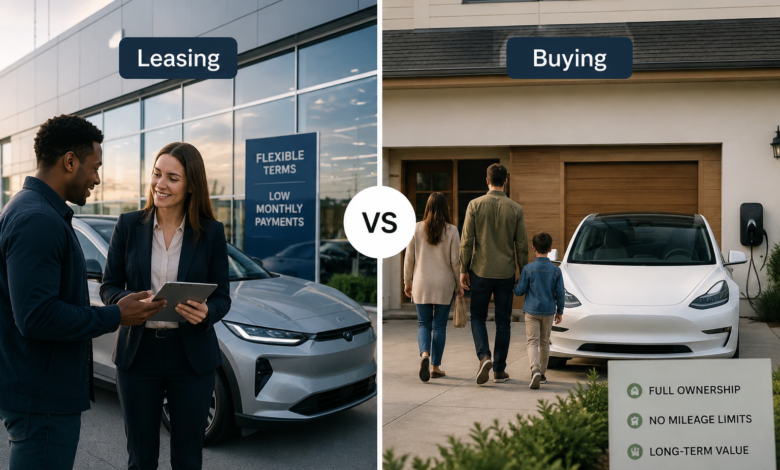
When comparing EV lease vs buy UK, ownership is the biggest difference. Leasing focuses on convenience and flexibility, while buying focuses on long-term value.
Why More UK Drivers Are Considering Electric Vehicle Leasing
Electric vehicles evolve much faster than traditional petrol or diesel cars. Every year brings improvements in battery technology, charging speed, driving range, and software updates.
Because of this rapid innovation, many UK drivers choose leasing to stay up to date with the latest technology.
Lower Monthly Payments
One of the biggest reasons people lease an EV is affordability.
Instead of paying the full value of the vehicle, lease payments are largely based on expected depreciation during the contract period. This usually results in lower monthly costs compared to financing the same vehicle through ownership.
For buyers working within a monthly budget, leasing often provides access to premium electric vehicles that might otherwise be too expensive.
Access to the Latest EV Technology
Electric vehicle technology changes quickly.
Modern EVs continue to improve battery efficiency, charging capabilities, driver assistance systems, and software integration. Leasing allows drivers to upgrade every few years without worrying about selling an older model.
For drivers who enjoy having the newest technology, leasing offers significant peace of mind.
Reduced Depreciation Concerns
Vehicle depreciation remains one of the largest ownership costs.
When purchasing an EV, the vehicle naturally loses value over time. Market demand, battery improvements, and new model releases can all affect resale prices.
With leasing, depreciation becomes the responsibility of the leasing provider rather than the driver. This removes much of the uncertainty associated with future resale values.
The Advantages of Buying an Electric Vehicle
Although leasing offers flexibility, ownership provides benefits that become increasingly valuable over the long term.
Many UK drivers still prefer buying because it offers greater financial freedom once the vehicle has been paid off.
Complete Ownership
Perhaps the biggest advantage of buying is that the vehicle becomes your asset.
Once finance payments are complete—or immediately if you purchase outright—you own the car without ongoing monthly lease obligations.
You can drive unlimited miles, customise the vehicle, sell it whenever you choose, or keep it for many years.
This freedom makes buying attractive for drivers planning long-term ownership.
Better Long-Term Value
Although buying usually involves higher upfront costs, it can become the cheaper option over several years.
Once your finance agreement ends, monthly payments stop entirely. From that point onward, your primary expenses are insurance, servicing, electricity, and general maintenance.
Many drivers discover that keeping an EV for six to ten years significantly reduces the overall cost of ownership compared to repeatedly leasing new vehicles.
No Mileage Restrictions
Most lease agreements include annual mileage allowances.
Exceeding these limits often results in additional charges when the contract ends.
When you own your vehicle, those restrictions disappear.
Whether you drive 8,000 miles or 25,000 miles annually, ownership provides complete flexibility without worrying about excess mileage fees.
Comparing the Real Costs of EV Lease vs Buy UK
Cost is often the deciding factor when comparing EV lease vs buy UK, but looking only at monthly payments can be misleading.
Leasing generally offers lower monthly costs because you’re paying only for the vehicle’s depreciation during the agreement.
Buying typically requires a larger deposit and higher monthly payments, especially for newer electric vehicles.
However, ownership builds equity over time. EV lease vs buy UK Once payments finish, the vehicle still has resale value, even after years of use.
Leasing, by contrast, provides predictable expenses but no ownership value at the end of the agreement.
For drivers who replace their vehicle every three years, leasing may offer better overall convenience.
For drivers intending to keep the same EV for many years, purchasing often delivers stronger long-term financial value.
Which Option Fits Your Lifestyle?
Choosing between leasing and buying isn’t purely about money.
Your driving habits, future plans, and personal preferences all influence the right decision.
If you enjoy driving the newest electric vehicles with updated batteries and technology, leasing offers flexibility that’s difficult to match.
If you prefer building ownership, avoiding long-term monthly payments, and keeping your vehicle well beyond five years, buying often proves to be the wiser investment.
Understanding your priorities is the first step toward making the right decision in the ongoing EV lease vs buy UK debate.
Maintenance, Warranty, and Running Costs
Another important factor when comparing EV lease vs buy UK is the cost of maintaining your vehicle over time.
Electric vehicles generally require less maintenance than petrol or diesel cars because they have fewer moving parts. There are no oil changes, timing belts, or exhaust systems to replace. However, tyres, brakes, suspension components, and cabin filters still require regular attention.
With a leased EV, the vehicle is usually covered by the manufacturer’s warranty throughout the lease period. Some leasing providers also include maintenance packages, making budgeting much easier. Unexpected repair bills are less likely, giving drivers extra peace of mind.
If you buy an EV, you become responsible for maintenance costs once the warranty expires. Although modern EV batteries are designed to last many years, it’s still wise to consider potential repair costs as the vehicle ages. Buyers who intend to keep their EV for a long time should include future servicing expenses in their overall budget.
Depreciation: A Key Financial Difference
Depreciation is one of the biggest financial considerations when deciding between leasing and buying.
Every new vehicle loses value over time, and electric vehicles are no exception. As battery technology improves and new models enter the market, older EV lease vs buy UK may experience faster depreciation than expected.
When you lease an EV, depreciation is not your concern. The leasing company accepts the resale risk, allowing you to return the vehicle when the agreement ends.
When you purchase an EV, depreciation directly affects your investment. However, if you plan to keep the vehicle for many years, depreciation becomes less significant because you continue benefiting from ownership long after the finance payments have ended.
For drivers who regularly change cars, leasing can reduce financial uncertainty. For long-term owners, depreciation often becomes less important compared to years of payment-free driving.
Is Leasing or Buying Better for Different Types of Drivers?
The answer to the EV lease vs buy UK question depends largely on your lifestyle.
If you drive relatively low annual mileage, enjoy upgrading to the latest technology, and prefer predictable monthly expenses, leasing may be the better choice.
If you commute long distances, travel frequently across the UK, or expect to keep your vehicle for more than five years, buying usually provides greater value.
Business users may also benefit from leasing because predictable monthly costs can simplify budgeting, while private buyers often appreciate the long-term savings that ownership offers.
There is no single option that suits everyone. The right decision depends on how you use your vehicle and your financial priorities.
Expert Tips Before Making Your Decision
Before signing any agreement, compare the total cost rather than focusing only on monthly payments.
Check the contract carefully for mileage limits, early termination fees, excess wear charges, and servicing responsibilities if you plan to lease.
If buying, consider the total finance cost, expected depreciation, insurance premiums, home charging installation, and estimated maintenance expenses over several years.
It is also worth thinking about how quickly EV technology is evolving. Drivers who always want the latest battery improvements, software features, and charging speeds may find leasing more attractive. Those who value ownership and long-term savings often benefit more from purchasing.
Making an informed decision today can save thousands of pounds over the lifetime of your electric vehicle.
Conclusion
Choosing between EV lease vs buy UK ultimately comes down to your driving habits, financial goals, and personal preferences.
Leasing offers lower monthly payments, reduced depreciation risk, warranty protection, and the flexibility to upgrade to newer electric vehicles every few years. It is an excellent option for drivers who enjoy the latest technology and prefer predictable motoring costs.
Buying, on the other hand, provides complete ownership, unlimited mileage, and stronger long-term value. Although the initial investment is higher, owning an EV lease vs buy UK can become significantly more economical if you plan to keep it for many years.
There is no universal winner in the EV lease vs buy UK debate. By carefully evaluating your budget, annual mileage, ownership goals, and future plans, you can confidently choose the option that delivers the greatest value for your lifestyle.
FAQs
1. Is leasing an electric vehicle cheaper than buying in the UK?
Leasing usually offers lower monthly payments because you only pay for the vehicle’s depreciation during the agreement. Buying often costs more initially but can become the more economical option if you keep the EV for several years.
2. Who should consider leasing an EV?
Leasing is ideal for drivers who prefer lower monthly costs, enjoy upgrading to the latest electric vehicle models, drive within agreed mileage limits, and want predictable ownership expenses without worrying about depreciation.
3. Is buying an EV better for long-term ownership?
Yes. If you plan to keep your electric vehicle for more than five years, buying generally provides better overall value because you eventually own the car and eliminate monthly finance payments.
4. Does leasing include maintenance and warranty coverage?
Most leased electric vehicles remain under the manufacturer’s warranty throughout the lease period, and some lease agreements also include maintenance packages. Always check the contract details before signing.
5. What should I compare before choosing between leasing and buying?
Compare the total ownership cost, monthly payments, deposit requirements, annual mileage, depreciation, maintenance costs, insurance, contract flexibility, and your long-term driving plans rather than focusing on price alone.
More EV Car Guides: Read more electric vehicle news, buying guides, reviews, and ownership tips on magazinerock.co.uk.