Best EV Charging Connector UK Guide: CCS vs Type 2 vs CHAdeMO Explained
EV charging connector UK

Introduction
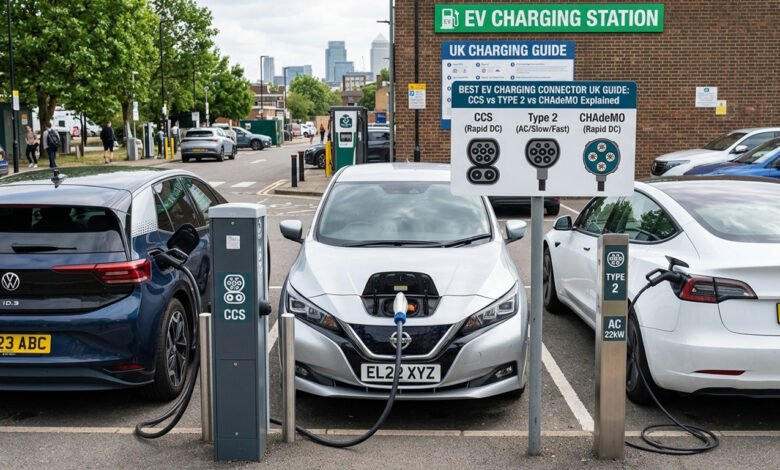
Choosing the right EV charging connector UK standard is one of the most important decisions for electric vehicle owners. Whether you have recently purchased an electric car or are planning to switch from a petrol or diesel vehicle, understanding charging connectors will help you charge safely, quickly, and efficiently. In the UK, the three most common connector types are CCS, Type 2, and CHAdeMO.
Each connector has a different purpose, charging speed, and compatibility with various electric vehicles. This guide explains how these connectors work, their advantages, limitations, and which option is best suited for different driving needs. By the end of this article, you will have a clear understanding of the EV charging connector UK standards and how to choose the right charging solution for your vehicle.
Understanding the Different EV Charging Connectors in the UK
The UK has adopted standardized charging systems to make electric vehicle charging easier and more reliable. Although several connector types exist worldwide, three have played the biggest role in the UK market: CCS, Type 2, and CHAdeMO.
The EV charging connector UK landscape has evolved significantly over the past decade. Manufacturers, charging network operators, and government policies have gradually moved toward common charging standards to improve compatibility and convenience for EV drivers.
Type 2 is the standard connector for AC charging across the UK and Europe, while CCS has become the preferred fast DC charging connector for most new electric vehicles. CHAdeMO remains available primarily for older Japanese electric vehicles, although its popularity is gradually declining as manufacturers adopt CCS.
Understanding these differences helps drivers avoid compatibility issues and make informed purchasing decisions.
CCS vs Type 2 vs CHAdeMO: What Makes Them Different?
The EV charging connector UK market includes connectors designed for different charging methods.
CCS (Combined Charging System)
CCS combines the traditional Type 2 connector with two additional DC charging pins. This design allows both AC and DC charging through a single charging port.
One of the biggest advantages of CCS is its ability to support ultra-rapid charging. Many modern charging stations deliver power ranging from 50 kW to over 350 kW using CCS technology. This enables compatible vehicles to recharge much faster during long journeys.
Most new electric vehicles sold in the UK now include CCS as the standard DC charging connector. Brands such as BMW, Volkswagen, Audi, Mercedes-Benz, Hyundai, Kia, Volvo, and Ford have widely adopted CCS.
As the EV charging connector UK standard continues evolving, CCS has become the dominant option for rapid public charging infrastructure.
Type 2 Connector
Type 2 is the standard AC charging connector throughout the UK and Europe. It is commonly used for home chargers, workplace charging stations, and many public charging points.
Unlike CCS, Type 2 only supports AC charging. Charging speeds generally range from 3.6 kW to 22 kW depending on the charger and vehicle capability.
Many electric vehicle owners use Type 2 chargers overnight because slower charging is often sufficient for daily commuting. The widespread availability of Type 2 charging makes it an essential part of the EV charging connector UK ecosystem.
CHAdeMO Connector
CHAdeMO was developed by Japanese manufacturers and became one of the earliest DC fast charging standards.
Popular vehicles such as the older Nissan Leaf and Mitsubishi Outlander PHEV commonly use CHAdeMO connectors.
Although CHAdeMO can provide rapid charging, many manufacturers have shifted toward CCS. As a result, fewer new charging stations prioritize CHAdeMO, although many existing public chargers still support it.
The EV charging connector UK market continues to support CHAdeMO for existing vehicles, but its long-term future appears more limited compared to CCS.
Comparing Charging Speed, Compatibility, and Convenience
When comparing connectors, charging speed is often the first consideration.
CCS offers the fastest charging capability, making it ideal for motorway service stations and long-distance travel. Drivers can significantly reduce charging time when using high-powered DC chargers.
Type 2 is designed primarily for regular daily charging. While slower than CCS, it provides a practical and cost-effective solution for overnight charging at home or during working hours.
CHAdeMO also supports DC fast charging, but charging infrastructure growth has slowed compared to CCS.
Vehicle compatibility is another important factor. Most new European electric vehicles now include CCS alongside Type 2 for AC charging. Older Japanese models often rely on CHAdeMO.
Understanding your vehicle’s connector type ensures you select compatible charging stations throughout the UK. This knowledge makes the EV charging connector UK experience more convenient and stress-free.
Benefits and Challenges of Each Charging Connector
Each connector offers unique advantages and some limitations.
CCS delivers excellent charging speed, widespread manufacturer support, and growing public infrastructure. Its primary challenge is that not every older charging station offers the highest charging speeds supported by newer vehicles.
Type 2 remains extremely reliable for daily charging. Homeowners benefit from lower installation costs and overnight charging convenience. However, longer charging times make it less suitable for drivers needing rapid top-ups during long journeys.
CHAdeMO still provides dependable rapid charging for compatible vehicles. Existing owners can continue using available charging stations with confidence. Nevertheless, declining manufacturer support means future expansion of CHAdeMO infrastructure may become more limited.
As the EV charging connector UK industry matures, infrastructure investments increasingly focus on CCS while maintaining reasonable support for legacy charging systems.
Which Charging Connector Is Best for UK Drivers?
Selecting the right connector depends largely on your vehicle and driving habits.
If you own a newer electric vehicle, CCS offers the greatest flexibility for rapid public charging while Type 2 covers everyday home charging.
Drivers who mainly travel short distances often find Type 2 charging more than sufficient because vehicles remain fully charged overnight.
Owners of older Nissan Leaf models or other Japanese EVs should continue using CHAdeMO-compatible charging stations until they upgrade to newer vehicles.
The best EV charging connector UK choice is not always about speed. Reliability, charging availability, installation costs, and vehicle compatibility all influence the ideal solution.
Consumers purchasing a new electric vehicle today will likely benefit from choosing a model equipped with CCS and Type 2 compatibility, ensuring access to the UK’s expanding charging infrastructure for many years.
Future of EV Charging Connectors in the UK
Electric vehicle technology continues advancing rapidly.
The UK government and private charging providers continue investing heavily in faster public charging networks. Most new installations prioritize CCS because it supports higher charging capacities and aligns with the direction of major automotive manufacturers.
Type 2 will remain the standard for AC charging due to its proven reliability and compatibility with home charging systems.
Although CHAdeMO remains operational, industry trends indicate its market share will gradually decrease as more drivers adopt CCS-equipped vehicles.
Understanding the future direction of the EV charging connector UK market helps consumers make investments that remain practical over the long term.
Conclusion
Understanding the differences between CCS, Type 2, and CHAdeMO makes electric vehicle ownership much simpler. Each connector serves a specific purpose, from everyday home charging to ultra-fast motorway charging. While Type 2 remains the standard for AC charging and CHAdeMO continues supporting many existing Japanese vehicles, CCS has become the leading rapid charging standard for modern electric vehicles in the UK.
Choosing the right EV charging connector UK depends on your vehicle, driving habits, and charging requirements. By understanding compatibility, charging speed, infrastructure availability, and future industry trends, you can confidently select the charging solution that best meets your needs and enjoy a smoother electric driving experience.
FAQs
What is the most common EV charging connector UK standard?
The most common connector combination is Type 2 for AC charging and CCS for rapid DC charging. Nearly all new electric vehicles sold in the UK support these standards.
Is CCS better than CHAdeMO?
For most modern vehicles, CCS offers broader compatibility, faster charging potential, and stronger long-term support from manufacturers and charging providers. CHAdeMO remains suitable for many older Japanese electric vehicles.
Can I use a Type 2 charger at home?
Yes. Type 2 is the standard connector for most UK home charging installations. It provides safe, reliable, and efficient overnight charging for everyday driving.
Are CHAdeMO chargers still available in the UK?
Yes. Many public charging stations still include CHAdeMO connectors, particularly to support older Nissan and Mitsubishi electric vehicles, although new installations increasingly focus on CCS.
How do I know which connector my electric vehicle uses?
You can check your vehicle’s owner manual, charging port, or manufacturer specifications. Most modern UK electric vehicles include a Type 2 connector for AC charging and CCS for rapid DC charging, while some older Japanese models use CHAdeMO.
More Celebrity Profiles: Read more UK television family background profiles on naturalupdates.co.uk.

One Comment