Positive Electric Car Depreciation Comparison: EV vs Petrol Car Depreciation Compared
Electric Car Depreciation Comparison

Introduction
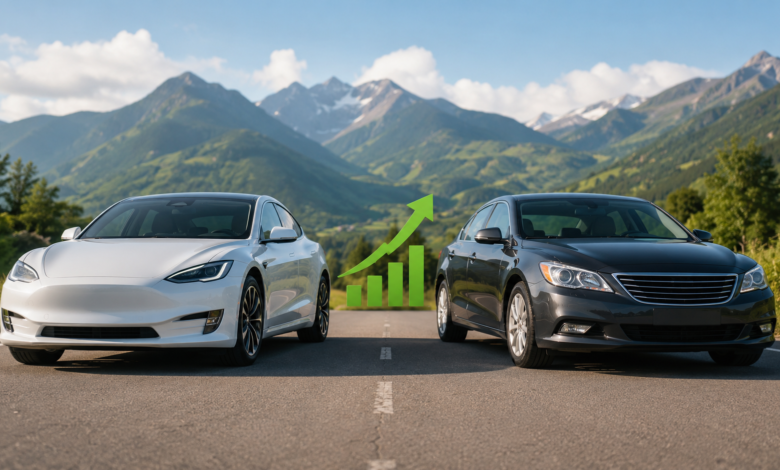
Buying a car is one of the biggest financial decisions most people make, and its resale value plays a major role in the overall ownership cost. While fuel efficiency, maintenance, and insurance are often discussed, depreciation is equally important because it determines how much value a vehicle loses over time. An electric car depreciation comparison helps buyers understand whether an electric vehicle (EV) or a petrol-powered car offers better long-term financial value.
In recent years, electric vehicles have become increasingly popular due to advancements in battery technology, government incentives, and growing environmental awareness. At the same time, petrol cars continue to dominate many markets because of their affordability and widespread fueling infrastructure. However, the depreciation patterns of these two vehicle types differ significantly. Understanding the reasons behind these differences enables buyers to make smarter purchasing decisions while reducing the total cost of ownership.
This guide explores how EVs and petrol cars depreciate, the factors influencing their resale values, and what buyers should consider before making an investment.
Understanding Car Depreciation
Car depreciation refers to the reduction in a vehicle’s market value over time. The moment a new vehicle leaves the dealership, it begins to lose value. This decline continues every year based on several factors, including age, mileage, condition, maintenance history, market demand, and technological advancements.
For most buyers, depreciation represents the largest ownership expense. Even a reliable vehicle that performs well can lose a substantial portion of its original purchase price within the first five years. Because of this, understanding depreciation is just as important as comparing fuel economy or maintenance costs.
A detailed electric car depreciation comparison reveals that depreciation is not determined by the powertrain alone. Consumer demand, battery technology, charging infrastructure, and government policies also influence how quickly an electric vehicle loses value compared to a petrol-powered model.
Why Depreciation Matters
Depreciation directly affects the resale or trade-in value of a vehicle. A car that retains its value better allows owners to recover a larger percentage of their initial investment when upgrading to another vehicle.
For businesses managing vehicle fleets, depreciation impacts operating costs and financial planning. Private buyers also benefit from understanding depreciation because it helps them estimate future ownership expenses before making a purchase.
Vehicles with stronger resale values often prove to be more economical over the long term, even if they have a higher purchase price.
EV vs Petrol Car Depreciation: The Basic Difference
The primary difference between EV and petrol car depreciation lies in how the market perceives each technology. Petrol vehicles have been available for over a century, resulting in predictable resale patterns and established buyer confidence. Electric vehicles, on the other hand, represent a relatively newer technology that continues to evolve rapidly.
An electric car depreciation comparison often shows that early-generation EVs depreciated faster than petrol vehicles because buyers were concerned about battery lifespan, charging availability, and expensive replacement costs. As battery technology has improved and charging networks have expanded, depreciation trends have gradually become more favorable for many modern electric vehicles.
Another important factor is technological innovation. New electric vehicle models frequently introduce better battery capacity, longer driving range, and faster charging capabilities. These improvements can make older EVs appear outdated more quickly than comparable petrol vehicles, influencing resale values.
Petrol cars experience depreciation for different reasons. Fuel price fluctuations, stricter emissions regulations, and changing consumer preferences affect their resale value. However, since petrol technology evolves more gradually, depreciation patterns tend to remain relatively stable.
Market demand also varies by region. Areas with extensive charging infrastructure often experience stronger resale values for electric vehicles. In contrast, regions with limited charging facilities may continue to favor petrol-powered cars, affecting local depreciation rates.
Ownership costs further influence depreciation. Electric vehicles generally require fewer mechanical repairs because they contain fewer moving parts than internal combustion engine vehicles. Lower maintenance costs can improve buyer confidence in the used EV market, partially offsetting depreciation concerns.
Government incentives also play a role. Tax credits and purchase subsidies can reduce the initial cost of new EVs. However, when incentives change or expire, resale values may fluctuate because buyers compare used vehicle prices with newly subsidized models.
Ultimately, depreciation is influenced by multiple economic and technological factors rather than a single characteristic. Buyers should evaluate expected ownership duration, driving habits, charging accessibility, maintenance costs, and resale expectations before deciding between an electric vehicle and a petrol-powered alternative.
Factors That Affect EV and Petrol Car Depreciation
Several factors determine how quickly a vehicle loses value over time. While some of these factors apply to every vehicle, others are unique to either electric or petrol-powered models. A careful electric car depreciation comparison shows that understanding these variables can help buyers predict future resale value more accurately.
The age of a vehicle remains one of the biggest contributors to depreciation. New vehicles experience their steepest value loss during the first few years of ownership. As the vehicle ages, the depreciation rate generally becomes more gradual.
Mileage is another major consideration. Cars that have covered fewer miles typically attract higher resale prices because buyers associate lower mileage with less wear and tear. This applies to both EVs and petrol cars, although modern electric vehicles often experience less mechanical wear due to their simpler drivetrain.
Maintenance history also plays a significant role. Vehicles with complete service records, timely repairs, and regular inspections usually command better resale prices. Buyers are more confident purchasing a vehicle that has been properly maintained throughout its lifespan.
Brand reputation further influences depreciation. Manufacturers known for reliability, build quality, and strong customer support often produce vehicles that retain value better than lesser-known brands. Consumer confidence remains a key driver in both the new and used car markets.
A thorough electric car depreciation comparison also highlights the impact of technological advancements. Electric vehicles evolve rapidly, with manufacturers frequently introducing longer driving ranges, improved batteries, and faster charging capabilities. While these innovations benefit new buyers, they can reduce demand for older EV models more quickly than is typically seen with petrol cars.
Government policies and environmental regulations are equally important. Incentives for electric vehicles can increase demand, while stricter emissions standards may reduce the attractiveness of older petrol-powered vehicles. Changes in taxation, registration fees, and fuel regulations can all influence depreciation trends over time.
Regional infrastructure also matters. In areas with widespread charging stations, used EVs often enjoy stronger demand. In locations where charging remains limited, petrol vehicles may continue to maintain a resale advantage despite higher fuel costs.
Battery Life and Its Impact on Resale Value
Battery health is one of the most discussed aspects of electric vehicle ownership. For many buyers considering a used EV, battery condition is just as important as engine condition is for a petrol car. This is why battery performance has become a central topic in any electric car depreciation comparison.
Unlike petrol engines, electric vehicle batteries gradually lose capacity over time. However, modern lithium-ion batteries are designed to last for many years and often retain a significant percentage of their original capacity even after extensive use. Improvements in battery chemistry, thermal management systems, and charging technology have greatly increased durability compared to earlier generations of EVs.
Manufacturers also provide lengthy battery warranties, offering buyers additional confidence. In many cases, battery warranties extend well beyond the standard vehicle warranty, reducing concerns about expensive replacement costs during the early years of ownership.
Charging habits influence long-term battery health. Frequent use of ultra-fast charging, repeated charging to 100%, and consistently allowing the battery to discharge completely may accelerate battery degradation. Owners who follow recommended charging practices often preserve battery performance more effectively, helping maintain stronger resale value.
A vehicle’s driving range is closely tied to battery condition. As electric car depreciation comparison. capacity decreases, the maximum driving range may also decline. Prospective buyers often consider remaining range before purchasing a used EV, making battery health reports increasingly valuable during resale transactions.
In contrast, petrol vehicles do not rely on battery capacity for their primary performance. Instead, buyers focus on engine reliability, transmission condition, fuel efficiency, and maintenance records. Major engine or transmission repairs can significantly reduce resale value, much like severe battery degradation can affect an electric vehicle.
Another factor influencing resale value is battery replacement cost. Although replacement costs have decreased steadily over the past decade, they remain one of the largest potential expenses associated with older electric vehicles. Fortunately, improvements in manufacturing and economies of scale continue to reduce these costs, improving confidence in the used EV market.
An updated electric car depreciation comparison shows that battery concerns have become less significant than they were several years ago. Better technology, stronger warranties, and improved reliability have helped many modern EVs retain value more effectively than earlier models. As consumer awareness grows and battery performance continues to improve, depreciation patterns are expected to become increasingly competitive with those of petrol vehicles.
The resale market is also becoming more sophisticated. Many dealerships and independent inspectors now provide detailed battery health assessments, giving buyers greater transparency before making a purchase. This additional information helps reduce uncertainty and contributes to more accurate vehicle valuations.
Ultimately, battery condition should be viewed alongside the vehicle’s overall maintenance history, mileage, software updates, and general condition. Buyers who understand these factors are better equipped to evaluate the long-term value of an electric vehicle and make informed purchasing decisions.


2 Comments