Save More on EV Charging at Home Cost: Cost of Charging an Electric Car at Home UK 2026
EV charging at home cost

Introduction
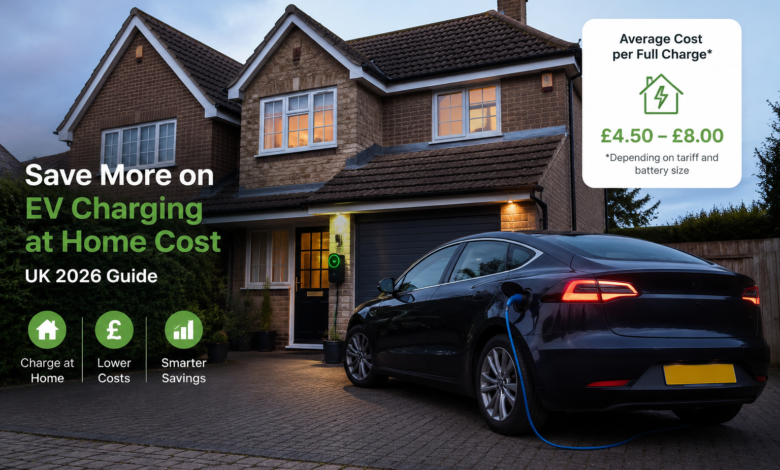
The EV charging at home cost is one of the biggest reasons why more UK drivers are switching to electric vehicles in 2026. Charging your EV at home is not only convenient but also far more affordable than relying on public charging stations. However, the total electric car charging cost at home depends on factors such as your electricity tariff, battery capacity, charging efficiency, and daily driving habits.
By understanding home EV charging cost UK, you can estimate your monthly expenses and discover simple ways to save money. Whether you use a smart charger, off-peak tariff, or renewable energy, managing your EV charging at home cost effectively can significantly reduce your overall vehicle running costs.
What Determines the EV Charging at Home Cost?
Several factors influence the EV charging at home cost, making it different for every household.
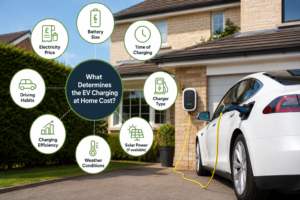 The first and most important factor is the electricity price per kWh UK 2026. If your supplier charges a higher electricity unit rate, your charging costs will naturally increase. Likewise, drivers using an off-peak electricity tariff can save significantly compared to those charging during peak hours.
Another major factor is your EV’s battery size. A larger battery requires more electricity for a full charge than a smaller one. For example, a 40kWh battery costs much less to charge than an 80kWh battery.
Charging efficiency also matters. During charging, some electricity is lost as heat, commonly known as charging losses. Most home chargers operate at around 90–95% efficiency, meaning you’ll use slightly more electricity than your battery’s official capacity.
Finally, your annual mileage directly affects your EV charging expenses UK. Drivers covering long distances will naturally spend more on electricity than those who only commute occasionally.
Average Home EV Charging Cost UK in 2026
The home EV charging cost UK remains considerably lower than refuelling a petrol or diesel vehicle.
For most households, charging an electric car at home costs between £7 and £22 for a full charge, depending on battery capacity and your electricity tariff.
Here’s a general comparison:
Small Battery EV (35–45kWh)
A compact electric vehicle with a 40kWh battery typically costs around £9–£12 for a complete charge under a standard tariff.
Medium Battery EV (50–65kWh)
Most family EVs fall into this category. Charging costs usually range from £12–£17.
Large Battery EV (75–100kWh)
Premium electric SUVs and luxury EVs often cost between £18–£28 for a full recharge.
Although these figures vary, cost to charge an electric vehicle at home remains significantly cheaper than using rapid public chargers.
How Electricity Tariffs Affect Charging Costs
Your electricity tariff can make a huge difference to your home charging electricity cost.
Standard Electricity Tariff
A standard tariff charges the same rate throughout the day. While simple, it isn’t always the cheapest option for EV owners.
Off-Peak Electricity Tariff
Many suppliers now offer time-of-use tariffs, allowing drivers to charge overnight when electricity demand is lower.
This dramatically reduces the overnight EV charging cost, making home charging even more affordable.
Economy 7 Tariff
The traditional Economy 7 tariff offers cheaper electricity for around seven hours overnight. Drivers who regularly charge electric car overnight can enjoy noticeable savings throughout the year.
Smart EV Tariffs
Modern options like Octopus Go tariff and Intelligent Octopus Go are specifically designed for EV owners. These plans automatically schedule charging during cheaper periods, reducing overall EV home charging price without requiring manual input.
Cost Per Mile When Charging at Home
Many drivers focus on the total charging bill, but the cost per mile offers a better way to compare vehicle running costs.
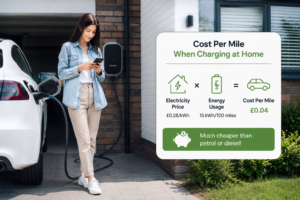
Most modern electric vehicles travel between 3.5 and 5 miles per kWh.
For example, if electricity costs 30p per kWh and your EV averages 4 miles per kWh, each mile costs approximately 7.5p in electricity.
Compared with petrol or diesel vehicles, the electric vehicle running costs remain substantially lower, especially for drivers covering long daily commutes.
Understanding your EV’s energy consumption, miles per kWh, and charging efficiency helps estimate long-term savings more accurately.
Monthly and Annual EV Charging Costs
Your monthly electricity bill depends on how often you drive.
A driver covering approximately 800 miles per month could spend between £45 and £80 on home charging, depending on the electricity tariff and vehicle efficiency.
Over a full year, the annual EV charging cost typically ranges from £550 to £950 for average UK motorists.
Drivers who regularly use cheap EV charging tariffs, overnight charging, or renewable electricity plans often reduce these figures even further.
Although your household electricity bill may increase, the reduction in petrol or diesel spending usually outweighs the additional electricity costs.
Is Charging from a Home Socket Cheaper?
Some drivers consider charging EV from home socket instead of installing a dedicated charger.
While using a standard three-pin plug can work occasionally, it is much slower and less efficient than a 7kW home charger.
A dedicated Level 2 home charger provides faster charging, improved safety, and better energy management. It also supports smart EV charging, allowing charging sessions to start automatically during cheaper electricity periods.
Although home charging installation requires an upfront investment, many owners recover these costs through lower long-term charging expenses and improved convenience.
Smart Charging Can Reduce Your EV Charging Bill
Technology has made home charging far more efficient.
A modern smart charger connects to your electricity supplier and automatically schedules charging during off-peak hours.
Many smart charging systems also monitor home energy usage, helping homeowners balance electricity demand and avoid expensive peak rates.
Some chargers even integrate with solar EV charging, allowing surplus electricity generated by rooftop solar panels to charge your vehicle almost free of charge during sunny periods.
These innovations significantly reduce the overall EV charging bill while making charging almost effortless.
Home Charging vs Public Charging
One of the biggest financial advantages of EV ownership is home charging.
Public rapid chargers offer convenience during long journeys but generally have a much higher fast charging cost than domestic electricity.
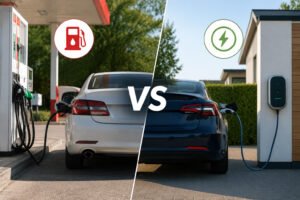
Home charging offers:
- Lower electricity prices
- Convenient overnight charging
- Better battery care through slower charging
- Predictable monthly expenses
- Greater control over charging routines
For most UK electric car owners, home charging remains the most economical option.
Using public chargers occasionally is perfectly practical, but relying on them every day will substantially increase overall EV ownership costs.
Tips to Lower Your Home EV Charging Costs
Reducing the EV charging at home cost is easier than many drivers think.
Charge during off-peak hours whenever possible.
Choose a supplier offering dedicated EV tariffs.
Install a smart home charger to automate charging schedules.
Monitor your vehicle’s energy efficiency and driving habits.
Consider renewable electricity tariffs or solar panels for additional long-term savings.
Keep tyres properly inflated and drive smoothly to improve vehicle range and reduce energy consumption.
Small changes in your charging routine can produce meaningful savings over the lifetime of your electric vehicle.
Conclusion
The EV charging at home cost in the UK during 2026 remains one of the strongest financial advantages of owning an electric vehicle. Although electricity prices continue to change, home charging is still considerably cheaper than public rapid charging and far more economical than buying petrol or diesel.
By selecting the right electricity tariff, using a smart charger, charging overnight, and understanding your vehicle’s battery capacity, you can significantly reduce your domestic EV charging costs. As more UK households embrace electric mobility, home charging will continue to provide convenience, lower running costs, and a smarter way to power everyday journeys.
FAQs
1. What is the average EV charging at home cost in the UK in 2026?
Most drivers spend between £7 and £22 for a full charge, depending on battery size, electricity rates, and charging efficiency.
2. Is charging an electric car at home cheaper than public charging?
Yes. Home charging is usually much cheaper because domestic electricity tariffs cost less than public rapid charging networks, especially when using off-peak electricity.
3. Does a smart charger reduce charging costs?
Absolutely. A smart charger automatically charges your vehicle during cheaper electricity periods, helping reduce monthly charging bills without extra effort.
4. How much does an electric car add to my household electricity bill?
For an average driver, home charging may increase the electricity bill by around £45–£80 per month, depending on mileage, battery size, and electricity tariff.
5. Can solar panels reduce EV charging costs?
Yes. Pairing a home charger with solar panels allows you to use renewable energy to charge your vehicle, reducing electricity costs and lowering your overall EV ownership expenses.

2 Comments