7 Powerful Truths About Petrol vs Electric Car Maintenance in the UK
petrol vs electric car maintenance

Introduction
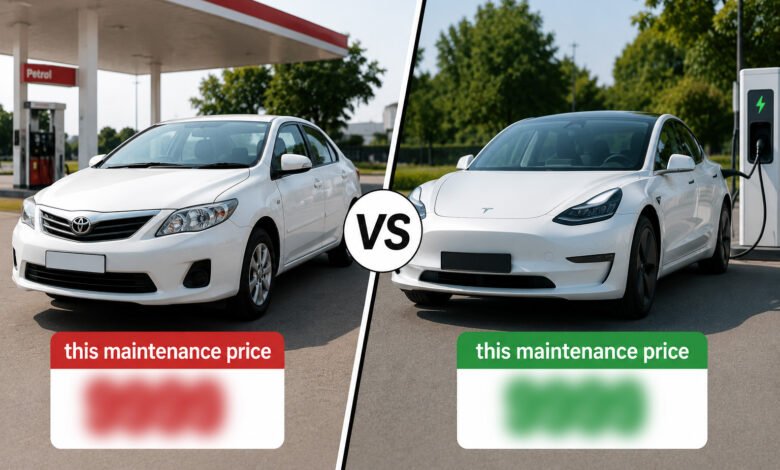
Choosing between a petrol car and an electric vehicle is no longer just about fuel prices or environmental concerns. For many UK drivers, long-term ownership costs play an even bigger role in the decision-making process. One of the biggest questions people ask is how petrol vs electric car maintenance compares over the years. While electric vehicles (EVs) are often promoted as cheaper to maintain, the real answer depends on driving habits, servicing requirements, repair costs, and vehicle age. This guide explores the differences in detail, helping UK motorists make an informed choice based on practical costs, reliability, and long-term value.
Understanding the Difference Between Petrol and Electric Vehicle Maintenance
The biggest difference between petrol and electric vehicles lies in how they are built. A traditional petrol car contains hundreds of moving mechanical components, including the engine, gearbox, exhaust system, timing belt, fuel injectors, spark plugs, oil filters, and many other parts that require regular maintenance.
An electric vehicle has a far simpler drivetrain. Instead of an internal combustion engine, it uses an electric motor powered by a high-voltage battery. Because there are fewer moving parts, many routine servicing tasks simply do not exist.
When comparing petrol vs electric car maintenance, this simpler design is one of the primary reasons why EV servicing costs are generally lower throughout the vehicle’s lifetime.
However, maintenance costs are not limited to servicing alone. Tyres, suspension, brakes, software updates, cooling systems, and unexpected repairs all contribute to the overall ownership experience.
Servicing Costs in the UK
Regular servicing is essential regardless of the type of vehicle you own. It keeps the car safe, efficient, and compliant with manufacturer warranties.
Petrol cars typically require annual servicing that includes engine oil replacement, oil filters, air filters, fuel filters, spark plug inspections, coolant checks, timing belt inspections, and emissions-related maintenance. These recurring jobs increase servicing costs every year.
Electric vehicles eliminate many of these routine requirements. There is no engine oil to replace, no spark plugs, no exhaust system, and no clutch in most models. Instead, servicing focuses on battery health inspections, brake fluid, suspension, tyres, cabin air filters, and software diagnostics.
For many UK owners, annual servicing for an EV is noticeably cheaper than for an equivalent petrol model.
When evaluating petrol vs electric car maintenance, servicing alone often creates significant long-term savings.
Why Brake Maintenance Is Different
One surprising advantage of electric vehicles comes from regenerative braking. Instead of relying solely on traditional brake pads, the electric motor helps slow the vehicle while recovering energy.
Because of this feature, brake pads and discs usually last much longer than those on petrol vehicles. Less wear means fewer replacements and lower maintenance costs over time.
Repair Costs and Long-Term Reliability
Maintenance and repairs are often confused, but they are different aspects of vehicle ownership.
Routine maintenance includes scheduled servicing, while repairs involve replacing worn or damaged components.
Petrol vehicles have more systems that can eventually fail. Common repairs include alternators, starters, fuel pumps, catalytic converters, exhaust systems, turbochargers, timing chains, water pumps, and engine components.
Electric vehicles remove many of these potential failure points. As a result, many owners experience fewer unexpected mechanical repairs during the first several years of ownership.
However, EVs are not completely maintenance-free. Components such as power electronics, charging systems, cooling pumps, and battery management systems can require repairs if faults occur.
Battery replacement is the concern many buyers worry about most. Fortunately, modern EV batteries are designed to last many years, and manufacturers commonly provide warranties lasting around eight years or up to 100,000 miles, depending on the brand.
In most cases, battery degradation happens gradually rather than suddenly, allowing drivers to continue using the vehicle with only a modest reduction in driving range.
When analysing petrol vs electric car maintenance, reliability depends heavily on vehicle age, manufacturer quality, and servicing history.
Running Costs Beyond Maintenance
Maintenance is only one part of total ownership costs.
Petrol vehicles require regular fuel purchases, while electric cars are charged using electricity. Home charging generally remains significantly cheaper than filling a petrol tank, particularly for drivers covering high annual mileage.
Road tax policies in the UK continue to evolve, and insurance premiums vary depending on the vehicle model, repair costs, and driver profile.
Tyres deserve special attention. Electric vehicles are often heavier because of their battery packs, which may increase tyre wear. At the same time, instant torque can accelerate tyre degradation if driven aggressively.
Despite this, lower servicing requirements frequently offset the additional tyre costs for many owners.
Software updates also play a growing role in electric vehicle ownership. Many manufacturers provide remote updates that improve battery management, efficiency, safety systems, or infotainment features without requiring a workshop visit.
This capability has become an important advantage when comparing petrol vs electric car maintenance in today’s automotive market.
Factors That Affect Maintenance Costs
No two drivers experience identical maintenance expenses.
Annual mileage has a significant impact. Someone driving 25,000 miles each year will naturally spend more on tyres, brakes, suspension components, and servicing than someone driving only 6,000 miles.
Driving conditions also matter. Frequent motorway driving usually causes less brake wear than constant stop-start urban traffic.
Vehicle quality is another major factor. Premium brands often have higher labour charges and more expensive replacement parts, regardless of whether the vehicle uses petrol or electricity.
Independent garages are gradually expanding their expertise with electric vehicles across the UK. As more trained technicians enter the market, EV servicing costs are expected to become even more competitive.
For used vehicles, maintenance history remains one of the strongest indicators of future reliability. A well-maintained petrol car may prove more dependable than a neglected electric vehicle, despite the mechanical differences.
Therefore, petrol vs electric car maintenance should always be evaluated alongside the condition and history of the specific vehicle being considered.
Which Option Offers Better Long-Term Value?
For many UK households, electric vehicles now provide lower maintenance costs throughout normal ownership periods.
Drivers benefit from fewer scheduled services, fewer mechanical failures, longer-lasting brakes, and reduced routine maintenance requirements.
Petrol vehicles still offer certain advantages. They generally have lower purchase prices, widespread refuelling infrastructure, and familiar servicing procedures available almost everywhere.
Electric vehicles become especially attractive for drivers who have access to home charging and plan to keep their vehicle for several years.
Business users, commuters, and families covering higher annual mileage often recover the initial purchase premium through lower running costs and reduced maintenance expenses.
On the other hand, drivers with limited annual mileage may find that the financial difference between petrol and electric ownership is smaller than expected.
Ultimately, the decision should consider purchase price, charging availability, insurance, depreciation, servicing, repair risks, and expected ownership duration.
Understanding petrol vs electric car maintenance helps buyers make a balanced decision based on total cost rather than focusing on only one expense.
Conclusion
The debate surrounding petrol vs electric car maintenance is becoming increasingly important as more drivers across the UK consider switching to electric vehicles. While petrol cars continue to offer familiarity and lower upfront purchase prices, they generally require more frequent servicing and contain many components that eventually wear out or fail. Electric vehicles simplify maintenance through fewer moving parts, reduced servicing requirements, regenerative braking, and fewer mechanical repairs.
That said, every driver’s situation is different. Mileage, driving style, charging access, manufacturer reliability, and ownership period all influence overall costs. For many UK motorists, electric vehicles now deliver meaningful long-term savings, but the best choice depends on individual needs and budget. By comparing maintenance alongside running costs and long-term reliability, buyers can make a confident and informed investment.
FAQs
1. Is petrol vs electric car maintenance really cheaper for electric vehicles?
Yes. In most cases, electric vehicles require less routine servicing because they do not need oil changes, spark plugs, fuel filters, or exhaust maintenance. This usually results in lower maintenance costs over time.
2. Do electric cars require annual servicing in the UK?
Yes. Although electric vehicles need less maintenance than petrol cars, manufacturers still recommend annual servicing or servicing at specified mileage intervals. These inspections usually include battery health checks, brake fluid, tyres, suspension, cooling systems, and software diagnostics.
3. Is replacing an electric car battery expensive?
Battery replacement can be costly, but it is relatively uncommon during the normal ownership period. Modern batteries are designed for long service life and are usually covered by manufacturer warranties of around eight years or up to 100,000 miles, depending on the vehicle.
4. Which vehicle has lower repair costs after several years?
Electric vehicles often experience fewer mechanical repairs because they have fewer moving parts. However, specialised electrical repairs can sometimes be more expensive if they occur. Overall repair costs depend on vehicle age, maintenance history, and manufacturer reliability.
5. Should UK drivers choose petrol or electric based only on maintenance costs?
No. Maintenance is only one part of total ownership costs. Buyers should also compare purchase price, insurance, depreciation, charging or fuel costs, road tax, resale value, annual mileage, and convenience before making a final decision.
More EV Car Guides: Read more electric vehicle news, buying guides, reviews, and ownership tips on magazinerock.co.uk.