Complete EV home charging guide UK: Your Ultimate Guide to Faster, Smarter, and Safer Charging
EV home charging guide UK

Introduction
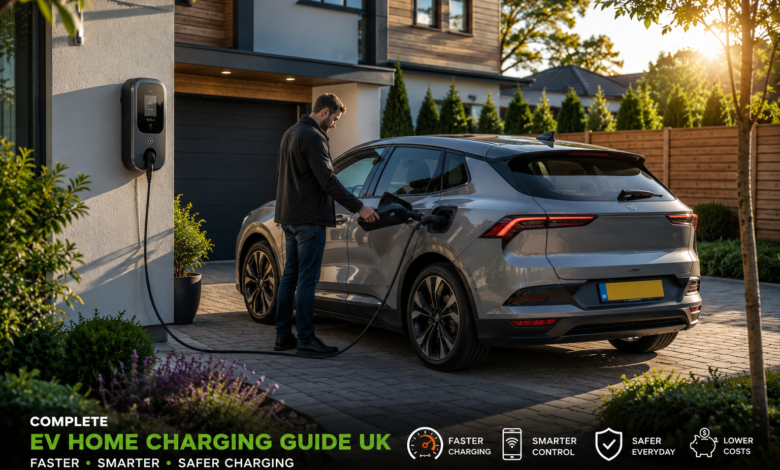
As electric vehicles become increasingly popular across Britain, having a reliable home charging solution is more important than ever. This EV home charging guide UK explains everything you need to know before installing a charger at home, from selecting the right equipment to understanding installation costs, charging speeds, and ongoing maintenance. Whether you have just purchased your first electric car or are planning to switch from a petrol or diesel vehicle, this guide will help you make informed decisions that save time, reduce charging costs, and improve your overall driving experience.
Charging at home is one of the biggest advantages of owning an electric vehicle. Instead of visiting public charging stations regularly, you can charge your vehicle overnight while benefiting from lower electricity tariffs. Understanding the available charging options, installation requirements, and smart charging features will help you choose a system that suits your lifestyle and future needs.
Why Home EV Charging Is Becoming Essential in the UK
The shift towards electric mobility has transformed the way people think about vehicle ownership. More households are installing dedicated home chargers because they offer greater convenience, improved efficiency, and long-term savings compared to relying solely on public charging networks.
A quality home charging system provides consistent charging speeds while protecting your vehicle’s battery through intelligent charging management. Modern chargers also allow users to schedule charging during off-peak electricity hours, helping reduce monthly energy bills.
This EV home charging guide UK is designed to simplify the process by explaining every stage, from choosing a charger to understanding electrical requirements. Home charging also reduces the stress of searching for available public charging points, particularly during busy travel periods.
Many UK homeowners are preparing for the future by installing chargers that support higher charging capacities and smart energy management. This ensures that today’s investment remains useful as electric vehicle technology continues to evolve.
Understanding Different Types of Home EV Chargers
Choosing the right charger is one of the most important decisions for any electric vehicle owner. Not every charger offers the same charging speed, compatibility, or smart functionality.
The most common domestic charger in the UK is the 7kW wall-mounted charger. This option offers an excellent balance between charging speed, affordability, and compatibility with most residential electrical systems. For many households, it can fully recharge an electric vehicle overnight, making it the preferred choice.
Some larger properties with suitable electrical infrastructure may support 22kW chargers. However, these usually require a three-phase electricity supply, which is not available in many homes across the UK.
Portable charging cables supplied with electric vehicles can also be plugged into a standard three-pin socket. While this provides a useful backup charging option, it is significantly slower and is generally not recommended as the primary charging method for daily use.
This EV home charging guide UK recommends selecting a charger that supports smart charging technology. Smart chargers enable remote control through mobile applications, charging schedules, energy monitoring, and automatic software updates. These features improve convenience while helping users minimise electricity costs.
When comparing different models, consider charging speed, weather resistance, warranty coverage, safety certifications, and compatibility with both current and future electric vehicles.
Installation Requirements and What to Expect
Installing a home EV charger involves more than simply attaching a charging unit to an outside wall. A professional installer will first inspect your property’s electrical system to ensure it can safely support the additional electrical load.
During the initial survey, the installer checks your consumer unit, earthing arrangement, cable routes, parking location, and overall electrical capacity. These assessments ensure that the installation complies with current UK electrical regulations.
The location of the charger also plays an important role. Ideally, it should be installed close to your regular parking space while allowing the charging cable to reach your vehicle comfortably without creating safety hazards.
A standard installation can usually be completed within a few hours if no major electrical upgrades are required. More complex installations involving long cable runs, electrical panel upgrades, or difficult mounting locations may require additional time and cost.
This EV home charging guide UK also recommends hiring certified installers who have experience with electric vehicle charging systems. Professional installation not only improves safety but also helps maintain warranty protection for your charger.
Once installed, the charger is tested thoroughly before being activated. The installer will explain how to operate the charger, connect it to any mobile applications, and schedule charging sessions for maximum efficiency.
Understanding Charging Costs and Long-Term Savings
One of the most attractive benefits of home charging is the potential to reduce running costs significantly compared to traditional fuel-powered vehicles.
The total cost of charging depends on several factors, including your electricity tariff, vehicle battery capacity, charging habits, and overall energy consumption. Charging during overnight off-peak periods often provides the lowest electricity rates, making home charging even more economical.
The initial investment includes the charger itself and professional installation. Although the upfront cost may appear substantial, many drivers recover this investment over time through lower fuel expenses and reduced vehicle maintenance.
This EV home charging guide UK encourages homeowners to compare electricity tariffs carefully. Energy suppliers often offer specialised tariffs designed specifically for electric vehicle owners, helping reduce charging costs further.
Smart charging technology also contributes to long-term savings. Instead of charging immediately after plugging in, the charger can automatically begin charging when electricity prices are lowest. This small adjustment can generate meaningful savings throughout the year.
Beyond financial savings, home charging offers valuable convenience. Drivers start each morning with a fully charged vehicle, reducing reliance on public charging infrastructure and making everyday travel more predictable.
As battery technology continues to improve and electricity pricing becomes increasingly flexible, investing in a modern home charging system is likely to provide even greater value over the coming years.
Smart Charging Features and Energy Management
Modern EV chargers offer much more than simply supplying electricity to your vehicle. Smart charging technology allows homeowners to manage energy consumption efficiently while reducing electricity costs. This EV home charging guide UK recommends choosing a smart charger if you want greater control over your charging schedule and energy usage.
Most smart chargers connect to a mobile app, allowing you to start or stop charging remotely, monitor electricity consumption, and receive notifications when charging is complete. Some models even integrate with smart home systems, making energy management more convenient.
Many energy suppliers in the UK offer time-of-use tariffs, where electricity prices are lower during off-peak hours. Smart chargers can automatically schedule charging sessions during these cheaper periods, helping you save money without any manual effort.
Some advanced chargers are compatible with solar panel systems. If your home generates renewable electricity, you can charge your electric vehicle using excess solar energy, reducing dependence on the national grid and lowering your overall energy bills. This EV home charging guide UK highlights that combining renewable energy with home charging is an excellent long-term investment for environmentally conscious households.
Another useful feature is load balancing. This technology monitors your home’s electricity demand and adjusts the charging speed automatically to prevent overloading the electrical system. It ensures safe operation while allowing other household appliances to function normally.
Safety, Maintenance, and Common Mistakes to Avoid
Safety should always be a priority when charging an electric vehicle at home. Although modern chargers are designed with multiple safety features, proper installation and regular maintenance are essential for reliable performance.
This EV home charging guide UK advises homeowners to inspect charging cables regularly for signs of wear or damage. Frayed cables, cracked connectors, or loose fittings should never be ignored, as they may create safety risks.
Keep the charging unit clean and free from dirt or debris. While most outdoor chargers are weather-resistant, occasional cleaning helps maintain performance and extends the equipment’s lifespan.
Avoid using extension leads or adapters with your charging equipment. A dedicated EV charger installed by a qualified professional provides the safest and most efficient charging solution.
Another common mistake is blocking ventilation around the charging unit. Chargers generate heat during operation, so maintaining adequate airflow helps prevent overheating.
Homeowners should also install software updates whenever they become available. Manufacturers regularly release updates that improve security, reliability, and charging efficiency.
Routine inspections by a qualified electrician can help identify minor issues before they develop into costly repairs. Following these simple maintenance practices ensures your charging system continues operating safely for many years.
Future-Proofing Your Home Charging Setup
Electric vehicle technology is evolving rapidly, making it worthwhile to think beyond your current vehicle when choosing a charger. This EV home charging guide UK encourages homeowners to invest in equipment that can support future charging requirements.
Many households eventually purchase a second electric vehicle. Choosing a charger with higher capacity or the ability to integrate with additional charging points can save money on future upgrades.
Smart software compatibility is another important consideration. Chargers that receive regular firmware updates remain compatible with evolving vehicle technology and changing energy regulations.
Cable length is often overlooked during installation. Selecting an appropriate cable length ensures flexibility if you change vehicles or parking arrangements in the future.
As renewable energy adoption increases, many homeowners are installing battery storage systems and solar panels. Choosing a charger that can integrate with these technologies allows you to maximise energy efficiency while reducing reliance on grid electricity.
Government policies and charging standards may continue to evolve. Investing in a high-quality charger from a reputable manufacturer helps ensure long-term compatibility and ongoing software support. This EV home charging guide UK recommends considering your future energy needs rather than focusing only on today’s requirements.
Choosing the Right EV Charger for Your Lifestyle
Every driver has different charging needs, so there is no single charger that suits everyone. Your ideal solution depends on factors such as daily mileage, parking arrangements, electricity tariff, and future vehicle plans.
If you drive relatively short distances each day, a standard 7kW charger will usually provide more than enough overnight charging capacity. Drivers with higher mileage or multiple electric vehicles may benefit from advanced chargers offering load balancing and enhanced smart features.
Think about ease of use as well. Mobile app functionality, scheduling options, energy monitoring, and warranty coverage all contribute to a better ownership experience.
This EV home charging guide UK also suggests comparing installation services as carefully as the charger itself. A reliable installer will ensure your charging system meets all safety regulations while providing ongoing support if required.
Although upfront costs vary, investing in quality equipment often results in lower maintenance costs, improved reliability, and greater customer satisfaction over the lifetime of the charger.
Conclusion
Switching to an electric vehicle is a significant step towards cleaner, more economical transportation, and home charging makes ownership even more convenient. From understanding charger types and installation requirements to exploring smart charging features and long-term savings, every aspect plays a role in creating an efficient charging experience.
This EV home charging guide UK has explained how to choose the right charger, prepare your home’s electrical system, improve charging efficiency, maintain your equipment safely, and plan for future developments in electric vehicle technology. By investing in a professionally installed, high-quality charging solution, you can enjoy lower running costs, greater convenience, and reliable charging every day.
Whether you are buying your first electric vehicle or upgrading your existing charging equipment, following this EV home charging guide UK will help you make confident decisions that deliver value for years to come.
FAQs
What is the best home charger for most UK households?
For most homes, a 7kW smart charger is the best choice. It provides fast overnight charging, works with the majority of electric vehicles, supports smart scheduling, and is compatible with standard single-phase residential electricity supplies.
How much does it cost to install a home EV charger in the UK?
Installation costs vary depending on the charger model, cable length, and electrical work required. A straightforward installation is generally more affordable, while properties requiring electrical upgrades or complex cable routing may incur higher costs.
Can I charge my electric vehicle using a standard three-pin plug?
Yes, most electric vehicles can be charged using a standard household socket, but it is much slower than using a dedicated home charger. It is generally recommended only as a temporary or emergency charging solution rather than for everyday use.
Are smart EV chargers worth the investment?
Yes. Smart chargers help reduce electricity costs by scheduling charging during off-peak hours, allow remote monitoring through mobile apps, provide software updates, and improve overall charging efficiency. They also offer greater convenience and better long-term value.
How often should a home EV charger be maintained?
Home EV chargers require very little maintenance. Regular visual inspections, keeping the charger clean, checking cables for damage, and installing firmware updates are usually sufficient. If you notice any faults or unusual behaviour, contact a qualified installer for inspection and repairs.
More EV Car Guides: Read more electric vehicle news, buying guides, reviews, and ownership tips on magazinerock.co.uk.