10 Smart Ways to Check used EV battery health Before Buying a Used EV Cars
used EV battery health

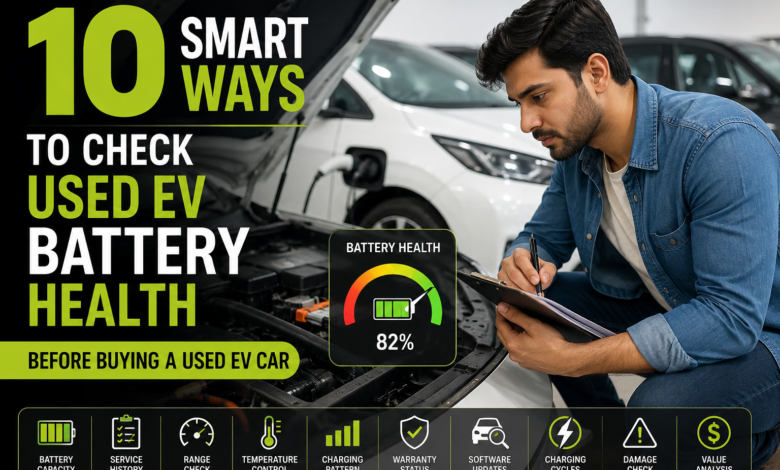
Introduction
Buying a used electric vehicle can be a smart way to save money while enjoying the benefits of cleaner and more efficient transportation. However, the battery is the most valuable component of any EV, making used EV battery health the first thing every buyer should evaluate. A well-maintained battery ensures better driving range, faster charging,
and lower long-term ownership costs, while a degraded battery can lead to expensive repairs and reduced performance. Understanding how to assess used EV battery health before making a purchase helps you avoid hidden problems, compare different vehicles with confidence, and choose a reliable used EV that delivers excellent value for years to come.
Why used EV battery health Is the Most Important Factor
When buying a traditional used car, buyers usually focus on the engine, transmission, and service history. With an electric vehicle, the battery replaces the engine as the most valuable component. In many cases, replacing an EV battery can cost thousands of dollars, making battery condition far more important than cosmetic appearance or even mileage.
Every lithium-ion battery gradually loses capacity over time. This natural process, called battery degradation, depends on several factors, including charging habits, climate, driving style, and maintenance. A vehicle with slightly higher mileage but excellent battery care may perform much better than a lower-mileage EV that has been poorly maintained.
Understanding used EV battery health helps buyers estimate the vehicle’s remaining range, charging efficiency, resale value, and expected lifespan. It also reduces the risk of unexpected repair expenses after purchase.
1. Check the Battery State of Health (SOH)
The first and most reliable way to evaluate used EV battery health is by checking the Battery State of Health, commonly called SOH.
State of Health measures how much battery capacity remains compared to when the vehicle was new. For example, if a battery originally stored 100 kWh but now stores 92 kWh, its SOH is approximately 92%.
An SOH above 90% is considered excellent for most used electric vehicles. Batteries with 80% to 90% capacity can still provide dependable daily driving, while significantly lower values deserve careful consideration.
Ask the seller for an official battery health report or diagnostic scan whenever possible. Many manufacturers allow technicians to generate detailed battery reports using factory diagnostic tools.
2. Review the Battery Warranty Status
Many buyers forget to check whether the battery warranty is still active. Fortunately, most modern electric vehicle manufacturers provide battery warranties lasting around eight years or approximately 100,000 miles, although coverage varies by brand.
Some warranties also guarantee that battery capacity will not fall below a certain percentage during the warranty period.
If the battery remains covered, you gain additional financial protection against unexpected battery degradation. Always verify warranty documentation before finalizing the purchase because remaining warranty coverage can significantly increase the vehicle’s value.
Checking warranty status is an important step when evaluating used EV battery health.
3. Examine the Vehicle’s Charging History
Charging habits play an important role in long-term battery performance.
Frequent use of DC fast charging generates additional heat inside the battery. While modern battery management systems help control temperatures, years of excessive fast charging may contribute to slightly faster battery degradation.
Ideally, most previous charging should have been completed using Level 2 home charging, which places less stress on the battery.
Ask the owner about their charging routine. If available, review charging history records through the vehicle’s software or service documentation. Combined with battery diagnostics, charging history provides valuable insight into used EV battery health.
4. Compare the Current Driving Range with Factory Estimates
One practical method for evaluating battery condition is comparing the displayed driving range after a full charge with the vehicle’s original estimated range.
Keep in mind that weather conditions, driving style, terrain, tire pressure, and climate control usage all influence estimated range. However, unusually low range compared to similar vehicles may indicate battery degradation.
For example, if an EV originally delivered 300 miles per charge but consistently shows only around 220 miles under normal conditions, further investigation is worthwhile.
During your inspection, ask the seller to fully charge the vehicle before your visit. This allows you to make a more accurate comparison while assessing used EV battery health.
5. Take a Proper Test Drive Instead of a Short Spin
Many buyers spend only ten or fifteen minutes driving a used vehicle before making a decision. That approach is often insufficient for evaluating an electric vehicle.
Plan a longer test drive covering city streets, highways, and stop-and-go traffic. Pay attention to battery percentage changes during the drive.
The battery level should decrease gradually and consistently based on the distance traveled. Rapid battery loss over relatively short distances may indicate battery wear or calibration issues.
Also observe acceleration, regenerative braking performance, dashboard warnings, and charging information displayed during the drive. Smooth and predictable performance usually reflects a well-maintained battery system.
A thorough road test remains one of the easiest ways to judge used EV battery health without specialized equipment.
6. Use an OBD Scanner for a Detailed Battery Diagnosis
If you want the most accurate picture of used EV battery health, consider using an OBD (On-Board Diagnostics) scanner that supports electric vehicles. Many modern EV-compatible scanners can read battery information directly from the vehicle’s Battery Management System (BMS).
A diagnostic scan can reveal valuable details such as battery State of Health (SOH), individual cell voltages, battery temperature, charging cycles, and any stored fault codes. These details help identify issues that may not appear on the dashboard.
If you are not familiar with EV diagnostics, ask a qualified technician to perform the scan before completing the purchase. Spending a small amount on a professional inspection can save you from expensive repairs later.
7. Check for Battery-Related Warning Lights
Never ignore warning lights on the dashboard. Even if the seller says they are caused by a minor software issue, it is important to verify the real cause.
Battery warning lights, charging system alerts, or powertrain notifications may indicate problems with the battery pack, Battery Management System, cooling system, or electrical components. Some issues are simple software glitches, while others require costly repairs.
Ask the seller if the warning lights have appeared before and request maintenance records showing any repairs or software updates. A vehicle with a clean diagnostic report and no battery-related warnings is usually a safer investment.
Evaluating warning indicators is another essential step in checking used EV battery health.
8. Review Service and Maintenance Records
A complete service history tells you how well the vehicle has been maintained throughout its life.
Look for records showing regular inspections, software updates, battery system checks, cooling system maintenance, and manufacturer-recommended servicing. These records demonstrate that the previous owner took proper care of the vehicle.
Also check whether any battery modules have been repaired or replaced. Professional repairs completed by authorized service centers are generally less concerning than undocumented repairs.
Vehicles with detailed maintenance records often have better long-term reliability and stronger resale value, making them a smarter purchase when assessing used EV battery health.
9. Consider the Climate Where the EV Was Driven
Environmental conditions have a significant impact on battery longevity.
Electric vehicles that spend years in extremely hot climates may experience faster battery degradation because excessive heat accelerates chemical aging inside lithium-ion batteries. Likewise, prolonged exposure to freezing temperatures can temporarily reduce driving range, although modern thermal management systems help minimize this effect.
Ask the seller where the vehicle has primarily been driven and stored. A garage-kept EV operating in a moderate climate often experiences slower battery degradation than one regularly exposed to harsh weather conditions.
Climate alone should not determine your buying decision, but it provides useful context when evaluating used EV battery health.
10. Get a Professional Pre-Purchase EV Inspection
Even experienced buyers can overlook hidden battery issues. That is why a professional pre-purchase inspection is one of the smartest investments you can make.
A qualified EV technician can evaluate battery performance, charging capability, cooling systems, electrical components, suspension, brakes, and software updates. They can also identify signs of accident damage or improper repairs that may affect battery safety.
Although a professional inspection adds a small upfront cost, it often prevents much larger expenses in the future. It also gives buyers greater confidence before completing the purchase.
When combined with the previous nine checks, a professional inspection provides one of the most complete evaluations of used EV battery health.
Conclusion
Buying a pre-owned electric vehicle can be a smart financial decision, but only if you carefully evaluate the battery before making a purchase. Since the battery is the most expensive and important component of an EV, taking the time to inspect its condition can help you avoid unexpected repair costs and enjoy years of reliable performance. By checking the battery’s State of Health, reviewing the warranty,
examining charging history, comparing driving range, taking a proper test drive, using diagnostic tools, reviewing maintenance records, considering the vehicle’s climate history, and arranging a professional inspection, you can make an informed buying decision. Focusing on used EV battery health ensures you choose an electric vehicle that delivers dependable range, efficient charging, and excellent long-term value.
FAQs
1. What is considered good used EV battery health?
Most experts consider a battery with a State of Health above 90% to be excellent. Batteries between 80% and 90% are still suitable for everyday driving, while lower values should be evaluated carefully based on your driving needs and the vehicle’s price.
2. Can I check used EV battery health without professional tools?
Yes. You can review the displayed driving range after a full charge, examine service records, take a thorough test drive, and ask the seller for a battery health report. These steps provide valuable information even without specialized equipment.
3. Does frequent fast charging reduce battery life?
Occasional DC fast charging is generally safe, but relying on it as the primary charging method for many years may contribute to faster battery degradation. Most manufacturers recommend regular Level 2 charging for everyday use.
4. How long do EV batteries usually last?
Modern electric vehicle batteries are designed to last well beyond eight years and often exceed 150,000 to 200,000 miles with proper maintenance. Battery lifespan depends on charging habits, climate, and overall vehicle care.
5. Is buying a used EV with some battery degradation a good idea?
Yes. Some battery degradation is completely normal. The key is ensuring the remaining battery capacity meets your daily driving requirements and that used EV battery health is still within an acceptable range for the vehicle’s age and price.
More EV Car Guides: Read more electric vehicle news, buying guides, reviews, and ownership tips on magazinerock.co.uk.